
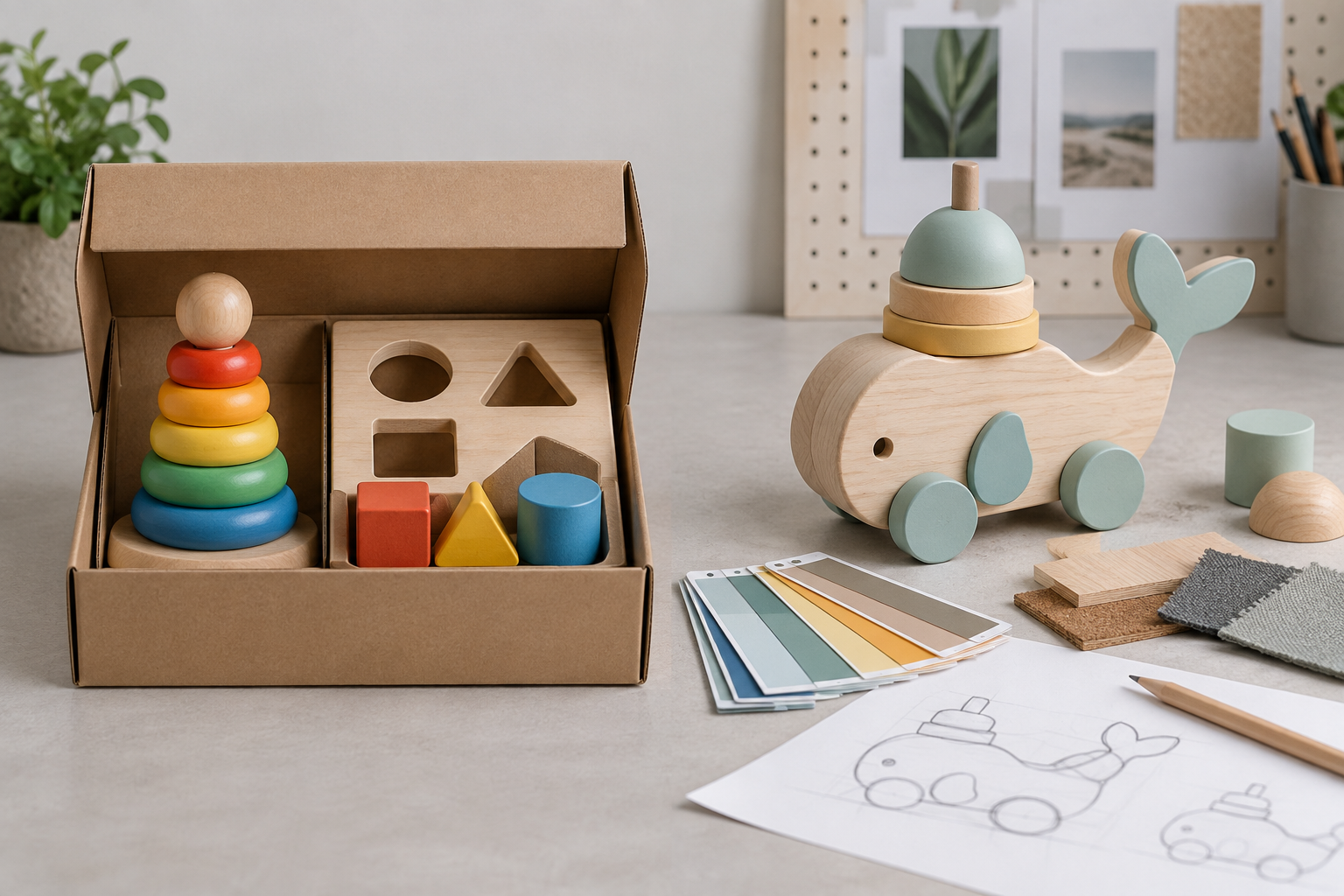
If you are still testing demand, need to launch quickly, or do not want to spend money on product development too early, ready-made toys are usually the safer starting point. If the shape, function, learning system, character, or another unique feature is part of the reason customers will buy the toy, custom development makes more sense. Semi-custom sits between the two: keep the base product and change only the parts customers actually see or use.
Before choosing, put five things on paper: first-order cash requirement, MOQ, realistic sales volume, total development time, and the value created by each custom feature. A cheap unit price can look attractive, but it tells only part of the story.
Ready-Made vs Custom Toys: Key Differences
| Factor | Ready-Made | Semi-Custom | Fully Custom |
|---|---|---|---|
| Core product | Existing factory design | Existing design with selected changes | New or heavily modified design |
| Production setup | Existing process and tooling where applicable | Existing setup plus new tooling, fixtures, print setup, or sourcing where needed | New product-development and production setup may be needed |
| Development work | Sample and specification confirmation | Artwork, packaging, components, colors, or selected structural changes | Design, engineering, prototyping, tooling, testing, and validation |
| Product control | Limited to available options | Control over selected features | Control over the developed specification |
| Typical upfront exposure | Inventory and purchase commitment | Inventory plus selected development costs | Development, tooling, testing, and inventory |
| Best use | Demand testing, seasonal lines, broad catalogs | Private-label products and proven categories | Proprietary products and differentiated core SKUs |
K&M’s OEM, ODM and manufacturing services follow the same basic logic. Some buyers start with an existing product and make small changes. Others come in with a new concept that needs design and development before production can begin.
12 Questions to Answer Before Choosing
- Is demand backed by actual sales, purchase commitments, pre-orders, or other reliable evidence?
- Which features really need to be unique?
- Can those features be added without changing the core product?
- Which component, material, package, or production step is driving the MOQ?
- How much cash will be tied up before the first unit is sold?
- What is the fixed development cost per unit at a conservative production volume?
- How many months of inventory will the first order create?
- Which steps have to happen before mass production starts?
- Which safety and documentation rules apply in the target market?
- Does the existing test documentation match the exact product you plan to order?
- Who owns the tooling, drawings, artwork, content, and other development assets?
- What business value does each custom feature actually add?
If a change does not improve function, customer value, compliance, differentiation, logistics, or cost, it probably does not belong in the first version.
Separate useful customization from expensive customization.
Send the toy type, target market, order quantity, and the changes you want. Ask which changes can use the current production setup and which ones need new engineering, sourcing, tooling, or testing.
When Ready-Made Toys Fit Better
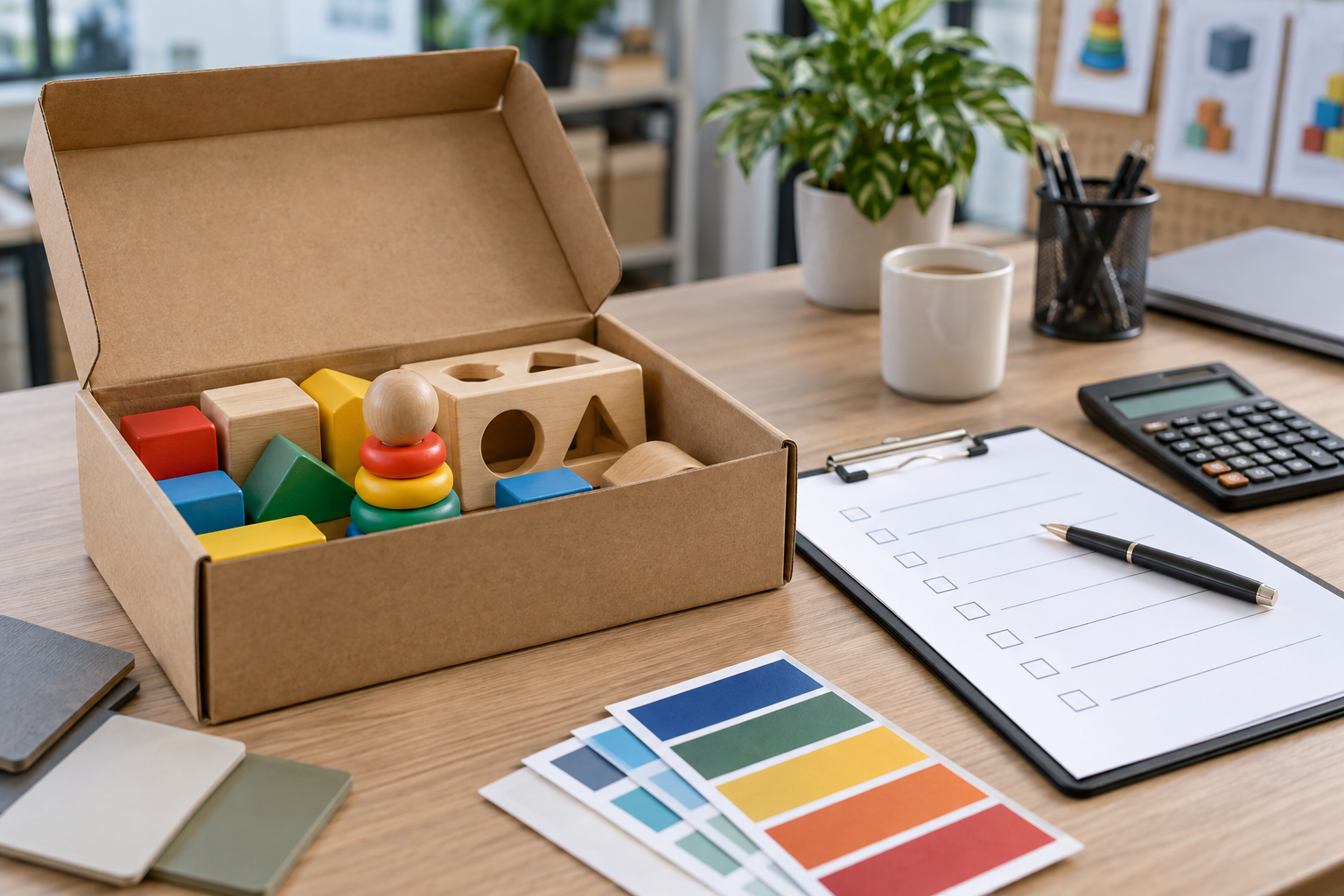
A ready-made toy already has a finished basic design and an established production process. If the manufacturing method uses molds or other tooling, those are already in place too.
You may still be able to change:
- logo placement;
- retail packaging;
- instructions;
- labels and barcodes;
- available colors;
- accessory combinations;
- bundle configuration.
This route works well when you want to test a new category, add several SKUs, hit a fixed selling season, or simply avoid spending heavily before you know whether the product will sell.
Take an existing excavation kit as an example. Instead of asking, “Can you customize this?”, ask exactly what can be changed: the tools, printed materials, colors, accessories, packaging, or component mix.
That small wording change matters. New box artwork and a new molded part are both “custom,” but they are nowhere near the same job.
The trade-off is exclusivity. If another buyer can source the same base product, you need to create the difference elsewhere. That may come from the content, packaging, accessory mix, brand, distribution, or service.
When Fully Custom Toys Fit Better
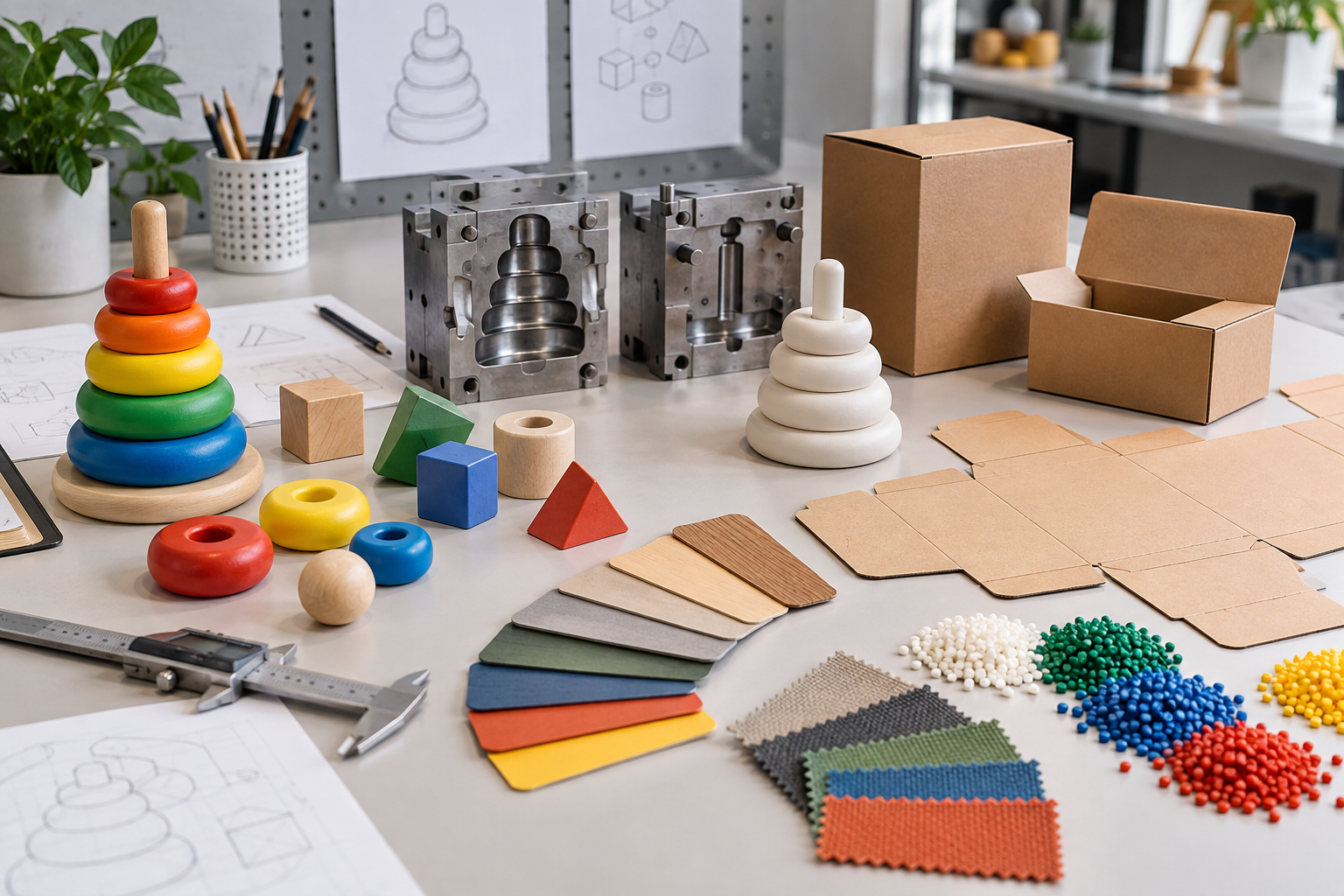
A custom project starts with your requirement rather than the factory’s catalog.
You may bring a sketch, artwork, measurements, a physical sample, a learning idea, a mechanism, or a full product specification.
Depending on the product, development may involve:
- industrial or mechanical design;
- material selection;
- prototype production;
- sample revisions;
- molds, dies, fixtures, printing plates, or other production tooling;
- new component sourcing;
- packaging development;
- product testing;
- pre-production approval.
Full customization makes the most sense when the unique feature is part of what customers are paying for. That might be an original character, a proprietary learning sequence, a unique mechanism, a distinctive component system, or another protected design feature.
If the product would sell just as well with a standard factory design, paying for a full redevelopment may not buy you much.
K&M’s custom educational toy development process walks through the stages between an initial idea and mass production, including design, sampling, specifications, compliance planning, and production preparation.
Use Semi-Custom When the Base Product Already Works
Semi-custom is often the practical middle ground. You keep the parts that already work and change the parts that matter to the customer.
Those changes may include:
- educational content;
- graphics;
- color combinations;
- selected accessories;
- instructions;
- packaging;
- labels and inserts;
- component combinations.
This model suits science and educational kits particularly well. The physical pieces may already be usable, while the activities, instructions, component mix, or retail presentation still need to feel specific to your brand.
K&M’s science kit manufacturing capabilities show how product configuration, packaging, content, and OEM/ODM work can be handled separately.
Before asking for a final quote, put each change into one of these groups:
- Existing-production change: current parts, tooling, suppliers, and processes can still be used.
- Development change: new artwork, packaging, sourcing, samples, engineering, or process work is needed.
- Tooling or setup change: a new geometry or process needs a mold, die, fixture, printing plate, cutting tool, or another dedicated setup.
This keeps a simple branding change from being priced and scheduled like a full product redesign.
Compare Total Project Cost, Not Unit Price
A low factory price can be misleading. What matters is how much money it takes to get sellable stock into your hands.
Total project cost = product cost + tooling + development + samples + packaging setup + testing + inspection + freight + duties and taxes + expected rework or replacement cost.
For custom projects, spread fixed tooling or development costs over a conservative production volume:
Allocated tooling cost per unit = total tooling cost ÷ conservative planned production volume.
If the custom version has a lower recurring cost, work out how many units it takes to recover the extra development money:
Break-even quantity = additional custom development cost ÷ recurring cost saving per unit.
Run the numbers for the first order and repeat orders separately. Tooling may disappear from later purchase orders, but testing, packaging, freight, inspection, and material costs do not simply vanish.
One common trap is spreading tooling across an optimistic sales forecast. The spreadsheet looks better, but the cash still leaves your account before the product sells.
Compare one-time development cost with recurring unit cost.
Ask for tooling, samples, packaging setup, testing, and recurring unit price as separate items. You will see the first-order cash requirement much more clearly.
MOQ Is Really an Inventory Decision
The assembly factory does not always set the real MOQ. Sometimes one small item upstream controls the whole order.
That item could be custom-colored plastic, printed packaging, fabric, electronics, magnets, accessories, labels, or another purchased part.
Ask one direct question: What exactly is creating this MOQ?
If the box is the problem, changing the packaging format may reduce the minimum. If the issue is a custom material, an existing color or material may solve it. If a purchased component is the bottleneck, negotiating only with the assembly factory will not fix much.
K&M’s custom educational toy MOQ guide explains how tooling, materials, purchased components, printed content, packaging, and SKU count can create different minimums inside the same order.
Then turn MOQ into something easier to judge:
Months of inventory = order quantity ÷ expected monthly unit sales.
That number is often more useful than MOQ by itself. Compare it with working capital, storage cost, replenishment time, shelf life where relevant, and the chance that packaging, rules, or customer preferences change before the stock sells.
Use Ready-Made Products to Validate Uncertain Demand
If you are not sure what customers want, a ready-made or lightly customized toy can give you real answers before you pay for proprietary development.
Watch the first sales cycle closely:
- Which configuration actually sells?
- Which accessories do customers use?
- Which complaints keep coming back?
- Which defects cause returns?
- Does the packaging create damage or confusion?
- Which feature do customers repeatedly ask for?
That information gives you a better brief for the next version. You are no longer guessing from a meeting room. You are fixing something customers have already shown you.
Calculate the Whole Development Timeline
“Production takes 30 days” does not mean the project takes 30 days.
A custom project may include:
- specification confirmation;
- engineering or artwork;
- prototype production;
- buyer review;
- sample revision;
- tooling or process setup;
- tool trial and correction;
- testing;
- pre-production approval;
- mass production;
- inspection;
- freight and destination handling.
Ask the supplier how long each stage takes and which stages depend on the previous one being approved.
K&M’s article on toy production delays covers common bottlenecks around tooling, components, packaging, production, and QC.
For seasonal products, work backward from the required arrival date. Build in room for sample revision, corrective work, inspection findings, and logistics delays if missing the sales window would leave you holding stock at the wrong time.
Custom Quality Depends on the Production Specification
An approved sample tells the factory what you accepted. It does not prove that thousands of units will come out the same way.
The written specification should cover the details that affect fit, function, appearance, packaging, or safety, including where relevant:
- dimensions and approved tolerances;
- material and material grade;
- component quantity;
- approved color reference;
- printing position and artwork version;
- assembly requirements;
- functional checks;
- packaging configuration;
- labels, warnings, and instructions;
- firmware or audio version for applicable electronic products.
Do not copy a tolerance from another toy just because it looks professional on a spec sheet. The correct limits depend on the actual design, intended use, safety requirements, and what the production process can reliably hold.
Early production should also be checked for issues that a prototype may hide, such as loose assemblies, tight fits, printing misalignment, color differences, weak seams, missing components, moving-part wear, or the toy rattling around inside the package.
K&M’s educational toy QC checklist shows how product requirements can be turned into inspection methods, acceptance criteria, frequencies, and corrective actions.
Material Changes Can Affect Function and Compliance
A toy described as “plastic,” “wood,” “fabric,” or “paperboard” is rarely made from only one material.
It may also contain pigments, coatings, adhesives, inks, fasteners, elastic, magnets, electronics, or other small parts.
A different plastic grade can change shrinkage, fit, impact behavior, or surface finish. A different ink, coating, pigment, adhesive, or accessory changes the material mix of the finished toy and may affect whether earlier test evidence still applies.
Freeze the bill of materials and approved material specifications before final testing and mass production. If the supplier later changes a material grade, coating, pigment, adhesive, component, or sub-supplier, check whether previous approvals still cover the new version.
K&M’s educational toy material guide covers plastics, wood materials, fabrics, foam, silicone, paperboard, coatings, and adhesives commonly used in toy production.
Ready-Made Toys Still Need Market-Specific Compliance
A toy may already be in a supplier’s catalog and still be unsuitable for your market.
In the United States, ASTM F963 is incorporated into the mandatory federal toy safety framework. CPSC states that children’s toys manufactured after April 20, 2024 must meet the applicable requirements of ASTM F963-23.[1]
Children’s products designed or intended primarily for children 12 years of age or younger that are subject to applicable CPSC safety rules require third-party testing and certification, with testing performed by a CPSC-accepted laboratory for the applicable requirements.[2]
For imported children’s products, the importer carries the applicable certification responsibility. An overseas factory’s test report does not move that responsibility away from the importer.[2]
Check any existing report against the exact model you plan to buy: materials, colors, components, construction, intended age, and applicable requirements. A report for an older or slightly different version should not be treated as automatic coverage.
CPSC tracking-label guidance requires identifying information to be ascertainable from permanent distinguishing marks on the children’s product and its packaging to the extent practicable. That includes the manufacturer/importer or private labeler, production location and date, batch or run information, and information that identifies the specific source of the product.[3]
CPSC also states that the tracking-label requirement itself does not require third-party laboratory testing and does not need to be listed on the Children’s Product Certificate.[3]
From July 8, 2026, importers of consumer products subject to CPSC certification requirements generally must electronically file the applicable certificate data. Products entered from a Foreign Trade Zone have a later effective date of January 8, 2027.[4]
For applicable children’s toys and child-care articles, CPSC states that an accessible component part may not contain more than 0.1% (1,000 ppm) of any regulated phthalate.[5]
EU Projects Need a Regulatory Transition Plan
Regulation (EU) 2025/2509 applies from August 1, 2030, while specified provisions have applied since January 1, 2026. Toys placed on the EU market in conformity with Directive 2009/48/EC before August 1, 2030 may continue to be made available under the transition rules.[6]
The new regulation strengthens chemical-safety requirements and introduces a digital product passport framework for toys.[6]
If you are developing a product now and expect to keep ordering it for years, check which rules will apply to each later production batch. Do not assume that the requirements in place at the start of development will stay the same forever.
Under the current EU toy-safety framework, manufacturers must assess relevant hazards and complete the applicable conformity-assessment process before placing toys on the EU market.[7]
Resolve material and compliance questions before the specification is frozen.
Provide the target age, destination market, product function, proposed materials, and current design stage before committing to final tooling and packaging.
Packaging Changes Cost and Logistics
Packaging is not just the box customers see on the shelf. It affects protection, shipment volume, carton configuration, labeling space, instructions, storage, and fulfillment.
Calculate package volume before approving the final structure:
Package volume = length × width × height.
Ask for:
- retail-package dimensions;
- units per master carton;
- master-carton dimensions;
- carton gross and net weight;
- total carton count.
Use the packed dimensions when estimating freight and warehouse space. The bare toy may be small, but a large retail box can quickly turn it into an expensive product to move and store.
If the physical toy already does the job, private-label packaging may create enough retail difference without touching the toy structure.
Define Tooling and Design Ownership Before Payment
Paying for a mold does not automatically answer who owns it.
Put these points in writing:
- legal ownership;
- storage location;
- whether the factory may use it for another customer;
- maintenance and repair responsibility;
- storage period;
- transfer rights;
- transfer cost responsibility.
Do the same for CAD files, character artwork, packaging artwork, instructions, activity content, firmware, and other product-development assets.
Exclusivity is a separate issue. You can own a mold and still not own every design file, standard component, or piece of intellectual property used in the finished product.
Audit the Production System, Not Just the Sample
A good-looking sample is useful, but it only shows the product presented for approval. It does not show how well the supplier controls thousands of units over several production runs.
For a custom project, check how the factory controls:
- incoming materials;
- approved suppliers;
- bill-of-material revisions;
- drawing and artwork revisions;
- tooling changes;
- in-process inspection;
- final inspection;
- nonconforming products;
- batch traceability.
A factory audit, a laboratory test, and a pre-shipment inspection do different jobs. The audit checks the production system. Laboratory testing checks the submitted product against applicable requirements. Shipment inspection checks the production batch against the approved specification.
K&M’s educational toy factory audit guide covers the records and controls buyers can examine before relying on a supplier for repeat production.
Match the Sourcing Model to the Business Condition
| Business Condition | Starting Model | Reason |
|---|---|---|
| Demand is unproven | Ready-made | Avoid fixed development spending before sales evidence exists |
| Existing product works but branding or content is weak | Semi-custom | Change customer-facing elements without rebuilding the core product |
| Customer data shows specific product weaknesses | Semi-custom or custom | Spend development money on documented problems |
| Original design, function, or IP drives demand | Custom | The commercial value depends on product-specific features |
| Retailer needs a broad assortment | Mixed model | Reserve development spending for strategic or proven products |
| Launch date leaves little development time | Ready-made or limited semi-custom | Fewer design, sampling, and tooling stages reduce schedule exposure |
A retailer building a wider science range can first compare existing categories through K&M’s wholesale science kit guide, then spend more development money only on the SKUs where sales or brand strategy make it worthwhile.
Send Every Supplier the Same RFQ Inputs
If three factories receive three different briefs, their quotations are not really comparable.
Send the same core information to each supplier:
- product category;
- target age;
- destination market;
- first-order quantity;
- expected repeat volume if supported by a forecast;
- dimensions;
- material requirements;
- functions;
- accessories;
- colors;
- packaging format;
- artwork requirements;
- drawings or reference samples;
- required delivery date.
Then ask each supplier to separate:
- unit price;
- MOQ;
- sample charges;
- engineering or development charges;
- tooling or production-setup charges;
- packaging setup;
- testing;
- sample lead time;
- tooling lead time where applicable;
- mass-production lead time.
Keep one-time and recurring costs separate. Otherwise, one supplier may look cheaper simply because part of the project cost is hiding outside the unit price.
Send one specification and compare quotations on the same basis.
Include the target market, quantity, product requirements, packaging, and any drawings or samples you already have. Ask for recurring unit cost and one-time development charges separately.
FAQ
Are ready-made toys always cheaper than custom toys?
No. Ready-made products usually avoid some design, engineering, and dedicated tooling costs, but the full project still includes packaging, testing, inspection, freight, duties, and inventory. Compare the first order and repeat orders separately.
Does a custom toy always require a new mold?
No. Injection-molded or compression-molded parts may need a dedicated mold when their geometry changes, but plush, sewn, paper, printed, and many wood products use different methods. A custom project may need dies, fixtures, printing plates, cutting tools, patterns, or no dedicated tooling at all.
What determines toy MOQ?
The limiting quantity may come from final assembly, raw materials, custom colors, electronics, magnets, printed content, packaging, labels, or another supplier in the chain. Find the actual bottleneck before trying to negotiate the finished-product MOQ.
Is an existing supplier test report enough?
No. Check the report against the exact model, materials, colors, components, construction, intended age, destination market, and applicable requirements. A report for a similar or older product version does not automatically cover the version you plan to import.
Ready-Made vs Custom Toys: Which Should You Choose?
Use ready-made toys when demand is still uncertain, the launch window is tight, or you want to keep development spending low. Use semi-custom sourcing when the base product already works but the content, branding, packaging, colors, accessories, or selected components need to change. Use full custom development when the product’s unique features create enough value to justify the extra design, tooling, testing, and inventory commitment.
Before signing off on the project, calculate total first-order cash requirement, months of inventory, allocated development cost per unit, break-even quantity where relevant, and the full calendar from specification approval to shipment. If a custom feature does not improve function, customer value, compliance, differentiation, logistics, or cost, leave it out of the first version.