
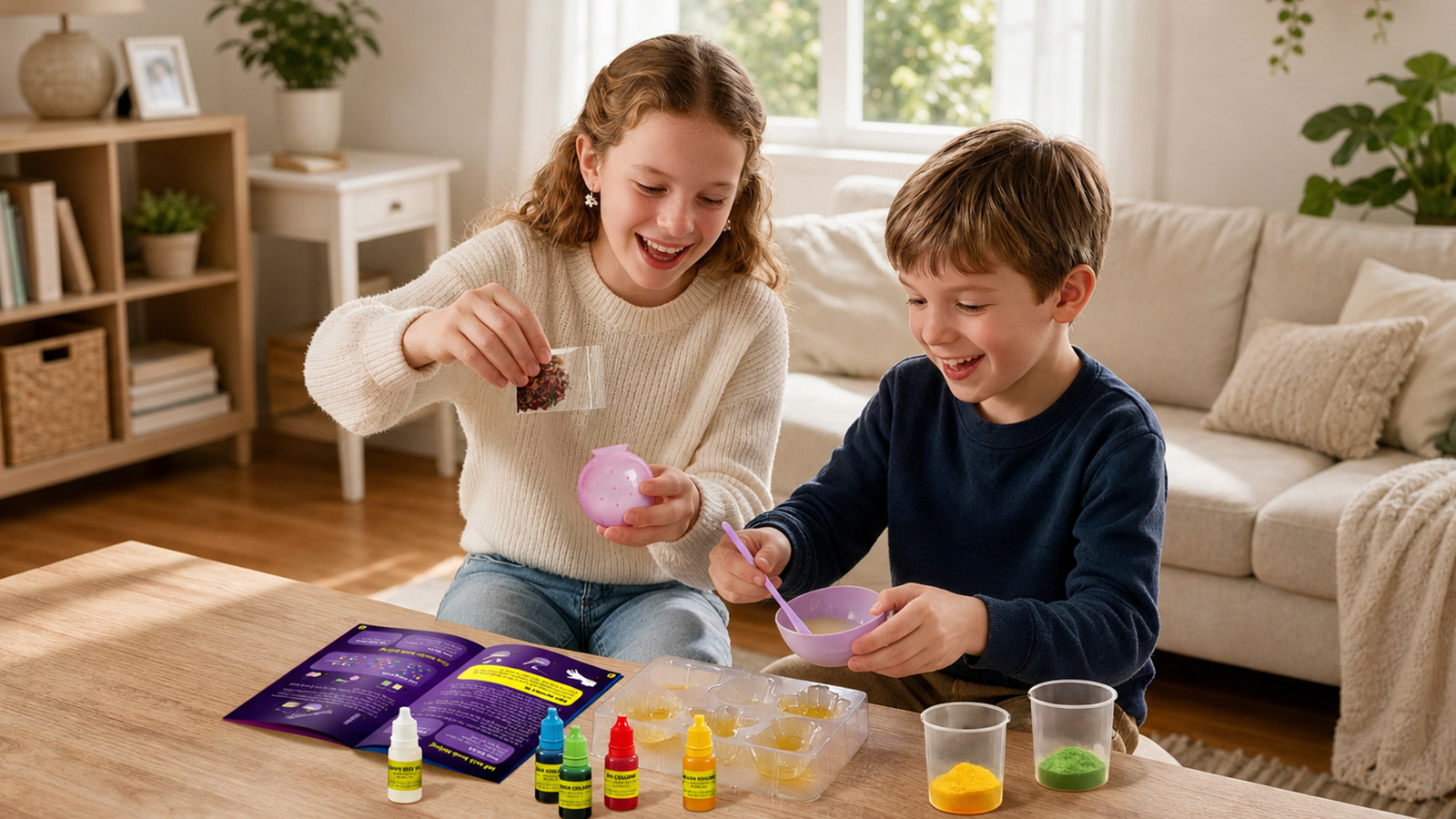
Brands can customize experiment themes, tools, packaging, artwork, instructions, difficulty levels, material choices, and video support. For a first order, keep an existing experiment design and focus spending on the box, instructions, and part layout. New formulas, molds, or electronics need a separate development and safety review.
Customization Options
| Area | What you can change | What to confirm before approval |
|---|---|---|
| Experiments | The theme, activity mix, sequence, and recording sheets | Complete activities supported by one box, shared supplies, and items families must provide |
| Tools and parts | Cups, droppers, racks, containers, and model components | Capacity, dimensions, materials, measurement markings, and replacement availability |
| Packaging | Box artwork, sleeves, trays, dividers, and storage cases | Print minimums, packed dimensions, part retention, and shipping protection |
| Brand artwork | Logo, illustrations, characters, and activity cards | Copyright ownership, editable files, image licenses, and any exclusivity terms |
| Instructions | Languages, step images, parent notes, and teacher sheets | Wording that matches the supplied parts, required warnings, and language-specific artwork |
| Difficulty | Guided activities and optional challenges | Age suitability, supervision, and hazards; a new age label alone does not make a kit suitable for younger children |
| Materials and refills | Paper inserts, reusable tools, and separate consumable packs | Protection, shelf life where relevant, disposal instructions, and evidence for environmental claims |
| Digital support | QR-linked demonstrations and printable worksheets | Videos that match the manual version, working links, and access without a required child account |
For custom science kits, ask for two quotes against the same brief: one using existing parts and one including your proposed changes. Have the supplier list each added mold, material, printing setup, and test requirement separately.
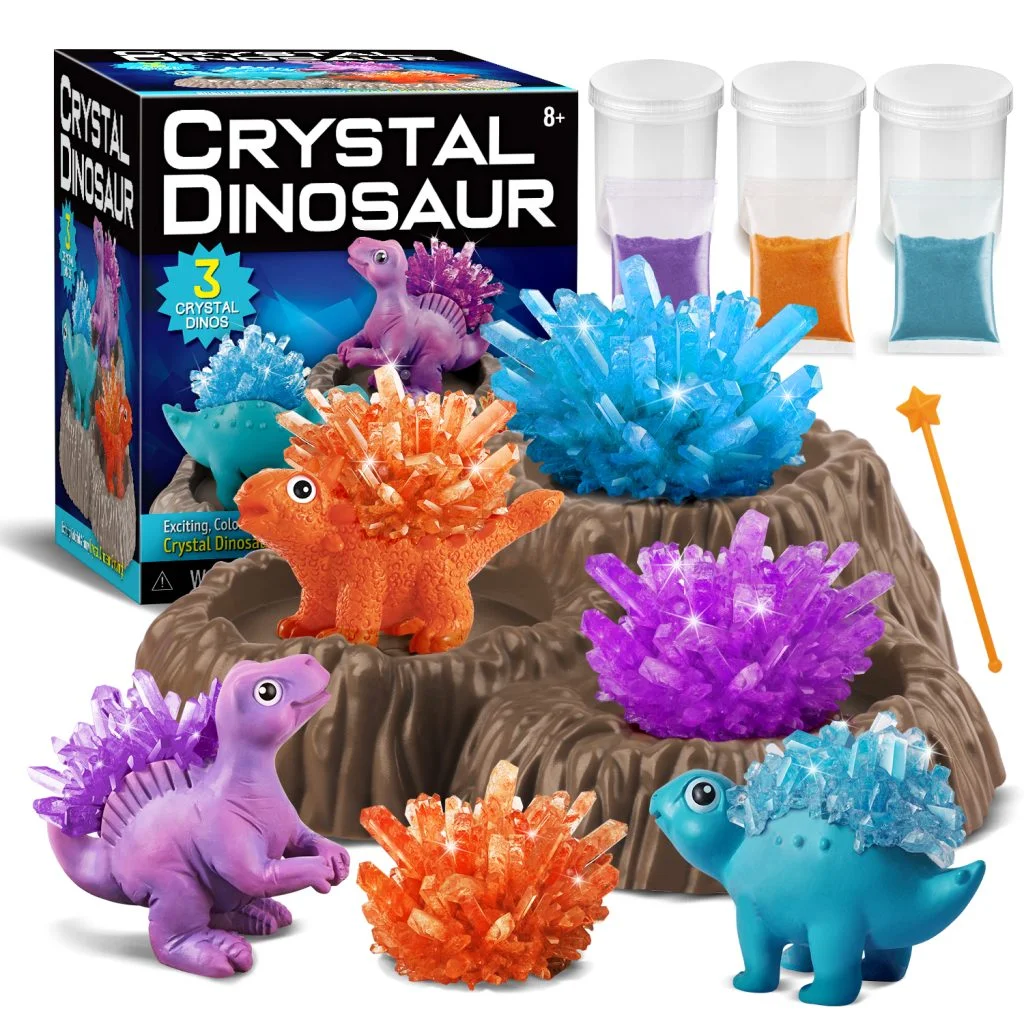
Order Size and Hidden Minimums
K&M publishes the following planning quantities for its science-kit programs. Confirm the minimum for each SKU, box design, and language version in the written quote.
| Order scope | Published quantity per SKU | Configuration |
|---|---|---|
| Existing design with logo | 200–500 units | Existing components with simple labeling or stock packaging; no formula or mold change |
| Private label with custom box | 500–1,000 units | Custom artwork, box printing, and packaging setup |
| Full ODM or new mold | 1,000–5,000 units | Custom parts, tooling, or new material sourcing |
These are K&M’s published production ranges, not guaranteed terms. A printed box or molded part can set a higher minimum than final assembly.
Consider a hypothetical 1,000-kit order split into four languages at 250 kits each. If the printer requires 1,000 boxes per language, you buy 4,000 boxes and leave 3,000 unused—75% of the print run. Check whether a shared multilingual box can meet the destination markets’ labeling requirements before splitting the artwork.
The component or packaging item driving the MOQ should be named in the quote. If you pay for unused stock, agree on ownership, storage charges, shelf life where relevant, and what happens after an artwork change.
Sample Checks Before Production
Request a sample with the intended parts, filled materials, printed instructions, and packaging. A blank box confirms size and fit; it does not confirm print quality or the accuracy of the manual.
Check the Activity Claims
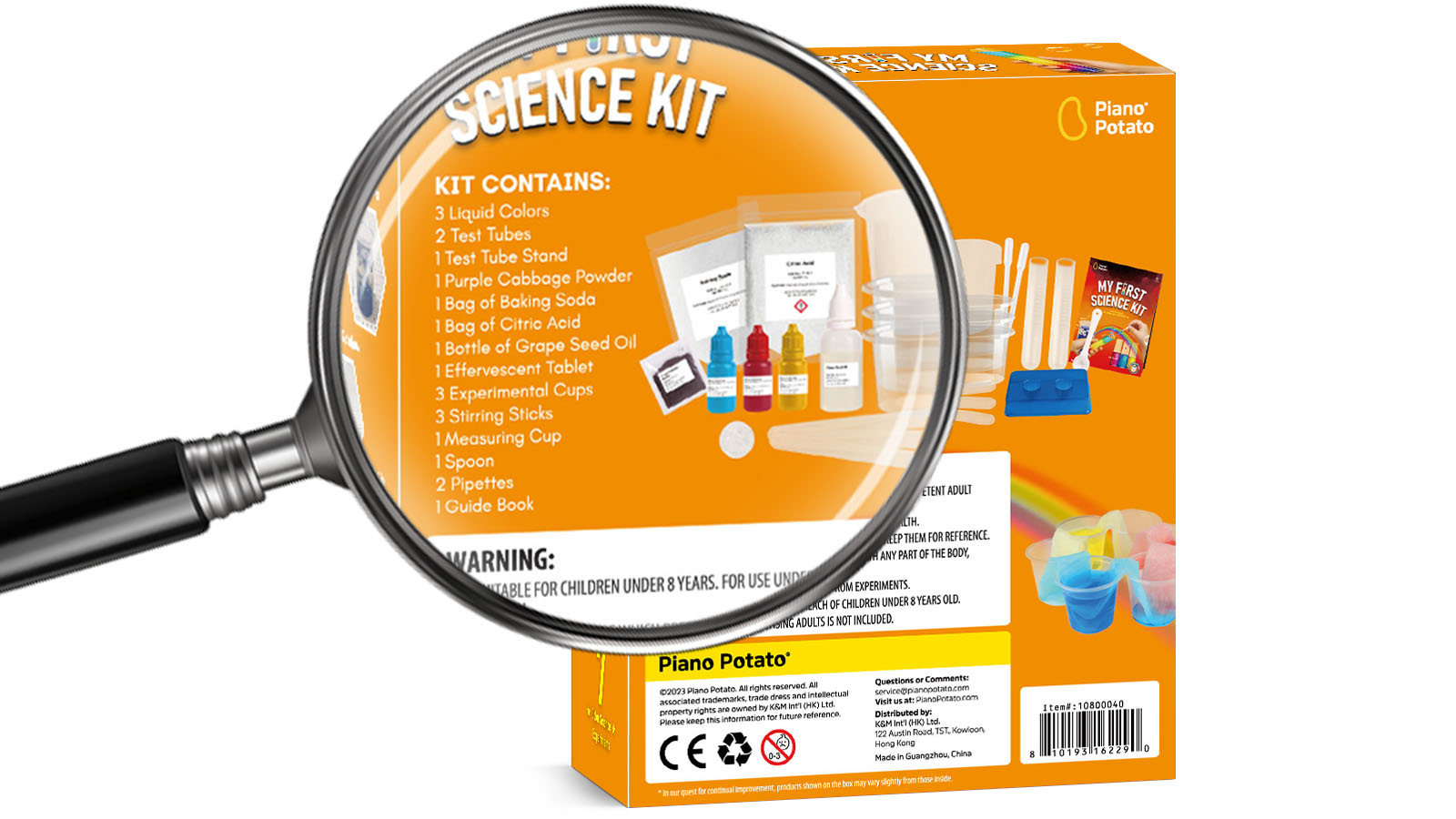
List every advertised experiment and the supplies it consumes. Count complete activities using the contents of one box. If two activities need the same single-use material, do not count each as though it has the full pack available. State any need for household supplies before purchase.
Record Where Instructions Fail
After the appropriate safety review, arrange a supervised usability check with children in the intended age group and parent or guardian consent. Record setup time, requests for help, unclear pictures, spills, and the result. Separate hands-on time from waiting time for crystal growth or other observations.
Keep the sample ID, manual revision, participant age range, and observations. Revise the unclear steps and check them again. These records can support a genuine development account; a small usability check cannot establish market-wide success rates or replace compliance testing.
Approve One Product Version
Keep the approved sample, bill of materials (BOM), artwork, manual, and inspection checklist under the same revision. Require written approval before substituting a powder, colorant, container, or electrical part. Ask the laboratory which changes need further assessment or testing.
Costs and Delivery
Request separate prices for the finished kit, samples, artwork, tooling, testing, packaging setup, and freight. Confirm the delivery terms, destination, carton dimensions, and gross weight. An ex-factory price is not a delivered warehouse price.
For illustration, a $3,000 mold adds $3 per kit across 1,000 kits, $1 across 3,000, or $0.60 across 5,000. Those figures cover tooling only. Put mold ownership, permitted use, maintenance, storage, and transfer rights in the contract; ODM does not automatically mean exclusivity.
Hypothetical retail calculation: $29.99 selling price − $9 landed cost − $4.50 platform and payment fees − $3 fulfillment − $3 advertising − $0.50 returns allowance = $9.99 contribution per sale, or about 33.3%, before fixed expenses and tax.
Ask for dated milestones for sample approval, safety review and testing, artwork approval, production, inspection, and transport. Identify what starts each stage and leave room for corrections. Do not commit to a launch date using production time alone.
For missing-part prevention during packing, agree on checks before sealing, final inspection criteria, and replacement terms. A correct total weight alone cannot confirm that every part is present.
Safety Documents by Market
Give the laboratory the final component list, material information, intended age, instructions, and sales countries. Factory audits and an older product’s report do not, by themselves, establish compliance for your new configuration.
United States. Applicable ASTM F963 requirements are incorporated through 16 CFR Part 1250; not every section applies to every toy.[1] Children’s products intended primarily for ages 12 or younger and subject to applicable safety rules generally need third-party testing and a Children’s Product Certificate, with specific exceptions. The responsible US domestic manufacturer or importer issues the CPC—not CPSC.[2] Importers should also confirm applicable certificate-data eFiling requirements.[3]
European Union. Prepare the applicable safety assessment, technical documentation, Declaration of Conformity, CE marking, warnings, and traceability information.[4] Confirm the relevant standards and chemical requirements for the actual kit. Regulation (EU) 2025/2509 entered into force on January 1, 2026, and starts applying on August 1, 2030, following the transition period. Its digital product passport requirement is not a blanket requirement for a 2026 launch.[5]
Great Britain. Current toy guidance allows the CE or UKCA route when the corresponding requirements are met. Northern Ireland has separate guidance; do not treat UKCA alone as a UK-wide solution.[6]
Price the changes before you approve the design
Send K&M your theme, intended age, sales country, quantity per SKU, languages, and packaging idea. Request separate prices for existing-design branding and custom development, including tooling, testing, and unused packaging where applicable.
Official guidance and supplier pages checked October 28, 2026. Sample-review steps are proposed purchasing checks, not reported customer trials or laboratory results. Confirm product-specific legal requirements before sale.