

Wholesale science kits range from single-use excavation and chemistry activities to reusable mechanics, circuit, microscope, and robotics sets. For a first assortment, compare three options: low-cost single activities, multi-activity family kits, and reusable equipment-based sets. Then check whether the quoted price covers a complete retail unit, how many activities the supplied materials support, and what the order will cost to reach your warehouse.
The budget table below uses illustrative allowances from $1–$5 for mini kits to $20–$100+ for basic robotics. These figures help frame an inquiry; they are not verified wholesale market prices.
All amounts are in US dollars. Product budgets exclude freight, taxes, testing, and selling costs. Financial examples are hypothetical. K&M’s published production minimums are identified separately and remain subject to project confirmation.
Product Types and Buying Budgets
| Kit Type | Illustrative Budget per Unit | Details Needed for a Comparable Quote |
|---|---|---|
| Mini experiments | $1–$5 | Materials for one complete activity, tools, and customer-supplied items |
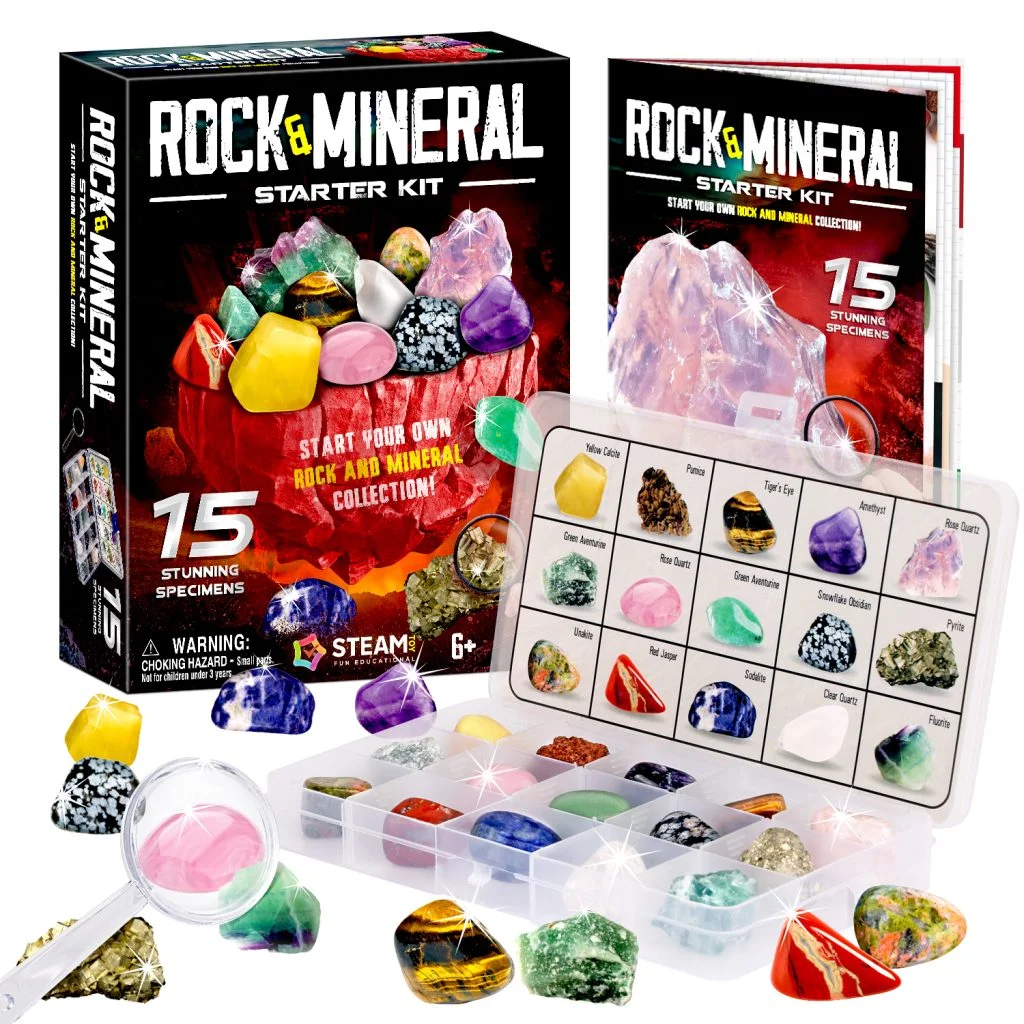
| Rock and excavation kits | $2–$10 | Specimen count, natural samples or replicas, digging tools, and identification cards |
| Plant and nature kits | $3–$15 | Containers, observation tools, seed quantities, and shelf life where applicable |
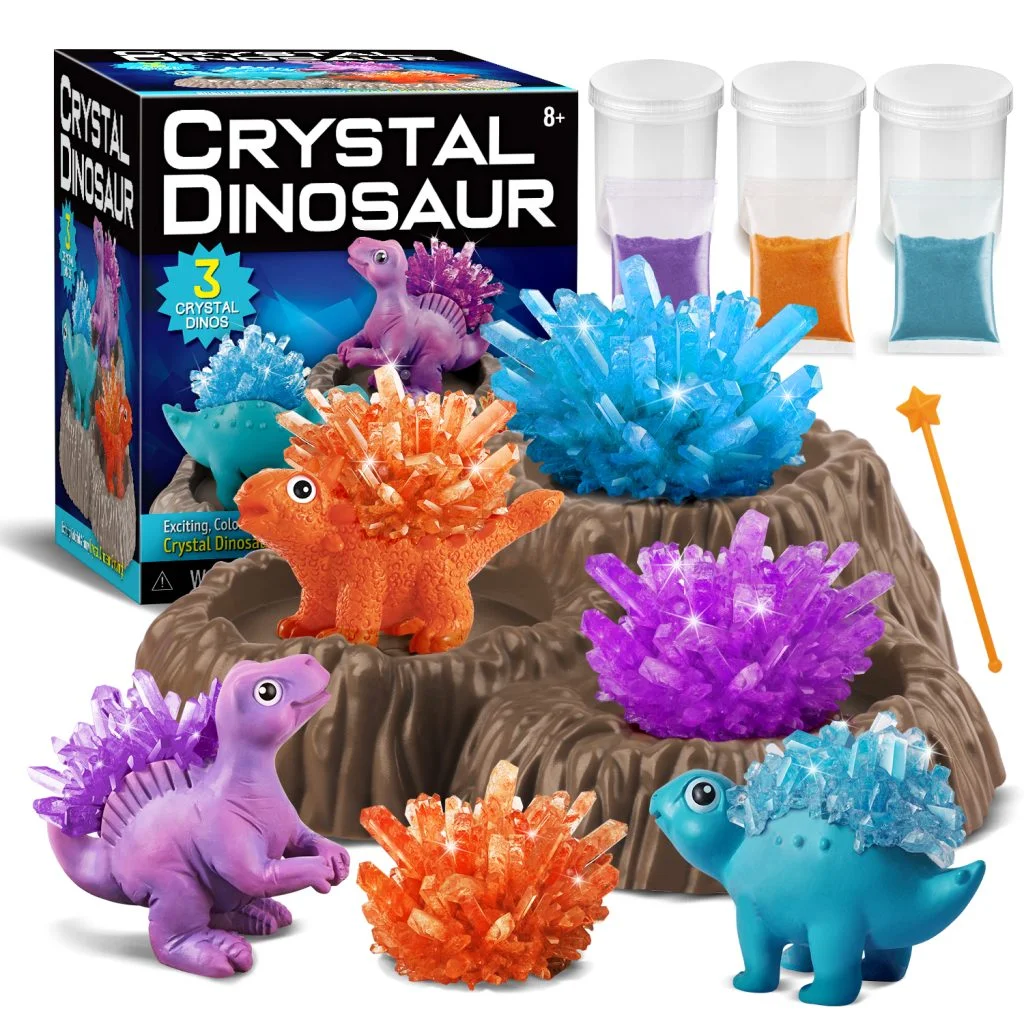
| Chemistry kits | $4–$20 | Material quantities, complete activity count, containers, and instructions |
| Physics and mechanics kits | $5–$25 | Parts, buildable models, connectors, and replacement availability |
| Circuit and energy kits | $8–$35 | Modules, motors, power supply, and connections |
| Basic microscope kits | $10–$45 | Optics, lighting, focus controls, and slides |
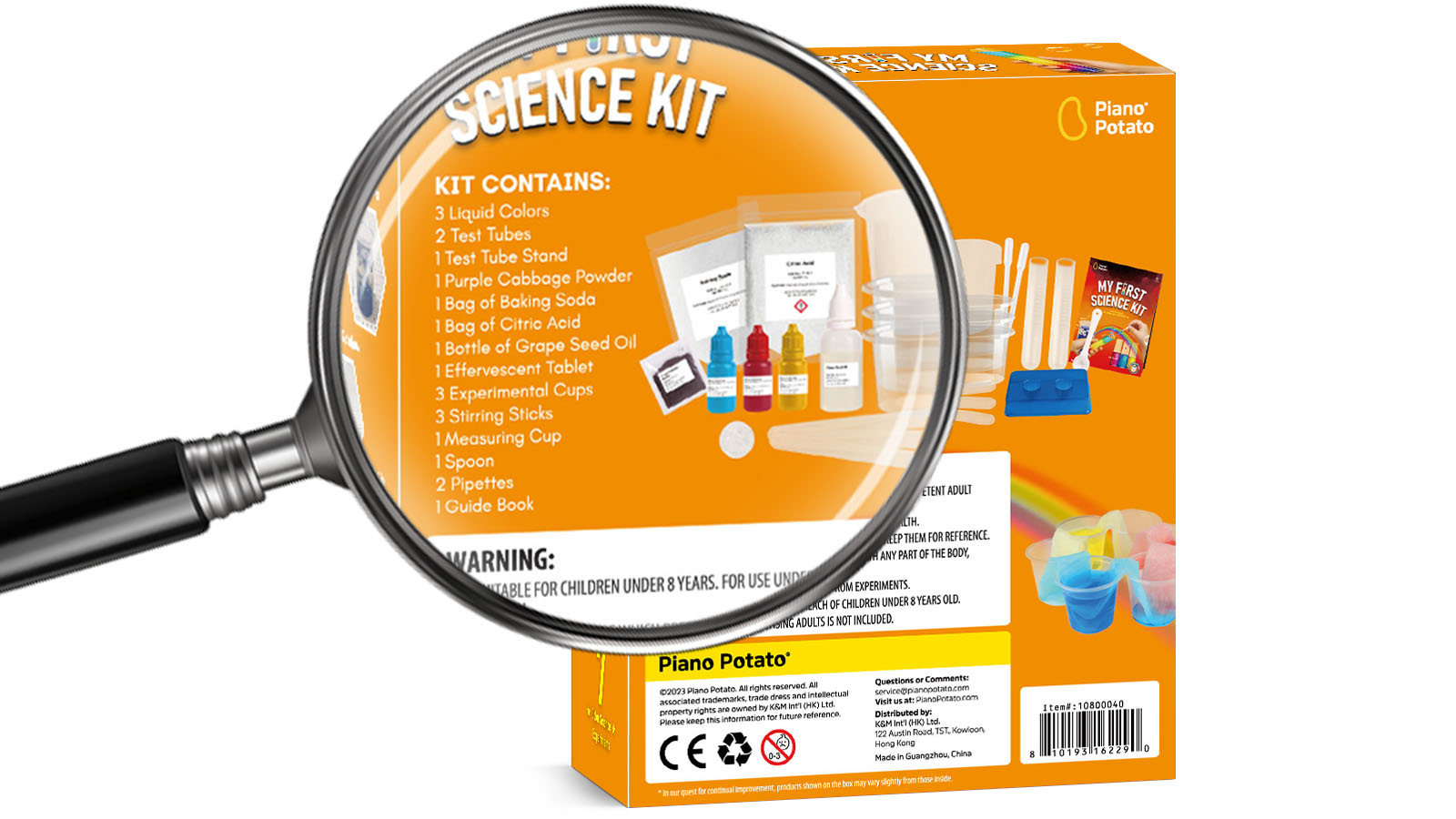
| Multi-topic science sets | $10–$40 | Activity list, shared supplies, tools, and retail packaging |
| Basic robotics kits | $20–$100+ | Controller, sensors, motors, software fees, and supported devices |
These allowances cover basic consumer products, not laboratory microscopes or advanced robotics platforms. They do not establish the price of the products pictured. Branded distributor stock and factory production also need separate comparisons: a ready-to-sell unit may include packaging and documentation work that a factory quote lists as extra charges.
Stock Orders and Custom Production
For available stock, ask about carton quantities, mixed-SKU orders, remaining shelf life, and reorder availability. For custom science kits, confirm the minimum per SKU, artwork, and language version before setting the assortment size.
K&M publishes the following planning ranges for its own science-kit programs. These are supplier-specific production ranges, not industry averages or guaranteed order terms.
| Order Type | Published Planning Quantity | Scope |
|---|---|---|
| Existing design with logo | 200–500 units per SKU | Existing components, no formula or mold change, stock packaging or simple labeling |
| Private label with custom box | 500–1,000 units per SKU | Custom artwork, box printing, and packaging setup |
| Full ODM or new mold | 1,000–5,000 units per SKU | Exclusive tooling, custom parts, or new material sourcing |
A private-label kit’s MOQ may come from one component rather than final assembly. If a printed box requires 1,000 pieces but the order uses 500, agree on who pays for, owns, and stores the remaining 500 boxes.
Product Checks Before Ordering
Chemistry and Multi-Activity Sets
A $6 kit that supports three complete activities costs $2 per activity. A $9 kit that supports nine costs $1 per activity. Count activities using the supplies in one box; experiments sharing the same bottle cannot each claim its full contents.
Request material quantities, amounts used per activity, expiry dates where applicable, storage and disposal instructions, and adult-only steps. Separate consumable refills from reusable tools so customers know what they must retain or buy again.
Mechanics and Circuits
For a box marked “60 pieces, three models,” check whether all three models have instructions and can be built simultaneously. Ask for replacement-connector availability.
During an internal sample review, assemble and remove frequently used connectors and record cracks, loose fits, or sticking. Run circuits only with the specified power source and operating time. Record failed starts and differences between the diagram and supplied parts. These checks do not replace required laboratory testing.
List battery requirements and any strong-daylight requirement for solar models on the retail page.
Nature and Geology
Separate setup time from observation time: a 10-minute planting activity does not produce visible growth in 10 minutes. For US-bound kits containing plants or seeds, check APHIS permit, exemption, and shipping requirements before ordering.[1]
Identify specimens as natural materials, replicas, or plastic models. State quantities and accessories separately. A 15-specimen collection with a storage case and identification guide is a different offer from 15 loose stones.
Microscopes and Robotics
Compare microscopes using the same prepared slide at a magnification each supports. Record focusing time, visible detail, and whether the image loses focus after the knob is released.
For robotics, check operating systems, account requirements, languages, subscriptions, and offline functions. A $40 retail kit with a required $3 monthly subscription costs $76 over 12 months, before batteries and replacement parts.
Purchase Costs and Retail Margin
The following example assumes 500 kits at $6 each. Freight, duty, testing, and receiving costs are hypothetical inputs—not estimates for a particular shipment.
| Cost Item | Example Amount |
|---|---|
| Products | $3,000 |
| Freight and insurance | $500 |
| Duties and customs clearance | $350 |
| Allocated testing and label costs | $250 |
| Warehouse receiving | $150 |
| Total | $4,250 |
If all 500 kits are sellable, the purchasing cost per unit is $8.50. If 10 are unsellable without replacement or compensation, it becomes $4,250 ÷ 490, or $8.67. This is an internal buying calculation; accounting treatment of allocated expenses may differ.
Using $8.50 per unit and a selling price of $19.99 before sales tax gives a margin of approximately 57.5% before selling expenses. Now deduct $3 in platform and payment fees, $3 in fulfillment, $2 in advertising, and $0.50 in expected return and support losses:
Contribution per sale = $19.99 − $8.50 − $3 − $3 − $2 − $0.50 = $2.99.
The $2.99 is before rent and fixed payroll. Recalculate discounted sales using the actual selling price and any fees that change with it.
Price Breaks and Inventory
Suppose a stock supplier offers 100 kits at $8 each or 300 at $7.50 each. The larger order costs $2,250 instead of $800. It saves $150 compared with purchasing 300 at $8, but requires $1,450 more upfront.
At 10 sales per week, the orders cover 10 and 30 weeks respectively. Compare the extra 20 weeks of inventory with shelf life, storage costs, seasonal demand, and reorder lead time.
Track full-price and discounted sales separately. Selling 18 of 24 kits gives 75% sell-through. If 12 needed a discount, only six sold at full price; that small sample is not enough to establish stable demand.
Quote and Acceptance Checklist
- Comparable pricing: Use the same components, packaging, quantity, currency, and delivery terms. Record the quote expiry date.
- Shipping costs: Supply the destination postcode and request carton count, dimensions, gross weight, and included duties or taxes. An EXW quote and a delivered quote are not directly comparable.
- Packing: Approve a component list with quantities, instruction language, artwork version, and batch identification.
- Acceptance: Agree on sampling, function checks, shortage-reporting deadlines, replacement parts, and refund terms.
- Reorders: Confirm the repeat-order minimum, lead time, remaining material shelf life, and approval process for component changes.
Before splitting a classroom set, check whether it contains complete individual kits or shared supplies. Each retail pack needs the applicable instructions, warnings, labels, and traceability information. Add repacking and any necessary assessment costs to the unit calculation.
US Safety Documentation
US rules incorporate relevant ASTM F963 requirements through 16 CFR Part 1250. The applicable sections depend on the toy, while the required standard version depends on its manufacturing date.[2]
Products intended primarily for children aged 12 or younger and subject to applicable children’s product safety rules generally require third-party testing and a Children’s Product Certificate, with specific exceptions. The responsible US manufacturer or importer issues the CPC; it is not a CPSC-issued product approval.[3]
Match the certificate and supporting reports to the ordered model, materials, age grade, and production details. Importers must also check applicable certificate eFiling requirements.[4] Products sold in other countries need a separate review of those markets’ requirements.
Source review: October 20, 2026. Official references support the US import and safety statements. Product budgets and financial examples are illustrative; K&M production quantities reflect its published project guidance. The sample checks described here are suggested purchasing procedures, not reported test results.