
This difference matters when comparing an existing product with a fully custom private label science kit. An existing kit can reuse much of the factory’s current supply chain. The moment you introduce a new mold, bottle, formula, tray, color, or packaging format, another MOQ can appear.
Kit Type
How much you customize the kit has a big effect on the starting quantity.
| Project Type | What Usually Changes | Main MOQ Pressure |
|---|---|---|
| Existing Kit + Private Label | Logo, artwork, labels, barcode, instructions | Packaging and printing |
| Semi-Custom Kit | Some experiments, tools, bottles, colors, or packaging | New component minimums |
| Full Custom Kit | Molds, formulas, components, trays, and packaging | Tooling, materials, and separate production runs |
If you’re taking an existing kit and mainly changing the branding, the factory may already be buying the same test tubes, droppers, measuring cups, bottles, and trays for several other products. That makes a smaller order much easier to handle.
Semi-custom work is where things start to move. Something that looks minor from the buyer’s side can have a surprisingly large effect. Swap a standard 15 ml bottle for a special 20 ml colored bottle, for example, and you may have created an entirely new supplier MOQ for one small component.
With a full custom project, there are simply more moving parts. New tooling, new raw materials, exclusive plastic pieces, and new packaging can all set their own minimums. That’s why the custom educational toy development process needs to look at MOQ part by part, not just as one finished-kit number.
Hard vs Soft MOQ
It helps to separate two very different situations.
A hard MOQ comes from a real purchasing or production limit. A soft MOQ usually means the factory can make fewer units, but doing so is expensive or inconvenient.
| MOQ Type | Example | What You Can Do |
|---|---|---|
| Hard MOQ | 1,000 printed boxes per artwork | Change the packaging or pay for the extra boxes |
| Hard MOQ | 25 kg raw-material pack | Use a common material or store the balance |
| Hard MOQ | 2,000-piece molded part run | Use an existing mold or standard component |
| Soft MOQ | Factory won’t set up a line for 300 kits at the normal price | Accept a setup charge or higher unit price |
| Soft MOQ | Small batch needs a separate packing run | Use a longer lead time or combine production |
This distinction changes the negotiation. If the printer physically requires 1,000 boxes, asking the factory ten times for 300 boxes doesn’t solve much. Either the packaging has to change, or someone has to pay for the unused 700.
If the issue is factory setup, there may be more room to talk. A 300-piece run could become possible if you’re willing to pay a setup fee or accept a slightly higher unit cost.
Component MOQ
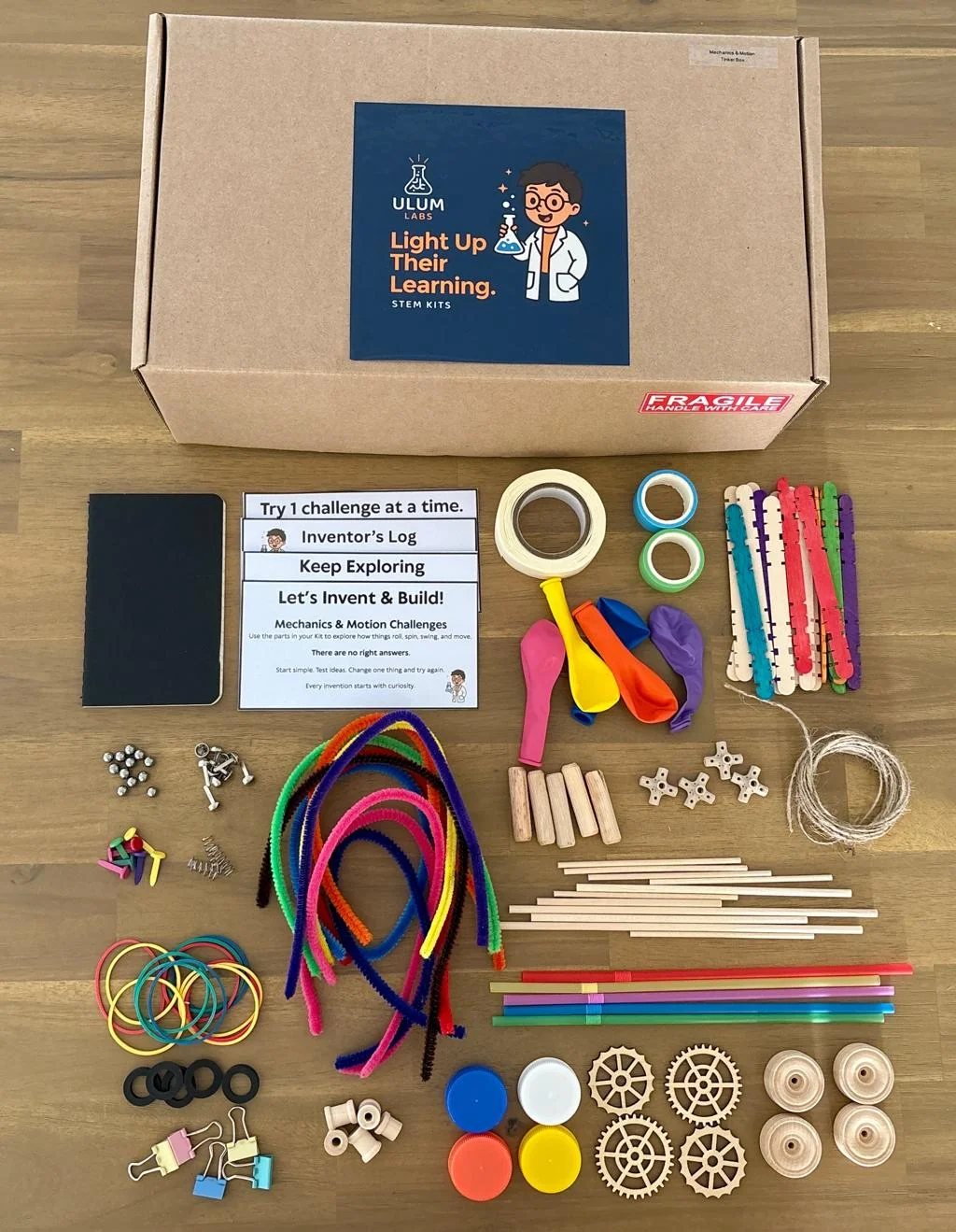
Science kits are often more complicated than they look. A retail box that sells as one product may contain 20 or 30 separately sourced pieces, and each one can have its own MOQ.
| Part | Used per Kit | Supplier MOQ | Kit-Equivalent Quantity |
|---|---|---|---|
| Test tubes | 4 | 4,000 pcs | 1,000 kits |
| Droppers | 3 | 3,000 pcs | 1,000 kits |
| Measuring cup | 1 | 1,000 pcs | 1,000 kits |
| Safety goggles | 1 | 500 pcs | 500 kits |
| Small bottles | 2 | 3,000 pcs | 1,500 kits |
Now say you only want 500 finished kits. You need 2,000 test tubes and 1,500 droppers, but the suppliers in this example want minimum orders of 4,000 and 3,000 pieces.
The extra parts don’t disappear. The factory either keeps them, uses them in another product, charges you for them, or pushes your finished-kit quantity higher.
This is one reason standard components are useful in a first run. If an existing dropper, tube, cup, spoon, or container already works, using it can remove one supplier minimum completely. The usual parts found in different experiments are covered in this kids’ science kit component guide.
Production Loss
There’s another detail buyers sometimes miss: the math above is theoretical.
If 1,000 kits use four test tubes each, you need:
1,000 × 4 = 4,000 test tubes
But planning exactly 4,000 leaves no room for inspection samples, handling damage, rejects, or replacement parts.
Using a simple 2% hypothetical planning allowance:
4,000 × 1.02 = 4,080 test tubes
That 2% is only an example, not an industry loss rate. A durable plastic spoon and a fragile clear tube will not necessarily need the same allowance.
The practical question to ask is whether the supplier’s quantity refers to the number purchased or the number expected to remain usable after incoming inspection and production.
Order Multiples
MOQ is also not always the exact number that appears on the final purchase order.
If the factory says the MOQ is 500 kits but each master carton holds 24, it may want to ship only full cartons:
24 × 21 cartons = 504 kits
So your actual PO becomes 504, not 500.
The same thing can happen with bottles, trays, bags, or other parts purchased by full carton. Ask for both the MOQ and the packing or order multiple.
Packaging MOQ
Packaging is often where a low-volume private label project gets stuck.
One finished science kit may use:
- Retail box
- Inner tray
- Paper divider
- Instruction manual
- Experiment cards
- Labels
- Sachets
- Shipping carton
Each one can come from a different process. The outer box might be easy to make in 500 pieces while the molded inner tray needs 2,000.
For a smaller first run, it often makes more sense to simplify the packaging instead of forcing every piece to be custom. A few common approaches are:
- Standard box + custom label
- Standard box + printed sleeve
- Existing tray + new box artwork
- Stock pouch + printed label instead of custom printed film
This same problem shows up in products such as private label excavation kits, where the retail box, insert, printed cards, and internal packaging can all have different minimums.
Language Versions
Multiple languages can make a reasonable total order look much smaller once the packaging is split.
Take a 1,000-kit order:
| Language | Finished Kits Needed | Example Printer MOQ per Artwork |
|---|---|---|
| English | 250 | 1,000 boxes |
| French | 250 | 1,000 boxes |
| German | 250 | 1,000 boxes |
| Spanish | 250 | 1,000 boxes |
If the printer treats each language as a separate artwork and requires 1,000 boxes per artwork, those four 250-kit versions could mean printing 4,000 boxes.
You only use 1,000 immediately. The other 3,000 boxes—75% of the print run—sit in storage.
Sometimes a multilingual manual can reduce that problem. Sometimes the outer box genuinely needs separate artwork for each market. Either way, check it before the files go to print.
Excess Stock
Any time the factory has to buy more than your current order uses, get the leftover-stock terms in writing.
If 1,000 boxes are printed and you assemble 500 kits:
- Boxes produced: 1,000
- Boxes used now: 500
- Boxes left: 500
- Unused portion: 50%
Then ask the practical questions. Who paid for those 500 boxes? Who owns them? Does the factory charge storage? How long will it keep them? What happens if your barcode, importer details, age label, or artwork changes before the next order?
That last point matters. Cheap excess packaging isn’t cheap anymore if it has to be thrown away six months later.
Custom Molds
A unique experiment stand, test tube rack, storage case, volcano model, or excavation tool can make a kit look different, but it also introduces tooling and another production run.
Even when the mold is already finished, the factory still has to install it, prepare the resin, set the machine, make trial parts, check dimensions, and run production.
If a molded part has a minimum run of 5,000 pieces:
- 1 piece per kit = 5,000 kit-equivalents
- 2 pieces per kit = 2,500 kit-equivalents
- 5 pieces per kit = 1,000 kit-equivalents
That does not mean you automatically have to buy 5,000 finished kits. It may be possible to mold 5,000 pieces, use some now, and keep the rest for the next production run.
Color can create a similar issue. One thousand blue cups plus 1,000 orange cups may sound like a 2,000-piece order, but the supplier may still need two resin preparations, two color adjustments, and two machine setups.
Tooling Cost
Custom tooling also looks very different when you spread it across different order sizes.
Assume a purely hypothetical $3,000 tooling cost:
| Production Quantity | Tooling Cost per Kit |
|---|---|
| 1,000 kits | $3.00 |
| 3,000 kits | $1.00 |
| 5,000 kits | $0.60 |
The $3,000 is only there to show the math. Real mold pricing can be far lower or far higher depending on size, material, cavity count, and complexity.
Still, the point is useful: a plastic part can be cheap to mold once production starts and still make a low-volume project expensive because of the tooling behind it.
Tooling Ownership
If you’re paying for the mold, don’t assume ownership terms are obvious.
- Who owns the mold?
- Where will it be stored?
- Can it be used for another buyer?
- Who pays for maintenance?
- Will repeat runs have setup charges?
- How long will an unused mold be kept?
- Can it be transferred if you move production?
Tooling cost and MOQ are two separate things. Paying for the mold pays for the tool. It doesn’t make every future molding run economical at 100 pieces.
Materials and Filling
Science kits often use small amounts of consumable material—powder, crystals, clay, sand, plaster, pigments, seeds, or mineral samples. Small quantities inside the kit do not necessarily mean small purchase quantities upstream.
Say each kit uses 8 g of powder:
8 g × 1,000 kits = 8 kg
If the supplier sells it in a minimum 25 kg pack:
- Material purchased: 25 kg
- Theoretical material needed: 8 kg
- Used for the order: 32%
- Balance before production loss: 17 kg
- Unused share: 68%
From the factory’s side, that’s not an 8 kg purchase. It’s a 25 kg purchase with 17 kg left over.
If that material appears in several other products, no big problem. If it’s a custom formulation used only for your SKU, the factory has to decide whether it wants to finance and store that balance.
This is easy to see in products such as a private label crystal growing kit, where the powder, container, growing base, color, manual, and packaging can all have separate minimums.
And don’t forget the sachet. Sometimes the powder quantity is manageable, but the custom printed film is not.
Shelf Life
Leftover material is only useful if it’s still usable when the next order comes in.
For powders, mixtures, seeds, or other time-sensitive materials, check:
- Production date
- Lot number
- Storage requirements
- Usable shelf life
- Likely reorder date
If 17 kg remains after the first production but the next order is expected much later, storing the material may not be a good solution at all.
Assembly
A kit with 30 individual pieces is simply harder to pack correctly than one with five.
At the most basic level, 30 component placements are six times the number of placements in a five-part kit:
30 ÷ 5 = 6
Assembly cost will not be exactly six times higher—some parts are faster to handle than others—but the comparison shows why complex kits need more control.
Typical packing problems include missing tools, the wrong powder, incorrect bottle counts, mixed manuals, missing cards, or loose caps.
Even a small run still needs packing instructions, first-piece checking, counting or weighing controls, and final inspection. That’s why some assembly MOQs are really soft MOQs: the factory can do less, but each unit becomes more expensive.
SKU Count
Total quantity can be misleading when you’re buying several SKUs.
Suppose three different science kits all use the same dropper:
| SKU | Order Quantity | Identical Droppers Needed |
|---|---|---|
| Kit A | 500 kits | 500 pcs |
| Kit B | 500 kits | 500 pcs |
| Kit C | 500 kits | 500 pcs |
| Total | 1,500 kits | 1,500 pcs |
If the dropper supplier MOQ is 1,000 pieces, that common component is fine. The 1,500-piece combined demand clears the minimum.
But the boxes might still be different. So might the manuals, labels, colors, or experiment powders.
Ask the factory one simple question:
“Which parts can share one MOQ across the SKUs, and which parts are calculated separately?”
Testing Costs
Safety rules can add fixed costs to a project, but they do not create a standard legal MOQ for science kits.
In the United States, ASTM F963 is a mandatory toy safety standard under 16 CFR Part 1250. ASTM F963 covers toys intended for children under 14, while CPSC testing and certification requirements for children’s products apply to products designed or intended mainly for children 12 years old or younger.[1]
Where an applicable children’s product safety rule requires third-party testing, that testing must be completed by a CPSC-accepted laboratory.[2]
The U.S. domestic manufacturer or importer is responsible for issuing the Children’s Product Certificate, or CPC, based on the applicable compliance evidence.[3]
Children’s products also need tracking information on the product and packaging to the extent practicable, so the manufacturer or private labeler, production location and date, and production batch or run can be identified.[4]
Not every ASTM F963 section applies to every toy. The exact requirements depend on the product, age, materials, and functions.[5]
For EU sales, Regulation (EU) 2025/2509 entered into force on January 1, 2026 and will start applying on August 1, 2030 after the transition period.[6]
From an MOQ point of view, the useful part is the cost math.
Assume a hypothetical fixed testing and compliance cost of $2,000:
| Order Quantity | Fixed Cost per Kit |
|---|---|
| 500 | $4.00 |
| 1,000 | $2.00 |
| 2,000 | $1.00 |
| 5,000 | $0.40 |
The $2,000 is not a standard testing price. It’s only an example showing how fixed costs behave. Actual testing scope depends on the kit, materials, age grade, variants, and market.
The wider process is covered separately in this U.S. and EU toy safety compliance guide.
BOM Control
One shortcut is worth avoiding: lowering MOQ by quietly changing an approved component.
A factory may suggest a different plastic resin, coating, magnet, powder formula, or bottle material because the original part is harder to buy in a small quantity.
That can create a compliance problem as well as a quality problem. CPSC states that a material change to a children’s product, production process, or component source that could affect compliance can require additional testing and a new CPC.[7]
Once the production sample is approved, keep a controlled bill of materials showing the main material, size, color, part number, and quantity for each important component.
A simple rule works well:
No material or component substitution without buyer approval.
MOQ Calculation
You can usually understand a supplier’s MOQ by converting the main purchased parts into kit-equivalent quantities.
Use:
Supplier MOQ ÷ quantity used per kit = theoretical kit-equivalent MOQ
| Item | Supplier MOQ | Used per Kit | Kit-Equivalent MOQ |
|---|---|---|---|
| Test tubes | 6,000 | 6 | 1,000 |
| Droppers | 3,000 | 3 | 1,000 |
| Printed box | 1,000 | 1 | 1,000 |
| Custom tray | 2,000 | 1 | 2,000 |
Here, the tray is the awkward part.
If you only want 1,000 kits, the tray supplier still makes 2,000 pieces:
2,000 – 1,000 = 1,000 unused trays
Half the tray run is left for later.
Before raising the finished order to 2,000, ask whether the factory already has another tray that fits, whether the spare trays can be stored, or whether another SKU can use them.
Then add production loss, carton multiples, packaging minimums, and any other parts that cannot be shared. That’s much more useful than accepting “MOQ 2,000” with no explanation.
Price Breaks
Always ask for several quantity levels using the same BOM, packaging, and specification.
A hypothetical quotation might look like this:
| Quantity | Example Unit Price | Total Product Cost |
|---|---|---|
| 500 | $10.80 | $5,400 |
| 1,000 | $8.90 | $8,900 |
| 2,000 | $7.80 | $15,600 |
| 3,000 | $7.35 | $22,050 |
| 5,000 | $7.00 | $35,000 |
The interesting part is not simply that the price drops. It’s how fast it drops.
- 500 to 2,000 units: $10.80 → $7.80, about 27.8% lower
- 2,000 to 5,000 units: $7.80 → $7.00, only another 10.3% lower
Going from 2,000 to 5,000 saves $0.80 on each kit, but total product spending rises by:
$35,000 – $15,600 = $19,400
That’s a lot of extra cash tied up just to reach the lowest unit price.
Inventory Months
One quick way to judge a larger MOQ is to convert it into months of stock.
Assume, purely as an example, that a new SKU sells 300 kits per month:
| Order Quantity | Approximate Stock Coverage |
|---|---|
| 1,000 kits | 3.3 months |
| 3,000 kits | 10 months |
| 5,000 kits | 16.7 months |
If your real sales forecast is 300 per month, buying 5,000 units means carrying nearly 17 months of inventory before allowing for slower sales, returns, seasonality, or product changes.
Replace the 300 figure with your own forecast. The calculation is more useful than chasing the cheapest factory price on its own.
Lowering MOQ
The easiest way to lower MOQ is to change the part that’s creating it.
| MOQ Cause | Practical Option |
|---|---|
| Custom printed box | Use a standard box, label, or sleeve |
| Custom tray | Use an existing tray |
| New plastic part | Use an existing mold or common component |
| Raw-material pack | Use a common material or agree on excess stock |
| Custom color | Use an existing production color |
| Several languages | Reduce versions or use shared multilingual instructions where practical |
| Assembly setup | Pay a setup fee or accept a higher small-batch price |
| Carton multiple | Round the PO to a full-carton quantity |
What you shouldn’t do is lower MOQ by cutting necessary safety checks, accepting questionable old stock, switching to unsuitable materials, or allowing the production version to drift away from the approved sample.
Split Delivery
Split delivery helps with warehouse space and cash planning, but don’t confuse it with a lower production MOQ.
A factory may require a 2,000-kit commitment and agree to ship:
- 500 kits now
- 500 kits later
- 500 kits in the third shipment
- 500 kits in the final shipment
You are receiving 500 at a time, but you may still be committed to all 2,000.
Before agreeing, check payment timing, ownership of the stored goods, storage fees, maximum storage period, and who takes responsibility if the stored products are damaged.
Sample vs Production
It’s perfectly normal for a factory to make one sample and then say it cannot mass-produce 100 pieces.
The sample may be made with stock components, hand assembly, digital printing, temporary labels, and materials borrowed from existing production.
Mass production is different. It may require a full component purchase, a formal packaging run, batch filling, production setup, and final inspection.
Before approving the sample, ask which parts, materials, colors, and printing methods will be different in mass production. That avoids approving one thing and receiving another.
Reorder MOQ
The MOQ on your second order may not match the first.
For example, the first production might look like this:
- Printed boxes: 1,000
- Finished kits: 500
- Boxes stored for later: 500
The next 500 kits can use those leftover boxes, so packaging is no longer the same problem.
But the reverse can happen too. A supplier might accept 300 kits because it already has enough stock components on hand. Once they’re gone, the next order could require a fresh 1,000-piece component run.
Before placing the first PO, ask:
“Can you offer this MOQ again on the next order, or is it only possible because you have stock now?”
Red Flags
A very low MOQ can be attractive, but it deserves a few extra questions.
Be careful when the quotation relies on:
- Old stock with no clear production date
- Mixed component batches
- Materials different from the approved sample
- Unapproved substitutions
- Setup charges hidden outside the unit price
- Old packaging from another production run
- A one-time MOQ that cannot be repeated
Always compare like with like. A 300-unit stock kit with a logo sticker is not the same project as 1,000 newly produced kits with a new box, manual, tray, and custom parts.
Supplier Questions
These questions usually get to the real MOQ quickly:
- Which component or process is setting the MOQ?
- Is it an upstream supplier minimum or your own factory minimum?
- What MOQ is possible if we use standard components and colors?
- Is the MOQ per SKU, color, language, or artwork?
- Which components can be shared across several SKUs?
- Who pays for and owns unused components or packaging?
- Which mold, printing, die, or setup fees are separate?
- What are the prices at 500, 1,000, 2,000, and 5,000 units using the same specification?
- Can any component change after sample approval?
- What will the reorder MOQ be?
- Does today’s MOQ depend on stock you already have?
These questions are also useful within the wider educational toy sourcing process, where packaging, product specifications, compliance documents, and commercial terms need to match.
If a supplier says, “The MOQ is 1,000 because of the box,” ask what happens if you use its standard box with your own label.
If it says, “The MOQ is 2,000 because of the tray,” ask whether another existing tray will fit.
If it says, “500 is too expensive to set up,” ask for a 500-piece quotation with the setup charge shown separately.
And if it says, “We can do 300 because we have the parts in stock,” ask what the next order looks like once that stock is gone.
First Order
For a first order, maximum customization is usually less important than proving the product can sell and be produced consistently.
Pilot: use proven molds, common components, fewer SKUs, and branded packaging.
Validate: watch sales speed, returns, missing-part complaints, experiment results, instruction problems, and packaging damage.
Scale: add exclusive molds, special colors, more languages, or deeper customization after the product starts generating repeat orders.
Using the earlier 300-units-per-month example, a 1,000-unit first run covers about 3.3 months. A 5,000-unit order covers almost 17 months. For a new SKU, that difference is often more important than saving a small amount on each kit.
Typical MOQ Scenarios
There is no single MOQ that applies to every private label science kit. Stock levels, packaging, sourcing, and customization all change the answer.
K&M currently publishes the following planning ranges for its own science-kit programs. These are K&M project ranges, not industry averages:
| Project Type | K&M Planning Range | Main Conditions |
|---|---|---|
| Existing Design + Logo | 200–500 units / SKU | No formula or mold change; stock packaging or simple label |
| Private Label + Custom Box | 500–1,000 units / SKU | Custom box, artwork, labels, and packaging setup |
| Full ODM / New Mold | 1,000–5,000 units / SKU | Exclusive tooling, custom components, or new material sourcing |
These figures are listed on K&M’s science kit manufacturing page. The final quantity still depends on the BOM, packaging, materials, number of versions, and what happens to unused stock.
FAQ
What Is a Normal MOQ for a Private Label Science Kit?
There is no universal number. A stock design with simple branding can start much lower than a kit that needs new molds, materials, or packaging. K&M’s published project ranges, for example, currently run from 200–500 units per SKU for an existing design with logo customization to 1,000–5,000 units per SKU for full ODM or new-mold work.
Can I Order Only 100 Kits?
Sometimes. It is most realistic when the factory already has finished or semi-finished stock and only simple branding is needed. It becomes harder once new packaging, colors, molds, or materials have to be produced.
Does a Custom Logo Increase MOQ?
It depends on how the logo is applied. A sticker or label can work at low quantities. Direct printing, molded logos, and fully custom retail packaging usually need more setup.
Can Several Kits Share One MOQ?
Some parts can. Three 500-unit SKUs using the same dropper create demand for 1,500 identical droppers. Their boxes, manuals, or experiment materials may still have separate minimums.
Can I Pay More to Get a Lower MOQ?
Sometimes. This works best when the issue is factory setup or labor cost. Paying a higher unit price does not remove a fixed supplier pack size unless someone also pays for the extra material or packaging.
Why Is My Reorder MOQ Higher?
The first order may have used stock the factory already had. Once those parts are gone, the supplier may need to start a fresh production run with a higher minimum.
Does Testing Set the MOQ?
No. Safety rules do not create one standard science-kit MOQ. Testing adds fixed project costs and can make uncontrolled material changes unacceptable, so very small custom runs can become more expensive.
Should I Order More for a Lower Unit Price?
Only if the extra stock makes sense for your sales and cash flow. In the hypothetical example above, going from 2,000 to 5,000 kits saves $0.80 per unit but requires another $19,400 in product inventory.
Finally
MOQ makes more sense when you stop looking at it as one factory number and start looking at the parts behind it. A 2,000-piece tray can leave 1,000 unused pieces on a 1,000-kit order. A 25 kg material pack used at only 8 kg leaves 68% unused. And if a new SKU sells 300 kits a month, 1,000 units cover about 3.3 months while 5,000 units tie up almost 17 months of stock. Before increasing the order, check the BOM, packaging, tooling, unused inventory, reorder MOQ, and expected sales. Often, changing one component is cheaper than simply buying thousands more kits.