

Choose a supplier that can check upcoming experiments against your past projects, track previous deliveries, and offer compatible refill packs. Plan reusable tools in the first box and buy later tools only when a project needs different specifications, dedicated equipment, or extra sets. Before prepaying, confirm how the supplier handles overlapping experiments and what a swap costs.
Compare Experiments Before Ordering
A “space” box and a “dinosaur” box may use the same reaction. Ask for project descriptions or sample instructions, then compare the steps and tasks with experiments already completed.
| Previous Project | Proposed Project | Decision |
|---|---|---|
| Build a paper bridge and test its load capacity | Build the same structure with different decorations | Skip if the aim is new content |
| Build a paper bridge and test its load capacity | Compare three fold patterns using the same paper size, support spacing, and loading method | Keep for the added comparison and measurement tasks |
| Complete a reaction in one color | Repeat it in three colors without changing the procedure or observation task | Record it as one activity type, not three new experiments |
For a three-month order, request those three project lists. For a six-month order, request six. If future contents are not disclosed, send your completed-project list and ask for written confirmation of exclusions or replacement terms.
Separate Tools From Refills
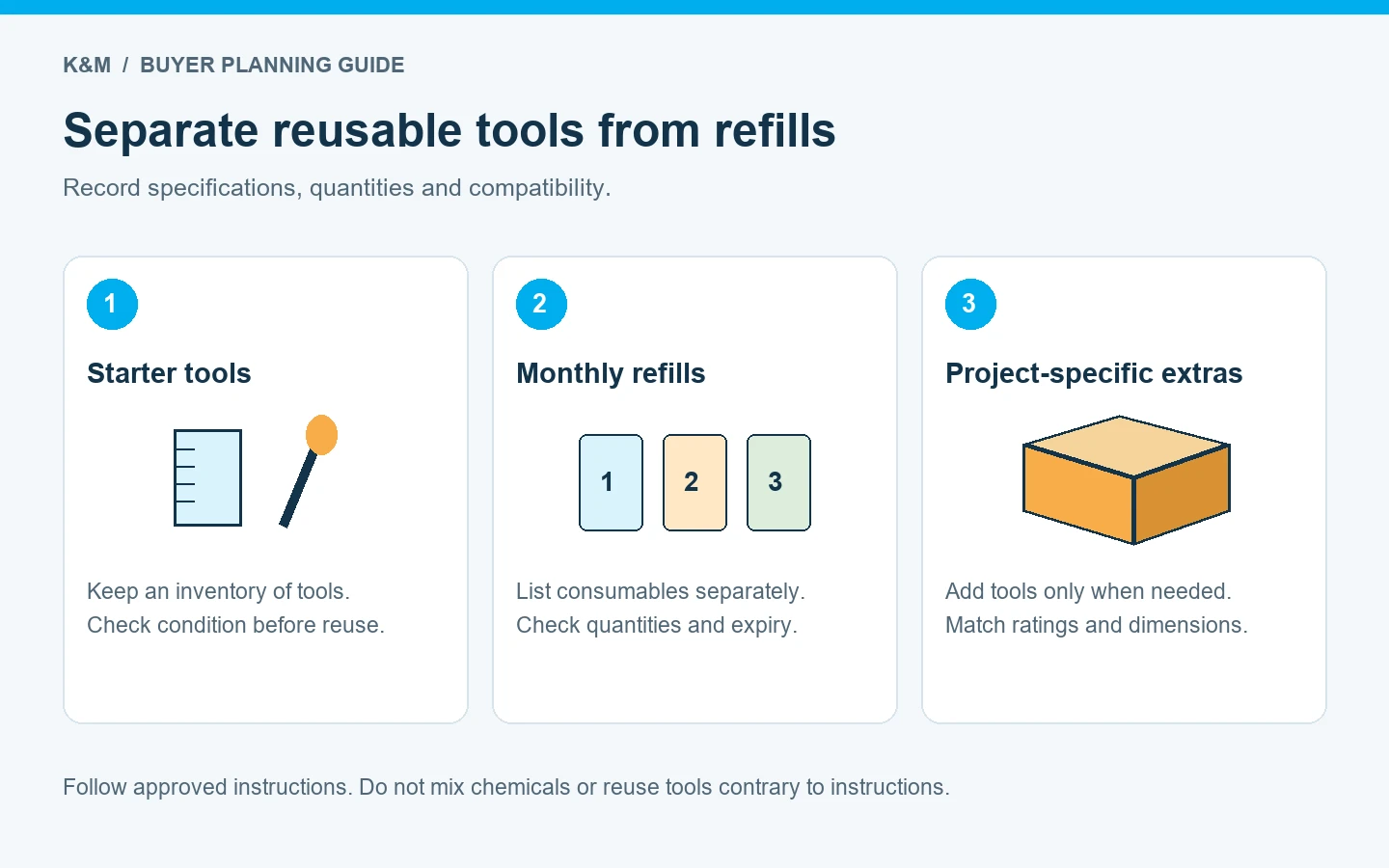
Keep a tool list with quantities, specifications, and condition. Record consumables separately, including remaining amounts and expiry dates where supplied.
If every monthly box contains one measuring cup and two droppers, 12 deliveries add up to 12 cups and 24 droppers. Ask which can be reused and whether the supplier offers a lower-priced refill version.
- A cup marked every 10 mL is generally unsuitable when the instructions require an accurate 5 mL measurement.
- Two children working independently may need two tool sets if they cannot share during the activity.
- Electrical replacements must match the required ratings and connectors.
- Dedicated droppers should stay with their assigned materials. Equipment used with experiment chemicals should not return to food preparation.
For bulk orders, give complete kits and refills separate product codes and packing lists with component quantities. Mark each later project with the tools it expects users to retain. A refill should not arrive with instructions that assume an unlisted tool is included.
Choose the Right Supply Route
| Source | What to Verify |
|---|---|
| Subscription brand | Delivery history, project exclusions, and skip or swap options |
| Individual-kit store | Published contents and the ability to choose each project |
| Educational supplier | Refill quantities, tool compatibility, and minimum orders |
| Custom kit manufacturer | Separate monthly specifications, samples, minimum quantities, and production schedules |
Search terms such as “science subscription box choose your projects” and “science experiment refill pack” can narrow the options. Check age suitability and shipping coverage before comparing prices.
If you are sourcing custom science kits for a subscription business, submit one schedule covering all planned months. List the experiment, supplied materials, retained tools, and quantity for each month. Ask whether minimum orders apply to each monthly kit or to the combined order.
Confirm Duplicate and Renewal Terms
Ask whether “no repeats” covers the actual experiments or only box names. Confirm whether previous single-kit purchases, gifts, and orders through other stores count.
- Swaps: Which overlaps qualify, must the box remain unopened, and who pays both shipping charges?
- Pauses: What is the request deadline, and does the original sequence resume afterward?
- Cancellations: When is the next charge, and what happens to prepaid deliveries?
For household subscriptions, the U.S. Federal Trade Commission advises checking cancellation terms before signing up, keeping cancellation records, and checking for later charges.[1]
We have completed [projects] and own [tools and specifications]. Please confirm which proposed kits overlap, whether compatible refills are available, and the fees and deadlines for swaps, pauses, and cancellations.
If a duplicate arrives, save the order number, product code, and earlier kit details. Check the return terms before opening it; if the seller requests photos inside, confirm that opening the box will not affect the return.
Compare Total Costs
The following prices are hypothetical, in Chinese yuan: CNY 180 per complete box, or CNY 240 for starter tools plus CNY 110 per refill. Both options cover comparable projects for the same number of users. Shipping, taxes, and extra parts are excluded.
| Deliveries | Complete Boxes | Starter Tools + Refills |
|---|---|---|
| 3 | CNY 540 | CNY 570 |
| 4 | CNY 720 | CNY 680 |
| 6 | CNY 1,080 | CNY 900 |
In this example, refills become cheaper at the fourth delivery. The six-delivery saving is CNY 180. An additional CNY 180 in shipping, taxes, or missing parts would erase that saving.
For custom production, request separate figures for samples, tools, monthly materials, packaging, testing, and freight. Keep order quantities and delivery terms identical when comparing quotes.
Test Before Committing
Try one or two boxes before a longer household subscription. For a custom range, check a packed sample of each monthly version before approving production.
Record repeated activities, missing parts, adult-help steps, extra purchases, and setup-to-cleanup time. A 25-minute activity takes 45 minutes if setup and cleanup each add 10 minutes.
If two boxes contain six projects and only two are completed, four remain. At two projects per month, a two-month pause could clear the backlog. Check material expiry dates and storage requirements first.
Check Instructions and Safety
Match the instructions to the supplied materials, tool sizes, and quantities. For orders serving several countries, check the manual’s language and printed layout in a finished sample, including measurements, diagrams, and warnings.
Check age guidance, adult supervision requirements, material labels, and storage and disposal instructions. Chemical-containing kits should include relevant use restrictions and accidental-exposure instructions; a “non-toxic” claim alone does not provide that information.
The U.S. Consumer Product Safety Commission advises following toy age guidance and keeping small balls and toys with small parts away from children under three.[2]
Do not create new activities by combining chemicals from separate boxes, increasing quantities, or changing heating or sealing conditions without approved instructions.