

To turn a craft idea into a private label collection, set the target age, activity, selling price and sales market first. Test a complete sample, approve the materials and packaging, and confirm the applicable safety requirements before production. Build the range around different projects, price points or pack sizes—not just different pictures on the same box.
Choose the Development Route
The first decision is how much of the product needs to change. Reusing an existing activity with new artwork is a different job from developing new tools, materials and instructions.
| Route | What changes | What to confirm |
|---|---|---|
| Existing kit with your branding | Logo, printed box, labels and approved language versions | Rights to use the existing design and minimums for custom printing |
| Adapted supplier design | Colors, themes, material quantities, tools or project mix | Which changes affect sampling, testing and production minimums |
| New product development | Original components, activity design, tooling and packaging | Development fees, tooling ownership, design rights and approval stages |
For OEM production using your own design, supply the artwork and component specifications. An ODM development arrangement can include supplier design work. Put the actual responsibilities in the agreement; the label alone does not establish who owns the finished design.
Ask whether the minimum order applies per activity, color, box design or total order. A hypothetical 500-set minimum per design means 2,000 sets for four designs—not 500 sets split across the range.
Write the Product Brief
Send every shortlisted supplier the same brief. Include the target age, sales country, finished project, number of users, target retail price, opening quantity and required arrival date. List any tools the customer must provide.
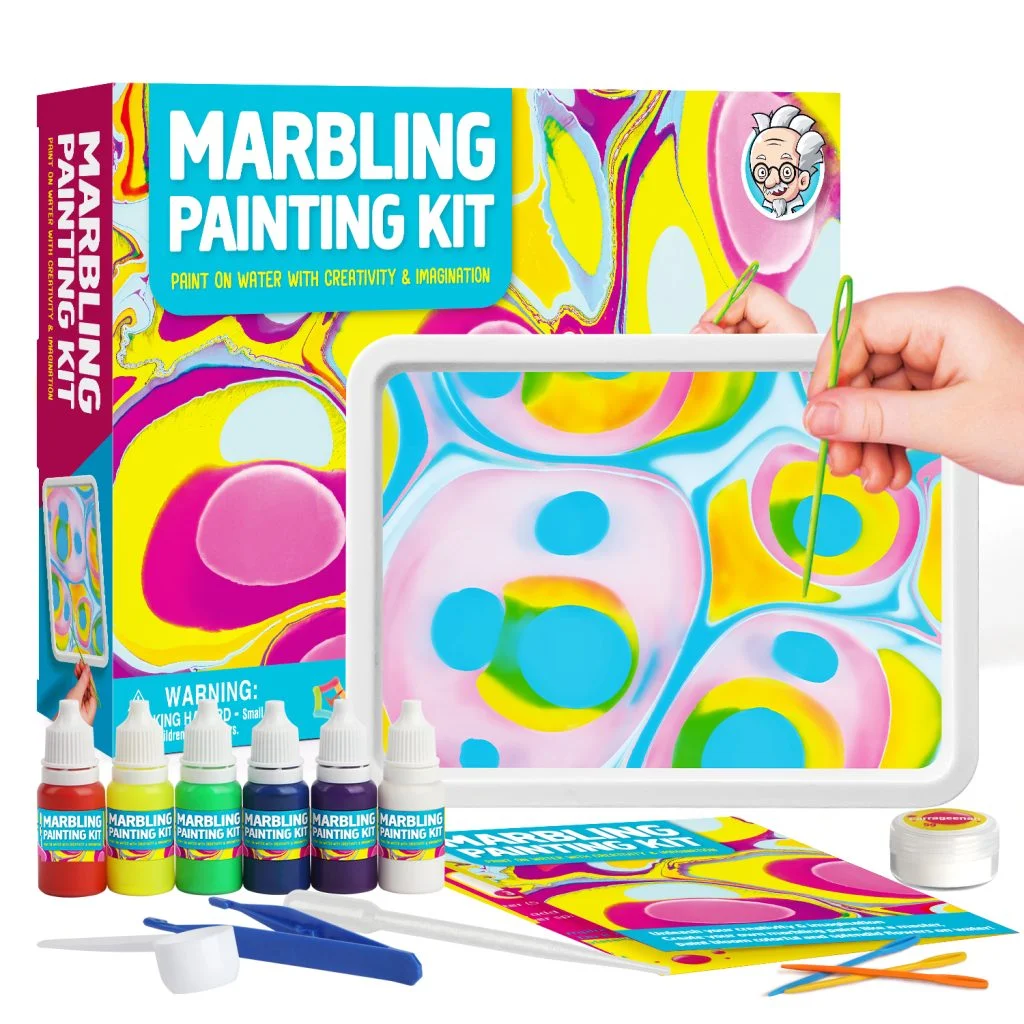
Example brief: A painting kit for one user, with materials for four finished cards, a target retail price of $24 and English-language instructions. The proposed hands-on time is 45 minutes; drying time must be measured separately. The opening order is 1,000 sets across two designs, subject to confirmed minimums.
For painting, clay, paper craft and jewelry kits, specify usable quantities rather than total piece counts. Record paint volume, clay weight, paper size or cord length. A box with 200 decorations and four backing cards still makes four cards.
Test the Complete Activity
Run a small usability trial with 10–20 intended users. For children’s kits, arrange suitable adult supervision and complete the safety review needed before handling prototypes. Give participants the instructions and only the supplies listed on the box.
Record completion time, requests for help, material shortages, unclear steps and cleanup. Photograph the finished work with permission. If a participant needs scissors that the packaging never mentioned, correct the contents or the claim before printing.
A trial result needs a denominator. “Eight of ten participants finished without help” describes the sample; it does not prove that 80% of all customers will succeed. Record which steps stopped the other two and retest the revised instructions.
Review customer complaints about comparable kits, too. Categorize missing parts, unclear instructions, damaged materials and misleading photos. Calculate percentages only from a recorded sample; do not assume these issues account for a fixed share of complaints.
Approve Samples and Packaging
Keep a dated approval pack containing the bill of materials, component specifications, signed reference sample, instruction version and packaging files. Both buyer and supplier should retain matching records.
- Materials: Identify paint, adhesive, clay and other relevant formulations or supplier codes.
- Contents: State quantities, dimensions, colors and any agreed extras.
- Instructions: Separate hands-on time from drying, curing or setting time.
- Packaging: Confirm box dimensions, inner protection, barcode position and carton quantities.
- Changes: Require written approval for substitutions and review their effect on safety, testing and performance.
Specify spare parts by count. If a bracelet needs 40 beads, adding two gives a 5% bead allowance. It does not necessarily increase the total kit cost by 5%, and it does not replace accurate packing.
Measure packaging costs before committing to a box. Increasing a box from 20 × 15 × 5 cm to 22 × 17 × 7 cm raises its volume from 1,500 to 2,618 cm³—about 75%. The shipping charge depends on the carrier’s weight rules and service, but that size change is worth quoting.
Use photos of the approved product and achievable finished projects. A short overhead video can show difficult steps; keep written instructions and safety information available without requiring a phone.
Calculate Both Sales Models
Price direct sales and wholesale separately. Wholesale revenue is the price paid by the retailer, not the suggested retail price minus a cost-table allowance.
| Unit economics | Direct-sale example | Wholesale example |
|---|---|---|
| Net sales revenue | $24 | $12 |
| Factory cost, including packaging | $6 | $6 |
| Allocated landing costs | $2 | $2 |
| Channel, payment and fulfillment costs | $5 | $1 |
| After-sales allowance not counted elsewhere | $1 | $0.50 |
| Contribution before fixed overheads | $10 | $2.50 |
These examples assume net revenue excludes sales taxes, discounts and refunds. Landing costs must include the relevant freight, duties and receiving expenses. Count development, tooling and testing separately if they have not been allocated to unit cost.
With an $8 landed product cost, gross margin is 66.7% on the $24 sale and 33.3% on the $12 sale. After the other listed variable costs, contribution falls to $10 and $2.50. The same kit can support direct sales while leaving much less room for wholesale.
Request separate quotations for samples, tooling, testing, packaging, production and freight. A fixed 4× or 5× markup cannot account for all of them.
Confirm Safety Requirements
Classify the kit before ordering tests. The intended user, marketing, materials and finished activity matter. Not every craft kit falls within toy rules; some hobby, craft and art products are excluded from ASTM F963’s scope when the material or finished item is not primarily of play value. Where the U.S. mandatory toy standard applies, its applicable requirements are legal obligations, not optional retailer preferences.[1]
U.S. Market
Products covered by the small-parts ban cannot be sold for children under three if they present the prohibited hazard. Certain product categories have exclusions, so assess the actual kit. A warning label does not override a ban.[2]
Children’s products intended primarily for ages 12 or younger and subject to applicable CPSC safety rules generally require third-party testing and a Children’s Product Certificate, subject to relevant exceptions. The domestic manufacturer or importer issues the CPC; a laboratory report alone is not the certificate.[3]
Art materials have separate toxicological assessment and labeling requirements under LHAMA. A “Conforms to ASTM D-4236” statement does not establish compliance for every component or hazard in the kit.[4]
EU Market
For kits classified as toys, confirm the applicable safety assessment, technical documentation, conformity assessment, declaration and CE marking requirements. The European Commission states that the new Toy Safety Regulation (EU) 2025/2509 starts applying on August 1, 2030, following its transition period. Plan against the requirements applicable when the product enters the market.[5]

Ask a qualified laboratory or compliance adviser for a written test scope and quotation. Costs depend on the product, materials and markets; one universal testing budget would be misleading. Adult positioning does not automatically remove art-material, chemical or general product-safety obligations.
Build the Retail Collection
Use a small opening range to test distinct offers. The following eight-SKU plan is an example, not a required assortment or forecast.
| Role | Example allocation | Difference the customer receives |
|---|---|---|
| Entry | 2 SKUs at $8–$12 | A smaller project with fewer steps and a lower purchase price |
| Core | 4 SKUs at $18–$28 | More finished pieces, materials or a reusable tool |
| Gift or group | 2 SKUs at $35–$50 | Additional projects, gift presentation or materials for a stated number of users |
For a group pack, count simultaneous users as well as finished projects. Materials for 12 children with four shared brushes create a different session from 12 individually equipped places.
Give each SKU a clear role when planning ages, price levels and pack sizes. New artwork adds choice, but it does not fill a missing activity or price point. Keep box sizes consistent where practical without forcing every kit into oversized packaging.
The buyer sheet should show product photos, contents, age guidance, wholesale price, suggested retail price, order minimums, case quantities, dimensions and confirmed lead times. Identify the compliance documents available for each model rather than claiming that the whole range is “certified.”
Inspect and Schedule the Order
Before production, agree on critical, major and minor defects, the sampling plan and rejection rules. Missing safety information and a minor print mark need different treatment. AQL values do not guarantee a fixed defect rate in the delivered batch.
Check packed samples against the approved records. Complete an activity from a production sample, verify component counts and inspect seals, labels and instruction versions. Choose transport testing for the package weight and distribution route rather than applying one drop height to every carton.
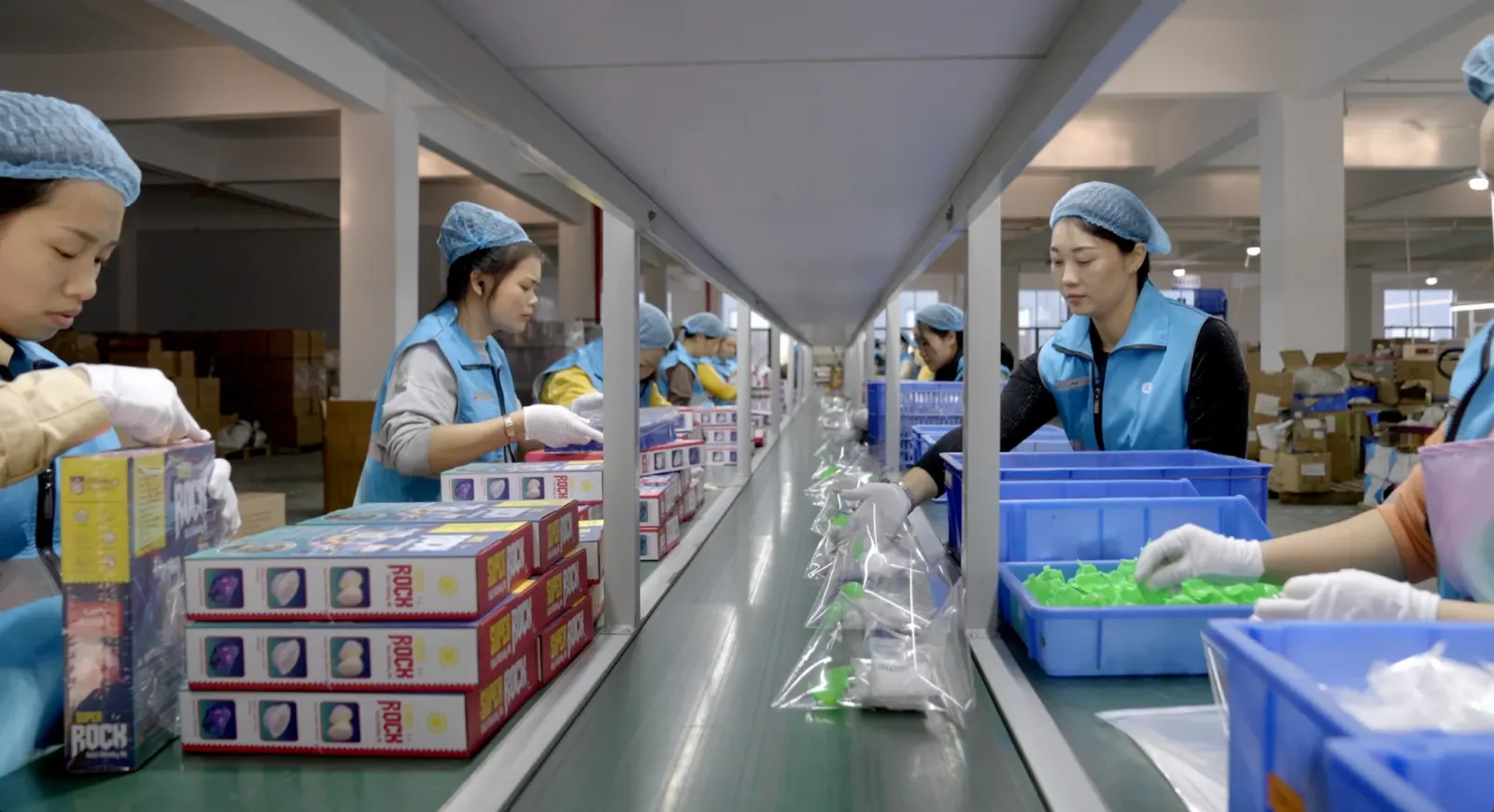
An illustrative schedule could allow two weeks for the brief, three for samples, three for testing and packaging in parallel, four for production, and four for freight and receiving: 16 weeks in total. Add contingency separately. Retesting, tooling changes and transport delays can extend that schedule.
Set the order deadline by working backward from the required warehouse arrival date. Payment terms, shipping terms and responsibility for delays belong in the purchase agreement.
Reorder From Sales Records
Under a simple continuous-review model, a kit selling 10 units a week with a four-week replenishment lead time and 20 units of safety stock has a reorder point of 10 × 4 + 20 = 60 units.
If 35 units are available, 30 are confirmed inbound and 10 are committed to unfilled orders, inventory position is 35 + 30 − 10 = 55 units. Review replenishment. This example assumes reasonably steady demand; seasonal peaks and fixed ordering schedules need additional allowances.
Track contribution, stockouts, missing-part complaints and sell-through by SKU. Add a refill or new design when records show demand for it—not because the collection has reached an arbitrary review score or repeat-purchase percentage.
Request a quote for your craft kit brief
Send K&M your activity, target age, sales country, quantity per design, packaging needs and required arrival date. Ask for separate development, testing, production and freight costs, along with sample arrangements and minimum orders.