
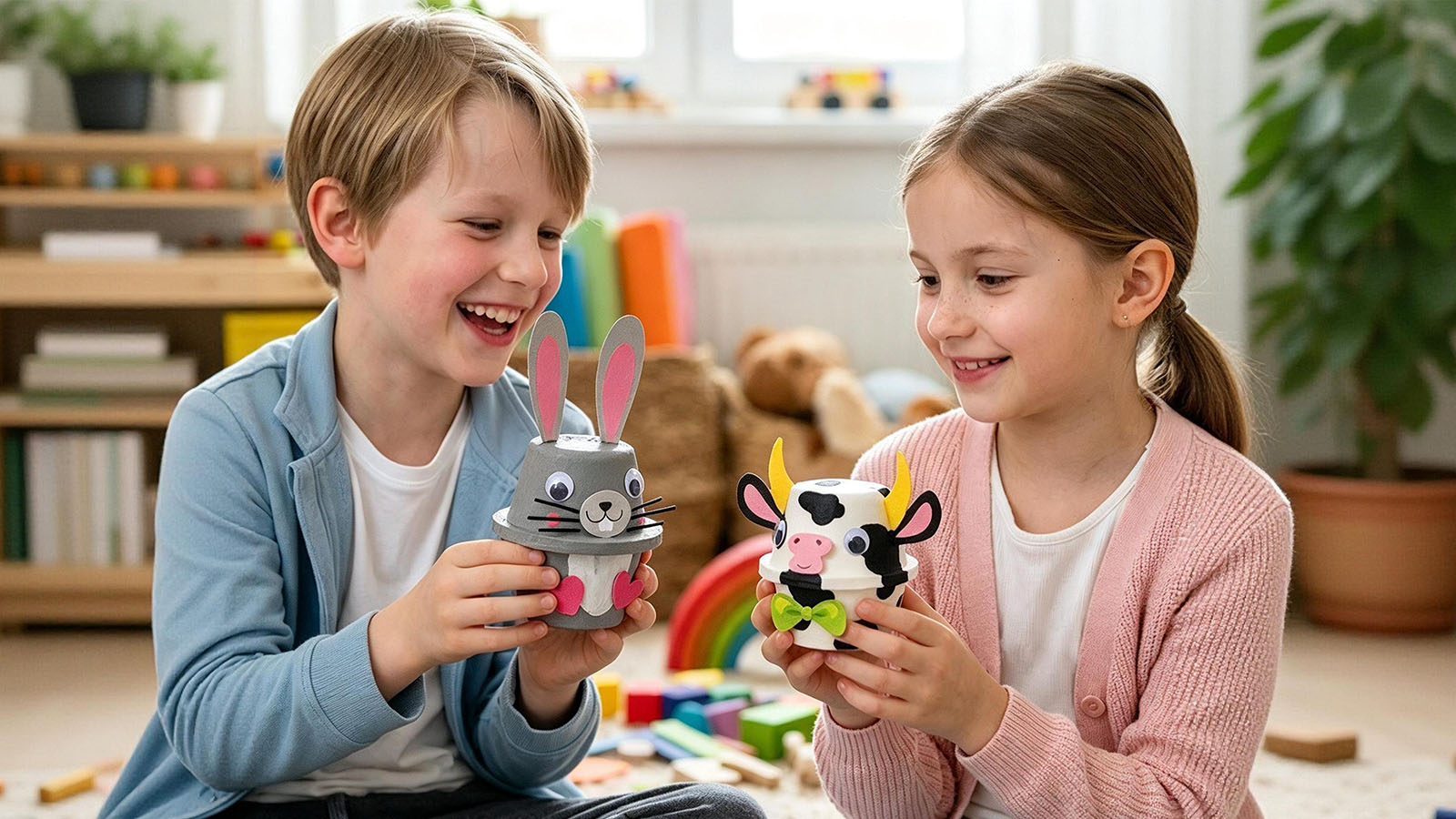
A balanced wholesale craft kit range gives your main customers a choice of age-appropriate activities, prices, and pack sizes. Start with year-round kits, add a smaller gift selection, and limit seasonal or unfamiliar products to trial orders. Set stock quantities by demand and restock time rather than buying equal amounts of every design.
Before adding a kit, check what it contributes: a missing age group, a different craft activity, a lower or higher price, or a group-use format. A new picture on an otherwise identical kit adds theme choice, but does not fill those gaps.
The quantities, prices, and sales figures below are planning examples, not industry averages, test results, or K&M quotations. Monetary examples use Chinese yuan (CNY).
Choose the Customer and Age Range
| Customer | Details to compare |
|---|---|
| Families | Adult help, extra supplies, working time, and cleanup |
| Gift buyers | Age label, finished projects, box contents, and presentation |
| Teachers and event organizers | Participant count, shared tools, session length, and cost per child |
List each candidate product’s stated age range beside its actual tasks: peeling, cutting, threading, knotting, reading, or assembling. If your customers buy for several ages, check whether the shortlist serves each group. Do not assume that every kit labeled “6+” offers the same difficulty or suits every older child.
Keep supplier age information and warnings intact while reviewing suitability. In the U.S., products intended for children under three are subject to restrictions on prohibited small parts; some products for older children require choking-hazard warnings. A warning label is not a substitute for meeting the applicable requirements.[1]
Plan the Opening Range
| Product role | 20-product example | Selection condition |
|---|---|---|
| Year-round kits | 12 | No holiday-dependent use; repeat supply available |
| Gift and advanced sets | 4 | Different projects, tools, materials, or difficulty |
| Seasonal kits | 2 | Confirmed arrival date and selling window |
| New activities | 2 | A clear gap in the range and an affordable trial order |
Assign each product one main role. Count a holiday gift box as seasonal rather than twice. These figures allocate product choices, not stock units or spending.
A smaller range could contain eight year-round kits, two gift sets, one seasonal kit, and one new activity. If a supplier allows 12 units per product and landed cost remains CNY 24, the 12-product order costs CNY 3,456; the 20-product order costs CNY 5,760.
Check whether you are buying stock or commissioning production. Small carton orders may be available for existing stock. Custom materials, printed boxes, or new tooling can require different minimums. The 12-unit example is not a promised factory MOQ.
Compare Activities and Contents
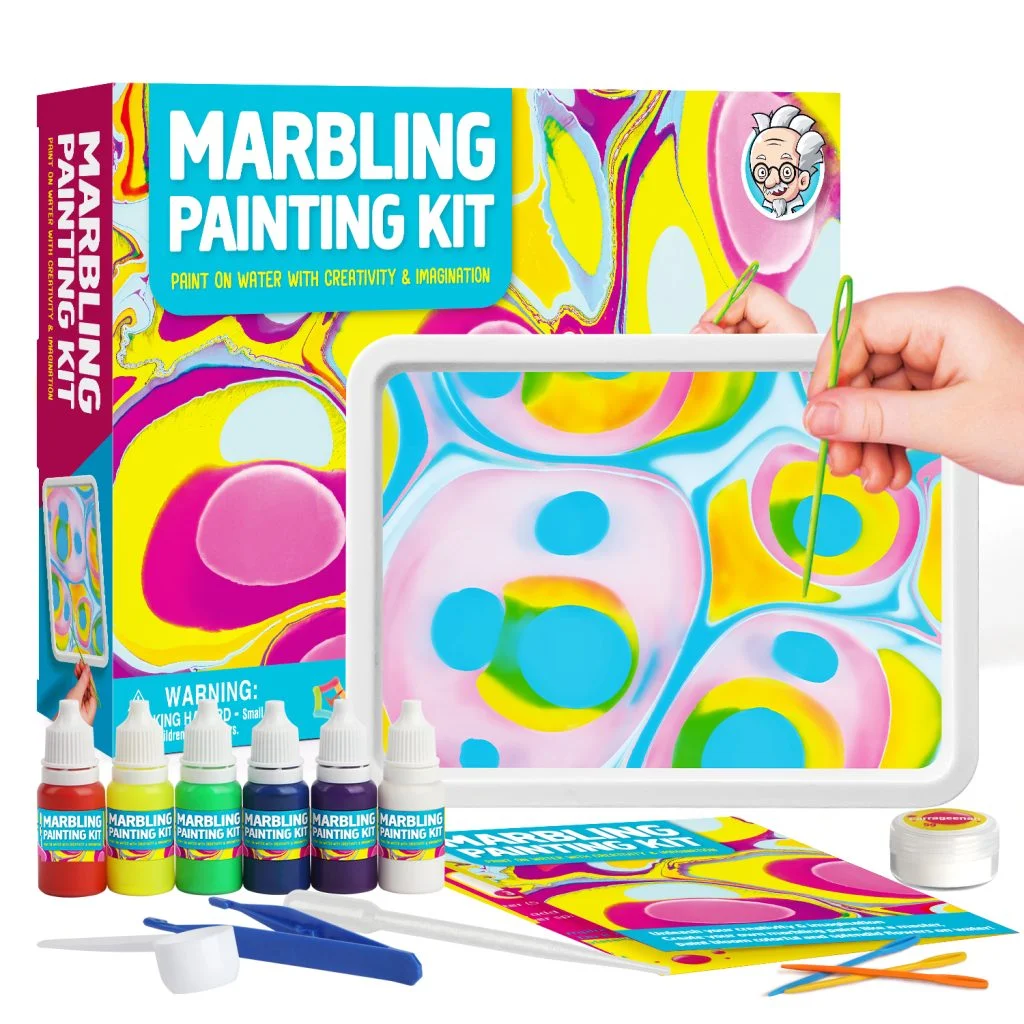
For painting, paper craft, clay, and build-and-paint kits, record the material quantity, tools, finished projects, and preparation needed.
- Painting: paint coverage, drying time, and cleanup.
- Paper crafts: pre-cut pieces, scissors, and adhesive.
- Clay: material weight, seals, and storage instructions.
- Textile crafts: threading, knotting, and adult assistance.
- Model building: part fit, connections, and finished stability.
A box with 200 decorative pieces and four backing boards should state that it makes four pictures. Record hands-on time separately from drying time.
Price Levels
Show what changes between entry-level, mid-range, and gift options. For example, a hypothetical CNY 39 kit might make two pieces, while a CNY 69 kit makes six and includes a reusable tool. Compare those contents beside the price; “Basic” and “Deluxe” alone do not explain the difference.
Group Packs
Example specification: Materials for 12 children to make one piece each, with four glue sticks shared between groups of three.
Test the sharing arrangement before promising a session length. As with individual packs and shared activity sets, material quantities alone do not establish how many children can work at once.
A CNY 120 kit requiring CNY 24 in extra tools costs CNY 12 per child for first-session materials and tools: (120 + 24) ÷ 12. Staff and venue costs are separate.
Approve Samples and Records
Complete a retail-ready sample using only its instructions and listed supplies. Record shortages, unclear steps, preparation time, adult help, finished stability, and cleanup. Keep the approved contents list and packaging version with the order.

- Match model numbers, sample photos, materials, age labels, and test scope.
- Ask how material substitutions are approved and whether they require further testing.
- Check warnings, instructions, batch identification, and relevant storage conditions.
- Agree on missing-part replacements, defect handling, and repeat-order specifications.
For the U.S. market, products intended primarily for children aged 12 or younger and subject to applicable children’s product safety rules generally require third-party testing and certification, subject to the relevant exceptions. The domestic manufacturer or importer issues the Children’s Product Certificate (CPC).[2]
Regulated art materials also require the applicable toxicological assessment and labeling under LHAMA. A “Conforms to ASTM D-4236” statement does not establish compliance for the entire kit.[3]
A successful sample activity does not replace compliance testing. For other destinations, confirm local requirements before approving labels and production.
Compare Quotes on the Same Basis
Send each supplier the same contents list, packaging requirements, quantities, delivery destination, and required arrival date. Request separate prices for samples, testing, tooling, production, and freight where applicable. Confirm what the shipping terms include before comparing totals.
For OEM orders using your own design, include artwork and component specifications. Record whether the minimum applies per product, color, packaging version, or total order.
| Item | Amount |
|---|---|
| Purchase price | CNY 18 |
| Allocated freight, inspection, labeling, and other landing costs | CNY 6 |
| Total landed cost | CNY 24 |
| Net sales revenue | CNY 49 |
| Marketplace, payment, and fulfillment costs | CNY 10 |
| Expected after-sales losses not counted elsewhere | CNY 2 |
| Contribution per unit | CNY 13 |
Net revenue excludes discounts, refunds, and applicable sales taxes. Do not count the same refund again under after-sales losses. The CNY 13 contribution is before fixed overheads. Any development or tooling charges omitted from unit costs must also be recovered.
If net revenue falls to CNY 39 while other unit costs remain unchanged, contribution drops to CNY 3. Recalculate percentage-based selling fees for an actual promotion.
Set Reorder Points
A kit selling 10 units a week, with a four-week lead time and provisional safety stock of 20 units, has a reorder point of 10 × 4 + 20 = 60 units.
With 35 available, 30 confirmed on the way, and 10 committed to unfilled orders, the inventory position is 35 + 30 − 10 = 55 units. Review replenishment. If lead time increases to six weeks, the reorder point becomes 80 units, assuming other conditions stay unchanged.
This example assumes ongoing stock checks and reasonably steady demand. Fixed ordering schedules need an allowance for the time between reviews. Calculate order quantities separately, allowing for carton sizes, minimum orders, available cash, and existing stock.
Seasonal Deadlines
For an October 1 launch, an example allowance of three weeks for production, two for shipping, one for receiving checks, and two for delays totals eight weeks. Order confirmation would fall around August 6. Use the supplier’s confirmed schedule for an actual purchase.
If sales end on October 31, an October 10 reorder with a four-week lead time would arrive too late. Set the last reorder date before the season begins.
Keep, Change, or Drop Products
| Evidence | Decision |
|---|---|
| Steady sales, acceptable contribution, few product complaints | Retain and update the reorder calculation |
| Repeated questions about tools or contents | Correct the listing before judging demand |
| Repeated defects in one batch | Inspect stock and resolve the supplier issue before reordering |
| Weak sales despite adequate availability and exposure | Reduce or stop replenishment; check whether another kit already serves the same need |
Compare products over the same period and record stockouts. Selling 28 units during 14 available days, followed by 14 days without stock, gives a four-week average of seven units a week and an in-stock average of 14. Neither figure alone establishes future demand.
Add refill packs only after checking which materials customers use up and whether compatible replacements are requested. State the refill quantity and compatible kit models. A request for more clay is useful evidence; it is not yet a repeat order.
Get a quote for your craft kit shortlist
Send K&M your activities, target ages, sales country, quantities, packaging needs, and required arrival date. Specify whether you need existing designs or custom development, and request itemized prices, minimum orders, sample arrangements, and lead times.