
To become an educational toy distributor, register your business, choose your sales market and channel, and apply to suitable brands or suppliers. Before buying stock, confirm your sales rights, minimum order, product compliance, delivery terms and after-sales responsibilities in writing. Start with a trial order you can afford to hold while you build sales.
This guide covers supplier selection and launch planning, with U.S. and EU compliance examples. Dollar amounts below are hypothetical USD calculations, not market averages or K&M quotations.
Choose Your Sales Channel
Choose one main customer group before requesting a catalog. A classroom buyer needs enough materials for a session; a gift shop needs a complete retail pack. Those requirements change the contents, packaging and price you should quote.
| Channel | What to establish first |
|---|---|
| Independent shops | Retail price, retailer margin, carton quantity and restock availability. |
| Schools and activity centers | Participant count, tools per group, instructions, refills and payment terms. |
| Online retail | Marketplace permission, fulfillment cost, listing assets and returns handling. |
Compare existing-brand distribution, OEM and ODM supply separately. Selling an established brand requires permission for the intended territory and channel. Private-label supply adds decisions about your own branding, specifications and compliance responsibilities.
Prepare Your Brand Application
Send a short business profile with your first inquiry. Include your registered business name, sales country, store or website details, customer type, intended age range and opening-order budget. If you are new, provide a launch plan rather than claiming a customer network you do not have.
Request these details from each shortlisted supplier:
- Order quantities: minimum per SKU, units per carton, mixed-carton options and separate minimums for custom packaging.
- Prices: currency, quantity breaks, quotation validity, named delivery term and location, and excluded charges.
- Availability: stock on hand, production lead time, repeat-order lead time and discontinued-item policy.
- Documents and support: model-specific compliance records, samples, instructions, product images and replacement arrangements.
Compare quotes for the same contents, quantities and delivery destination. A lower factory price can disappear once freight, labeling, inspection and import charges are added. Verify the supplier’s legal name and payment details before transferring funds.
Agree on Distribution Terms
The agreement should identify the products, territory, permitted channels, term, renewal conditions and any exclusivity targets. It should also cover payment, defects, unsold stock, termination and the period allowed to sell remaining stock after termination.
Separate an order deposit from an exclusivity fee or security deposit. Record what each payment covers and when it is refundable. For an exclusive territory, check whether the brand can still sell directly, supply national chains or appoint online sellers there.
Check Product Compliance
Check the exact model and configuration, not just the supplier’s certificate folder. Match product photos, materials, age grading and model numbers to the supporting reports. Ask who approves substitutions and whether a change requires further assessment or testing.
United States
ASTM F963 is incorporated into the mandatory U.S. toy safety framework. The applicable sections depend on the toy; requirements for lead, certain phthalates and other hazards may also apply. Toys intended primarily for children aged 12 or younger generally require applicable third-party testing and certification, subject to relevant exceptions.[1]
For products requiring a Children’s Product Certificate (CPC), the responsible domestic manufacturer or importer issues the certificate based on the required evidence. A laboratory report alone is not a CPC. Confirm the certificate, supporting reports and applicable tracking-label information for the product you will sell.[2]
A choking-hazard warning does not make a prohibited small-parts toy suitable for children under three. Certain products for older children also require warnings, including in relevant advertising.[3]
For imports subject to CPSC certification, coordinate certificate-data eFiling with your customs broker. The general implementation date was July 8, 2026; the specified Foreign Trade Zone scenario has a January 8, 2027 date.[4]
European Union
Confirm the conformity assessment, CE marking, Declaration of Conformity, technical documentation, traceability and required warnings and instructions. Agree on the manufacturer, importer and distributor responsibilities. A generic “CE certificate” is not a substitute for the required compliance file.[5]
As of October 2026, Directive 2009/48/EC remains the main toy-specific framework during the transition. Regulation (EU) 2025/2509 entered into force on January 1, 2026 and generally applies from August 1, 2030, introducing requirements including a digital product passport. Confirm the rules for the date your goods enter the market.[6]
Approve Samples Before Ordering
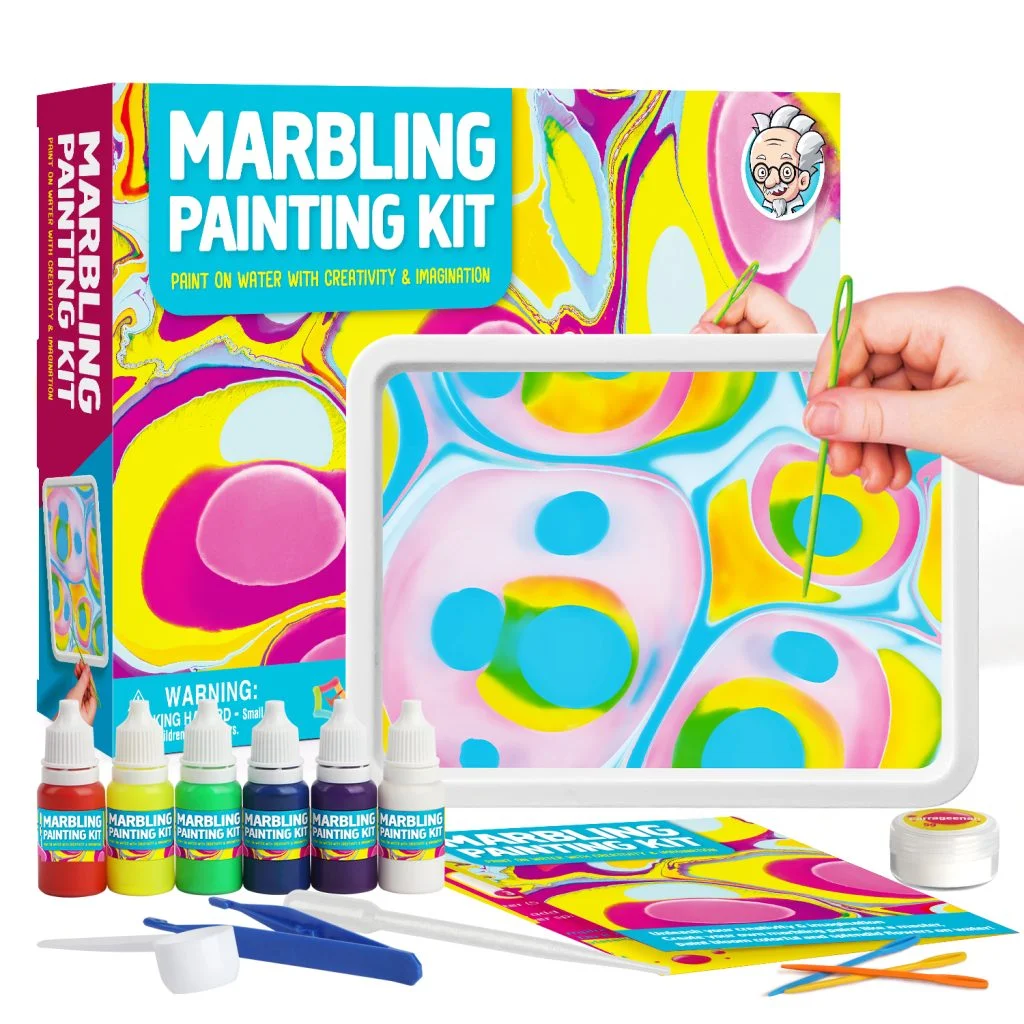
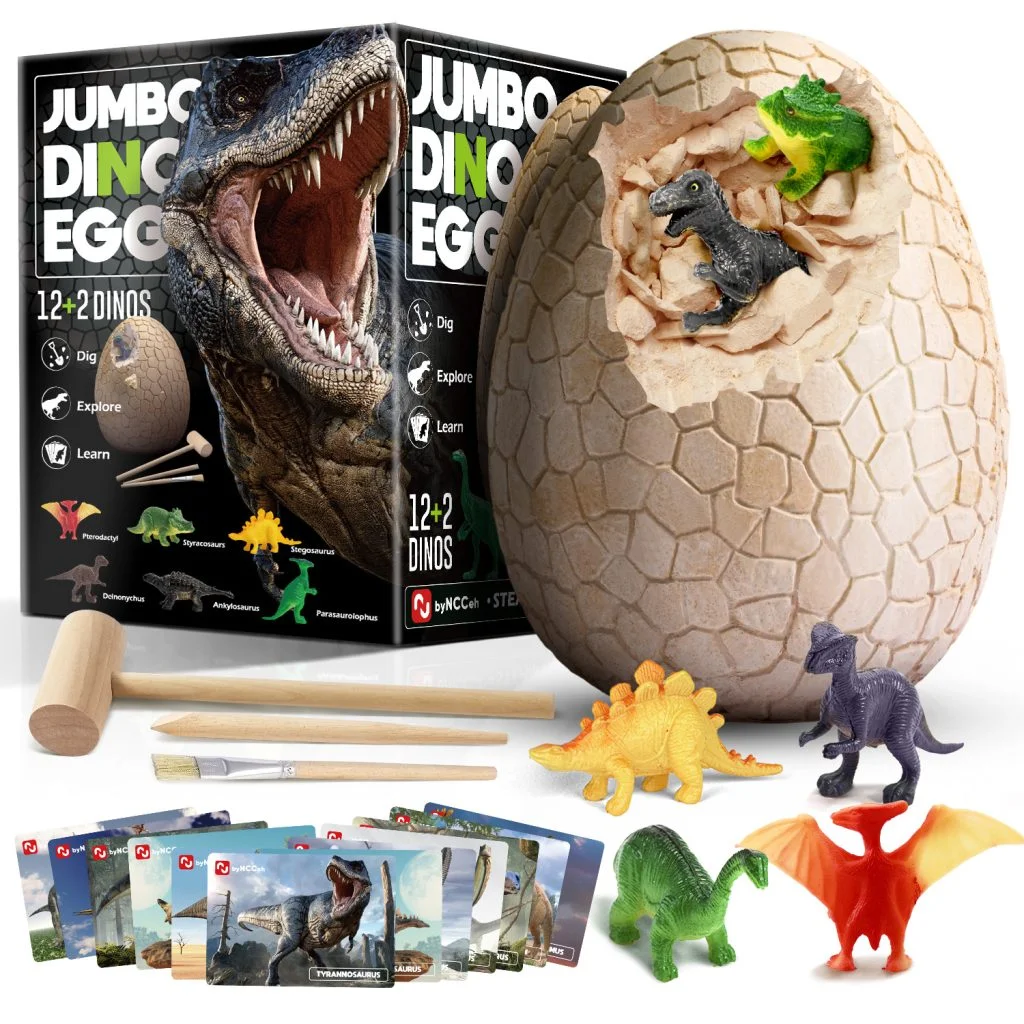
Build the shortlist around different activities, not several boxes with different artwork. For craft kits at different ages and price levels, compare finished projects, material quantities, extra supplies and adult help. For dinosaur dig kits, check blocks, tools, buried contents and cleanup.
Use a Sample Record
Request retail-ready samples in the proposed packaging. Follow the instructions through a complete activity and record the following checks. This is a practical buyer review, not a laboratory safety test or a statistically representative batch inspection.
| Check | Record |
|---|---|
| Contents | Expected and actual quantities, missing items, leaks and damaged components. |
| Activity | Setup, hands-on and cleanup time; unclear steps; extra materials and adult assistance. |
| Packaging | Model, barcode, age label, warnings, instruction language and packed dimensions. |
| Order approval | Dated photos, contents list, artwork version, agreed corrections and retained reference sample. |
For a hypothetical 24-child session, 24 dig blocks and 12 tools do not provide one tool per child. Quote extra tools or specify a turn-taking plan. Comparing individual packs with shared sets means checking cost per participant, not just cost per box.
For custom science-kit production, require a signed-off sample, final contents list, packaging artwork, warnings and carton marks before production approval. K&M’s published development process identifies these approval records; request the actual files for your order rather than treating a website description as proof.
Calculate Your Opening Budget
Your budget must cover landed stock, setup costs and the cash gap before customers pay. Obtain separate quotes for samples, testing, registration, insurance, storage and selling fees. Do not treat the supplier’s opening-order minimum as the total cost of starting.
Worked Wholesale Example
Assume a supplier accepts six SKUs at 50 units each. The figures below illustrate the calculation; they are not an available order offer. The example excludes recoverable taxes and assumes the $600 allocation covers all relevant costs of bringing this stock into inventory.
| Item | Calculation |
|---|---|
| Stock purchase | 300 units × $6 = $1,800 |
| Inbound freight, duties, inspection and labeling | $600 allocated across the order |
| Landed stock cost | $2,400 total; $8 per unit |
| Wholesale selling price | $12 per unit, excluding sales tax |
| Gross profit | $12 − $8 = $4 per unit; 33.3% gross margin |
| Outbound delivery, payment fees and after-sales allowance | $1 per unit combined |
| Contribution before fixed overhead | $3 per unit; $900 if all 300 units sell at the stated price |
At $1,200 in monthly fixed overhead, this $3 contribution requires 400 units a month to break even on operating costs. The trial order alone would not cover that month’s overhead. Discounts, refunds and additional launch costs would change the result.
If buyers pay 60 days after delivery but your supplier requires payment before shipment, you must fund the production and transit period as well as those 60 days. Faster stock movement does not automatically mean faster cash collection.
Launch and Manage Reorders
Offer a small selection with a wholesale price list, carton quantities, delivery terms, age information and a clear returns process. Track retailer purchases separately from sales to end customers; a retailer’s opening order is not proof of repeat demand.
Review sales, cash collected, available stock and complaints by SKU each week. Log missing parts separately from shipping damage, product defects and change-of-mind returns. Agree on who handles each problem, the response deadline and who pays replacement freight.
Reorder example: At 10 units sold per week, a four-week replenishment lead time and 20 units of safety stock give a reorder point of 60 units. Compare that with inventory on hand plus confirmed incoming stock minus unfilled orders. Recalculate when demand or lead time changes; choose the order quantity separately.
Pause an item with unresolved safety concerns or repeated defects. For slow sellers, check stock availability, price, product information and seasonal timing before discounting. A 20% discount means charging 80% of the original price; include the reduced contribution in your cash plan.
Common Questions
Can You Start Without Experience?
Yes, if the supplier accepts new businesses. Use an existing range, review samples and test one channel before committing to exclusive targets or custom packaging. Keep dated sample records and pilot sales results so the next order rests on evidence.
Do You Need a Warehouse?
Not necessarily. Compare your own storage with a fulfillment provider or an agreed supplier-direct arrangement. Confirm storage conditions, stock visibility, dispatch charges, returns handling and batch traceability before choosing.
Is There a Distributor License?
There is no single worldwide educational-toy distributor license. Check local business registration, tax, import and product requirements. Brand authorization is a separate commercial agreement and does not establish product compliance.
Commercial examples are hypothetical, not reported customer results or income forecasts. Supplier-process details describe published procedures, not an independent factory audit. Compliance notes summarize selected U.S. and EU requirements; confirm the rules for your exact product, role and destination before ordering.