
Dinosaur dig kits suit one-time excavation activities, non-electronic figures suit repeat play, and activity sets suit painting or assembly projects. Compare dig kits by blocks and tools per participant, models by size and construction, and activity sets by completed projects and supplies—not the total piece count on the box.
| Product type | Best fit | Quote details | Main trade-off |
|---|---|---|---|
| Dinosaur dig kits | Timed excavation activities and take-home discovery kits | Block dimensions and weight, buried pieces, tools and trays | The excavation is usually a one-time activity; preparation and cleanup add work |
| Non-electronic dinosaur models | Repeated handling, storytelling and display | Each figure’s dimensions, material, construction and packaging | Larger figures take more carton space; joints and thin parts need inspection |
| Dinosaur activity sets | Painting, assembly and group craft sessions | Models, brushes, paint volume, tools and instructions | Shared tools can limit participation; paint and other supplies may run out |
This is a purchasing comparison, not a hands-on product review. Prices, quantities and schedules are worked examples, not supplier quotes, market averages or test results. Prices are in Chinese yuan (CNY).
Dinosaur Dig Kits
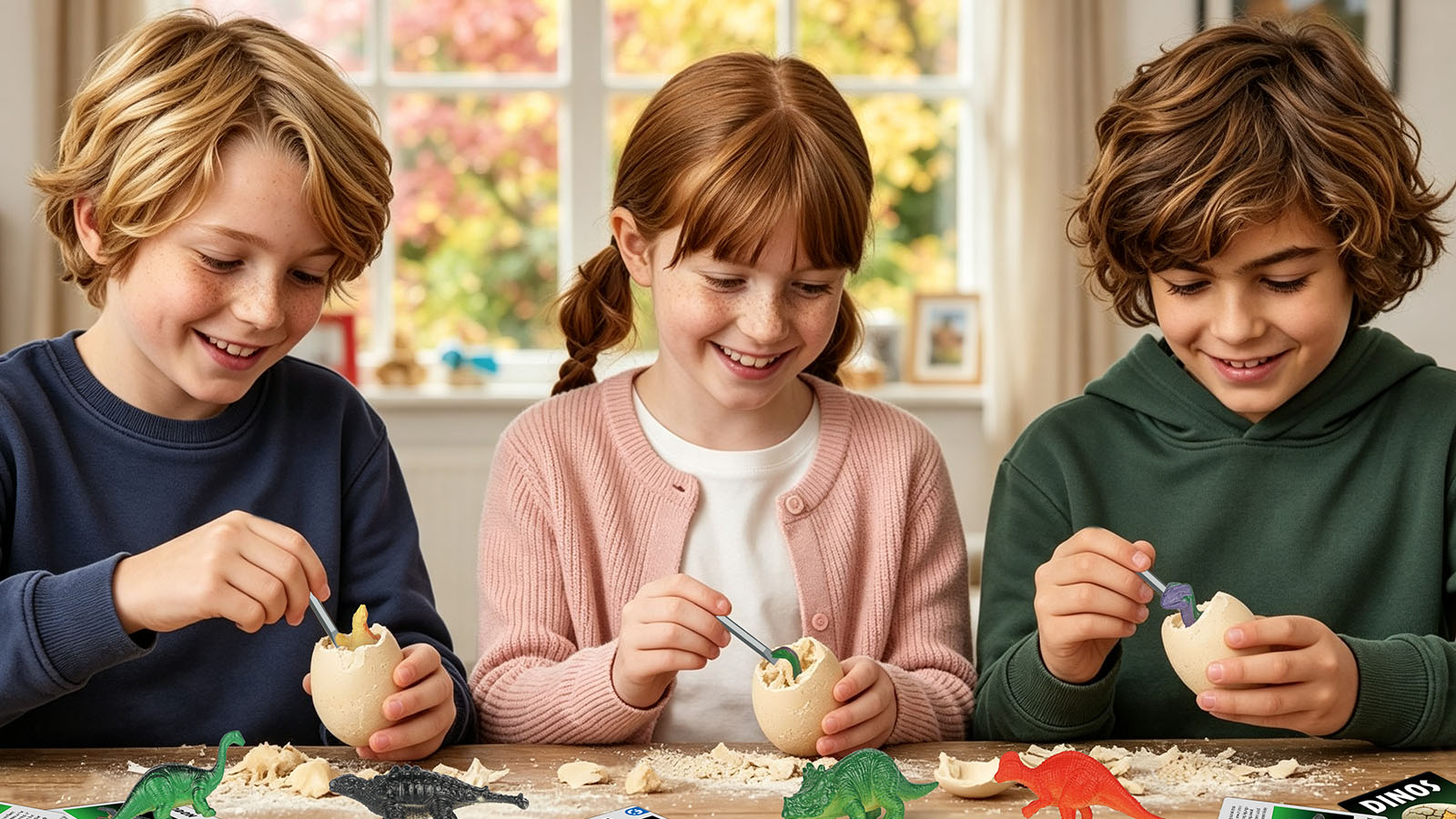
A 45-minute session could allow 5 minutes for setup, 25 for digging, 10 for examining the finds and 5 for cleanup. This schedule excludes skeleton assembly. A sample that takes 40 minutes just to excavate needs a longer session.
Record the user’s age, completion time and any adult help. An adult’s trial does not establish how long a child will need.
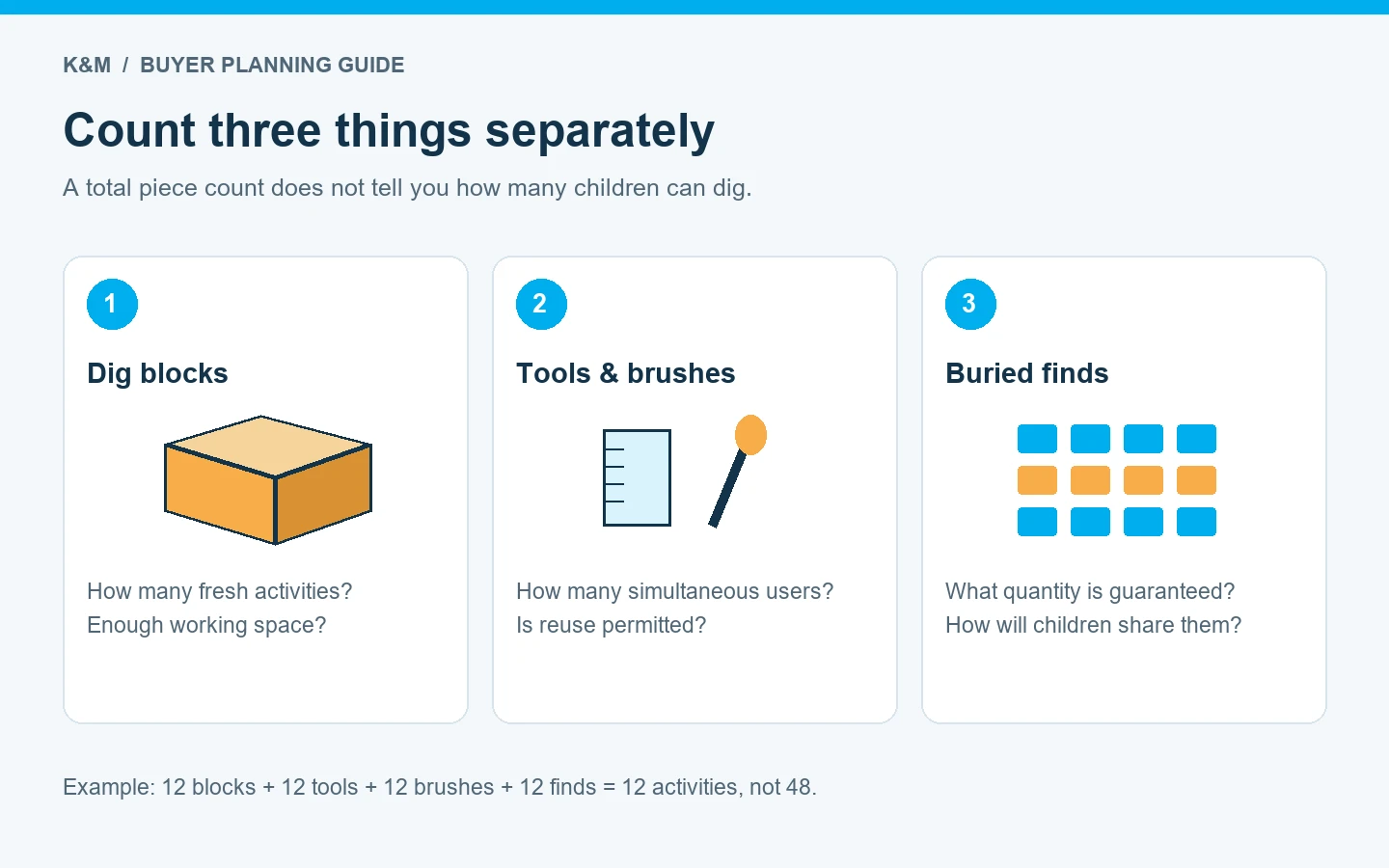
For individual packs and shared dig sets, count blocks and tools separately. Four children sharing one block and two tools will need turns, even if the block contains four finds.
- Photograph cracked blocks and powder leakage when opening samples.
- Record tools that slip, bend or break during instructed use.
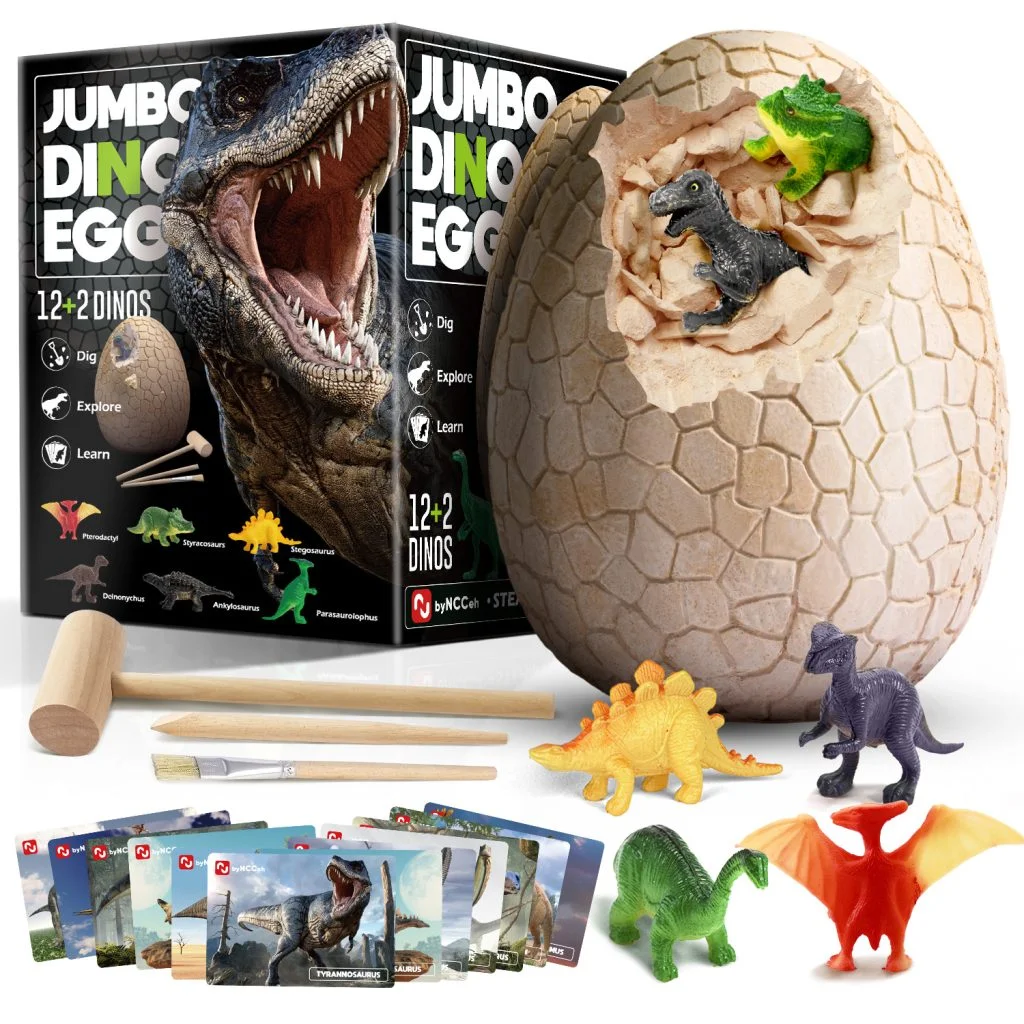
- Count the buried pieces and check skeleton connectors, glue requirements and standing balance.
- Confirm whether brushes and trays are included. Add water only if the instructions permit it.
- Describe manufactured bones as replicas or fossil models, not real fossils.
For custom dinosaur dig kits, record block dimensions, weight, buried contents and tool quantities in the approved specification.
If 30 kits cost CNY 600 and table covers and cleaning supplies cost CNY 90, materials cost CNY 23 per participant: (600 + 90) ÷ 30. Shipping, staff and venue costs are extra.
Dinosaur Models
Get the length, width and height of every figure, with photos beside a ruler. Compare 8 cm solid figures separately from 20 cm hollow figures with moving joints. Mixed sets need measurements for each design, not just the largest dinosaur.
| Measurement | Product A | Product B |
|---|---|---|
| Carton dimensions | 40 × 30 × 30 cm | 60 × 40 × 40 cm |
| Carton volume | 0.036 m³ | 0.096 m³ |
| Volume per set | 0.0015 m³ | 0.004 m³ |
Product B occupies 2.67 times the carton space per set. This is not a freight-cost ratio. Give the carrier the dimensions, gross weight, carton count and route for a shipping quote.
Stand each sample on a level table. Check for tipping, sticky paint, cracks, rough edges and loose joints, especially around tails, horns and necks. For educational packaging, verify each species name and separate dinosaurs from other prehistoric animals rather than labeling the whole assortment as dinosaurs.
Dinosaur Activity Sets
A “24-piece set” might contain 6 models, 12 paint pots, 2 brushes, 2 sticker sheets, a map and an instruction sheet. It provides six models to paint but only two brushes.
Thirty participants painting one model each need five sets.
Five sets contain 10 brushes, leaving a shortage of 20 if everyone needs a brush at once.
Paint all six sample models and record how much of each color remains. Check whether the instructions require extra glue, containers or tools. The product page should show unfinished models alongside painted examples, with paint volume, storage instructions and any applicable shelf-life information.
Wholesale Prices and Total Cost
Ask suppliers to quote the same order quantity, materials, contents and packaging. Record the currency, trade term and named delivery point. An EXW factory price and an FOB named-port price cover different delivery obligations and should not go into the same unit-price comparison without adjustments.
| Expense | Amount |
|---|---|
| Products | CNY 12,000 |
| Packaging and customization | CNY 1,500 |
| Shipping and non-recoverable import costs | CNY 3,500 |
| Inspection and testing costs allocated to this batch | CNY 1,000 |
| Total | CNY 18,000 |
If 30 sets cannot be sold and the supplier provides no replacements or refund, CNY 18,000 ÷ 970 ≈ CNY 18.56 per sellable set. That is CNY 6.56 above the CNY 12 product price. Recalculate if damaged stock is repaired, replaced or refunded.
At a CNY 39 selling price, CNY 20.44 remains before platform fees, customer delivery, advertising, storage and operating expenses. The testing allocation above is not the price of a complete compliance program; get a laboratory quote for the actual materials, variants and destination market.
Minimum Orders and Carton Quantities
At CNY 12 per set, three designs with a minimum of 300 sets each cost CNY 10,800. If the supplier accepts 300 sets split across all three designs, the cost is CNY 3,600—a CNY 7,200 difference.
Ask what determines the minimum order for a private-label kit: finished products, printed boxes, colors or individual components. If custom boxes set the minimum, request a separate quote for standard packaging with a custom label.
Check carton multiples too. With 24 sets per carton and no split cartons, a 300-set minimum becomes an order for 312 sets: 13 × 24. At CNY 12 each, those 12 extra sets add CNY 144 before freight.
Confirm whether the same minimum applies to reorders and whether the quoted lead time starts at deposit payment, artwork approval or sample approval. Ask for the arrival estimate separately from the factory completion date.
Safety Documents by Market
Match report model numbers, photos, materials and accessories to the order. A report for a plain figure does not establish compliance for an entire set containing paints or batteries. Recheck the testing scope when the approved materials or components change.
Age Labels and Small Parts
Check age labels, small parts and warnings for each product. U.S. rules ban products intended for children under three when prohibited small parts present choking, aspiration or ingestion hazards. Certain products for older children also require choking-hazard warnings. Do not replace a product’s age restriction with “adult supervision required.”[1]
United States
ASTM F963 requirements apply through 16 CFR Part 1250, with the applicable sections depending on the toy. Toys intended primarily for children aged 12 or younger generally require third-party testing for applicable children’s product safety rules.[2]
The responsible domestic manufacturer or importer issues the Children’s Product Certificate using the required compliance evidence, including CPSC-accepted laboratory results where required. The CPC is not a product approval issued by the CPSC.[3]
Before shipping, confirm who will provide certificate data for applicable CPSC eFiling and who will handle the customs submission. Put the importer and broker responsibilities in the shipment plan.[4]
European Union
Check the applicable technical documentation, declaration of conformity, labels and CE marking. CE marking is the manufacturer’s declaration of conformity, not evidence of individual EU approval. As of October 2026, Regulation (EU) 2025/2509 has entered into force, with its main rules applying from August 1, 2030; current orders still need to follow the applicable rules during the transition.[5]
Sample Approval and Order Records
Attach the sample’s model number, materials, dimensions, parts count, packaging version and approval date to the purchase order. Record defects with photos and agree on acceptance criteria, replacement deadlines and freight responsibility.
For 120 sets across six designs, write “20 sets of each design” if you need equal quantities—not “six assorted designs.” Require written approval before the supplier substitutes materials or parts.
If one of five samples is missing a brush, record that finding and request corrective action. It does not establish a 20% defect rate for the batch. Sample inspection also does not replace compliance testing.