
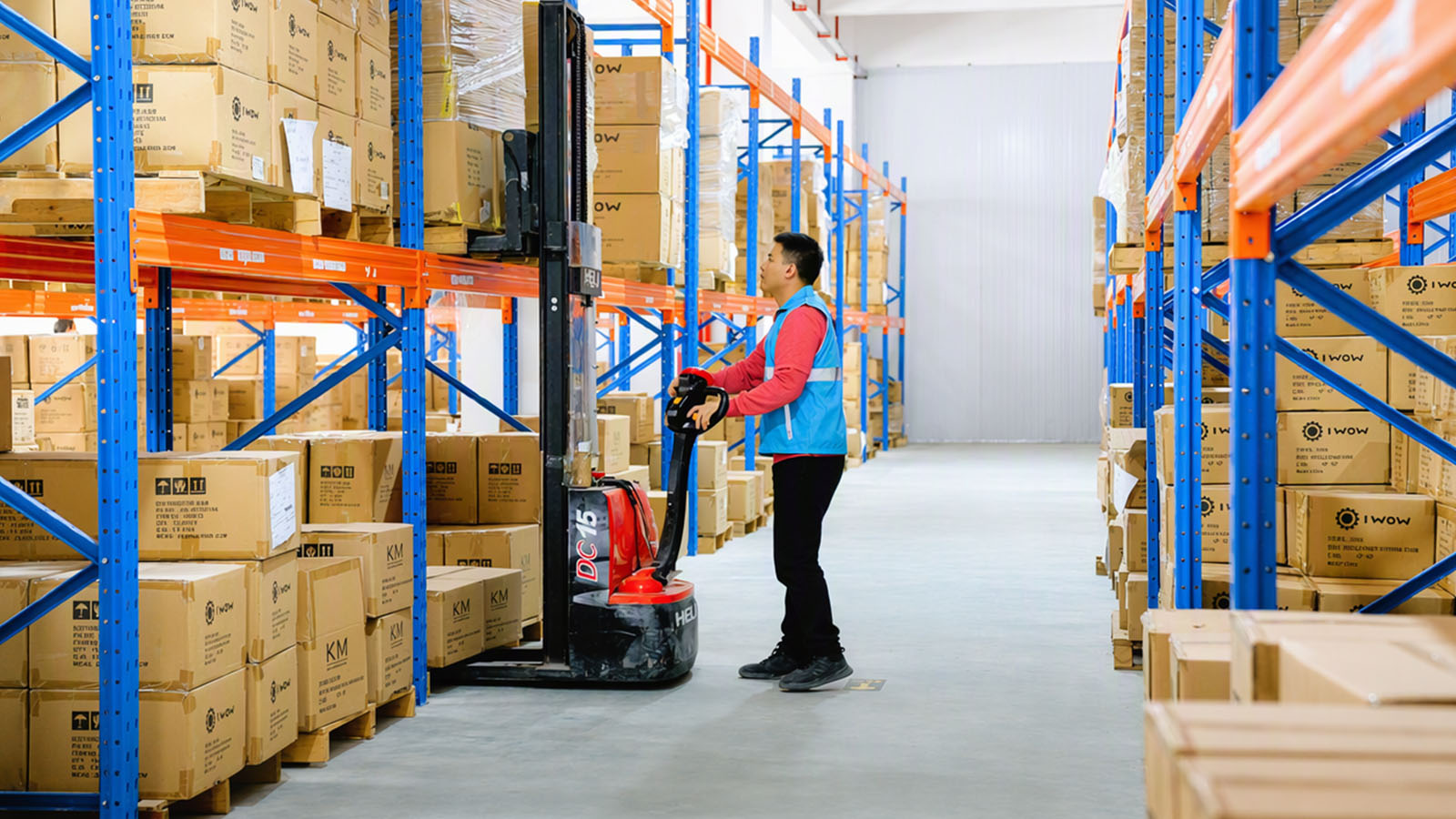
For a multi-factory toy order, control every SKU through the same six data points: approved specification, compliance status, production date, QC result, carton data, and warehouse arrival date. A project with 5 factories, 18 SKUs, 28,000 units, 760 cartons, and 42.6 m³ of cargo is easier to manage when each SKU has its own status and deadline, while all 18 SKUs feed into the same shipping plan.
Add a Factory Only When the Math Works
A lower quote is not enough reason to add another supplier. First calculate what the new factory actually saves after the extra work it creates.
Expected purchasing saving − extra supplier-management cost
Example:
- 6,000 units;
- new factory saves $0.08/unit;
- purchase saving = $480.
The additional supplier also brings:
- $220 domestic pickup;
- $180 inspection;
- $120 warehouse receiving and handling.
$480 − $520 = -$40
At this point, the new factory is already more expensive, and international freight or delay risk has not even been counted.
Adding another factory makes more sense when it gives you something useful in return:
- it provides a production process your current factories cannot provide;
- landed cost is clearly lower after inspection and logistics;
- quality performance is better;
- production capacity solves a real bottleneck;
- you need a second source for a critical SKU.
The same calculation applies when building a broader educational toy sourcing program in China.
Verify Capacity Before Paying a Deposit
Before paying a deposit, get enough information to judge whether the supplier can actually handle the order you are giving them.
- legal company name;
- production address;
- main product category;
- number of relevant production lines;
- daily output per line;
- current production load;
- longest-lead-time component;
- outsourced processes;
- QC staff;
- finished-goods warehouse capacity.
Take a factory that says one line can assemble 1,500 units per day. Your order is 18,000 units and only one line is available.
18,000 ÷ 1,500 = 12 production days
If the promised delivery time is 15 days, only 3 days are left for materials, printing, packing, inspection, and rework. The schedule may still work, but there is very little room for anything to go wrong.
Ask the factory to show:
- the actual line that will produce your SKU;
- current orders using the same line;
- the component with the longest lead time;
- which work will be subcontracted.
Printing, embroidery, batteries, electronics, coatings, or packaging may be handled by outside suppliers. That is common. What matters is knowing which parts are outsourced and keeping control over changes that could affect quality or compliance.
The practical difference between direct production and supplier coordination is covered in this comparison of a STEM toy factory and a sourcing company.
Build One SKU Control Sheet
Give every SKU its own row. One factory may supply several products, but those products can finish, pass QC, and arrive at the warehouse on different dates.
| Field | Example |
|---|---|
| Supplier | Factory B |
| SKU | PT-104 |
| Product | Plastic dinosaur set |
| Quantity | 2,400 pcs |
| Unit price | $1.85 |
| Spec revision | V4 |
| Production finish | October 12 |
| Inspection | October 14 |
| Cartons | 120 |
| Carton size | 58 × 42 × 48 cm |
| Gross weight | 15.8 kg/carton |
| CBM | 14.03 m³ |
| Compliance | Approved |
| QC | Pending |
| Warehouse deadline | October 19 |
| Cargo ready | Pending |
Keep these dates separate:
Production finished → QC passed → rework finished → cargo ready → warehouse received
Assembly can be finished while the goods are still waiting for QC, repair, repacking, payment, or pickup. Treat “cargo ready” as a separate milestone.
Keep the status list short and clear:
- Sample pending
- Approved
- In production
- QC booked
- QC passed
- Rework
- Cargo ready
- Warehouse received
- Loaded
Calculate Landed Cost Before Choosing the Supplier
Two factories can quote the same toy and still produce very different final costs.
Factory A
- 5,000 units;
- $2.10/unit;
- China delivery: $280;
- packed volume: 18 m³.
Factory B
- 5,000 units;
- $2.03/unit;
- China delivery: $620;
- packed volume: 22 m³.
Factory B saves:
5,000 × $0.07 = $350
But its China delivery costs more:
$620 − $280 = $340
That leaves:
$350 − $340 = $10
Now add the extra 4 m³. If freight and related handling cost $95/m³:
4 × $95 = $380
Factory B becomes:
$380 − $10 = $370 more expensive
Run the same calculation for each SKU:
Product
+ packaging
+ China transport
+ QC and rework
+ warehouse/consolidation
+ international freight
+ duty
+ customs/destination fees
+ final delivery
Allocate Shared Freight by What Causes the Cost
Shared shipment costs should follow the space, weight, inspection work, or handling that created them.
Example:
- shared ocean freight: $4,800;
- total shipment volume: 20 m³.
$4,800 ÷ 20 = $240/m³
SKU Group A uses 12 m³:
12 × $240 = $2,880
SKU Group B uses 8 m³:
8 × $240 = $1,920
Splitting the freight 50/50 would make the smaller cargo group look more expensive and the larger group look cheaper than they really are.
| Cost | Allocation Basis |
|---|---|
| China pickup | Actual supplier pickup |
| Inspection | Factory/SKU/inspection visit |
| Warehouse | Cartons, pallets, or CBM |
| Ocean freight | Usually CBM for volume-driven toy cargo |
| Air freight | Chargeable weight |
| Duty | Product customs value/classification |
| Rework | SKU or supplier that caused it |
Confirm the HS Code Before Final Costing
The factory’s suggested HS code is useful, but it should not be the only basis for your final duty calculation.
Send the customs broker:
- product photos;
- materials;
- main function;
- components;
- product value;
- supplier’s suggested HS code;
- previous classification information, if available.
Pay closer attention to:
- electronic toys;
- mixed toy sets;
- multi-function products;
- products that may fit more than one customs category.
For U.S. imports, use the current Harmonized Tariff Schedule published by the U.S. International Trade Commission.[1]
Use the Same Incoterm When Comparing Quotes
Put every quotation on the same basis before comparing prices.
Write the term in full:
FCA [named place], Incoterms® 2020
or:
FOB Shenzhen, Incoterms® 2020
| Term | What the Buyer Needs to Check |
|---|---|
| EXW | Buyer takes on most transport responsibility; export clearance can be difficult for an overseas buyer |
| FCA | Seller handles export clearance and delivers at the named place |
| FOB | For sea/inland-waterway transport; delivery occurs on board the vessel |
ICC notes that FCA should be considered when container cargo is handed to the carrier before it is loaded on the vessel.[2]
A quote written only as “FOB China” does not give enough detail for a proper cost comparison.
Set Insurance Before the Cargo Moves
For an $86,000 order, settle the insurance details before the goods start moving between factories, trucks, warehouses, and ports.
- when risk transfers from seller to buyer;
- who buys cargo insurance;
- insured value;
- start and end of coverage;
- excluded losses;
- claim documents required.
Map the full route:
Factory → domestic truck → consolidation warehouse → port/CFS → vessel → destination → final warehouse
Carrier liability and cargo insurance are not the same protection. Check both separately.
Give Every SKU One Approved Specification
Use one current toy product specification sheet per SKU. Write down what the factory and inspector can actually measure.
For a plush toy:
- height: 28 ± 1 cm;
- filling weight: 185–200 g;
- fabric: specified polyester plush;
- label position: 30 ± 5 mm from side seam;
- embroidery: approved artwork version;
- 24 units/master carton.
For a plastic toy:
- resin;
- dimensions and tolerance;
- Pantone color;
- surface finish;
- assembly gap;
- printing;
- moving-part function;
- packaging.
Keep the file name clear:
PT-104-Spec-V3-2026-09-15.pdf
After V3 is approved, take V1 and V2 out of the active production file. The factory should have only one current version to follow.
Approve Every Material or Component Change
When a factory wants to replace something, record the change before production continues.
- plastic resin;
- fabric;
- paint or coating;
- electronic component;
- battery;
- magnet;
- adhesive;
- component supplier;
- production location;
- warning text;
- packaging.
Example:
- 12,000 units approved with Component A;
- factory proposes Component B before production.
Record:
- old component;
- new component;
- reason for change;
- date approved;
- whether laboratory review is required.
Use Three Different Sample Stages
| Sample | Use |
|---|---|
| Prototype | Check shape, size, design, concept |
| Pre-production sample | Check production materials, components, artwork, packaging |
| Golden sample | Final physical reference for mass production and inspection |
If the golden sample measures 27.5 cm while the specification says 30 cm, fix that mismatch before production starts. Otherwise the factory and inspector are working from two different standards.
Keep the approved sample tied to the same files used in the custom toy OEM and ODM process.
Finish Compliance Work Before Mass Production
Before the factory starts the full order, settle these points:
- Confirm destination country.
- Confirm intended age.
- Freeze product design and materials.
- Send the specification to a qualified laboratory/compliance professional.
- Confirm applicable tests.
- Approve warnings and labels.
- Complete required certification/documentation.
The detailed U.S. and EU process is covered in this toy safety compliance guide.
United States: ASTM F963 applies to toys intended for children under 14. For children’s toys designed or intended primarily for children 12 years old or younger, applicable children’s product rules generally require testing by a CPSC-accepted third-party laboratory and certification through a Children’s Product Certificate. ASTM F963-23 applies to covered toys manufactured on or after April 20, 2024.[3]
For imported children’s products, the U.S. importer is responsible for issuing the CPC. Since July 8, 2026, most imported regulated consumer products subject to certificate requirements also require electronic certificate filing through the CPSC eFiling process.[4]
Children’s products also require tracking information that can identify production details such as manufacturer/private labeler, production place/date, and batch or run information to the extent required and practicable.[5]
European Union: the importer should verify conformity work, technical documentation, CE marking, warnings/instructions, manufacturer/importer information, and traceability information.[6]
Regulation (EU) 2025/2509 is the new Toy Safety Regulation. Most requirements apply from August 1, 2030, while certain provisions have applied since January 1, 2026.[7]
Use QC and Laboratory Testing for Different Jobs
| QC Inspection | Laboratory/Compliance Work |
|---|---|
| Dimensions | Applicable chemical limits |
| Appearance | Applicable material restrictions |
| Function | Applicable mechanical safety tests |
| Workmanship | Applicable electrical/safety testing |
| Quantity | Tests requiring laboratory equipment |
| Packaging/barcode | Market-specific regulated requirements |
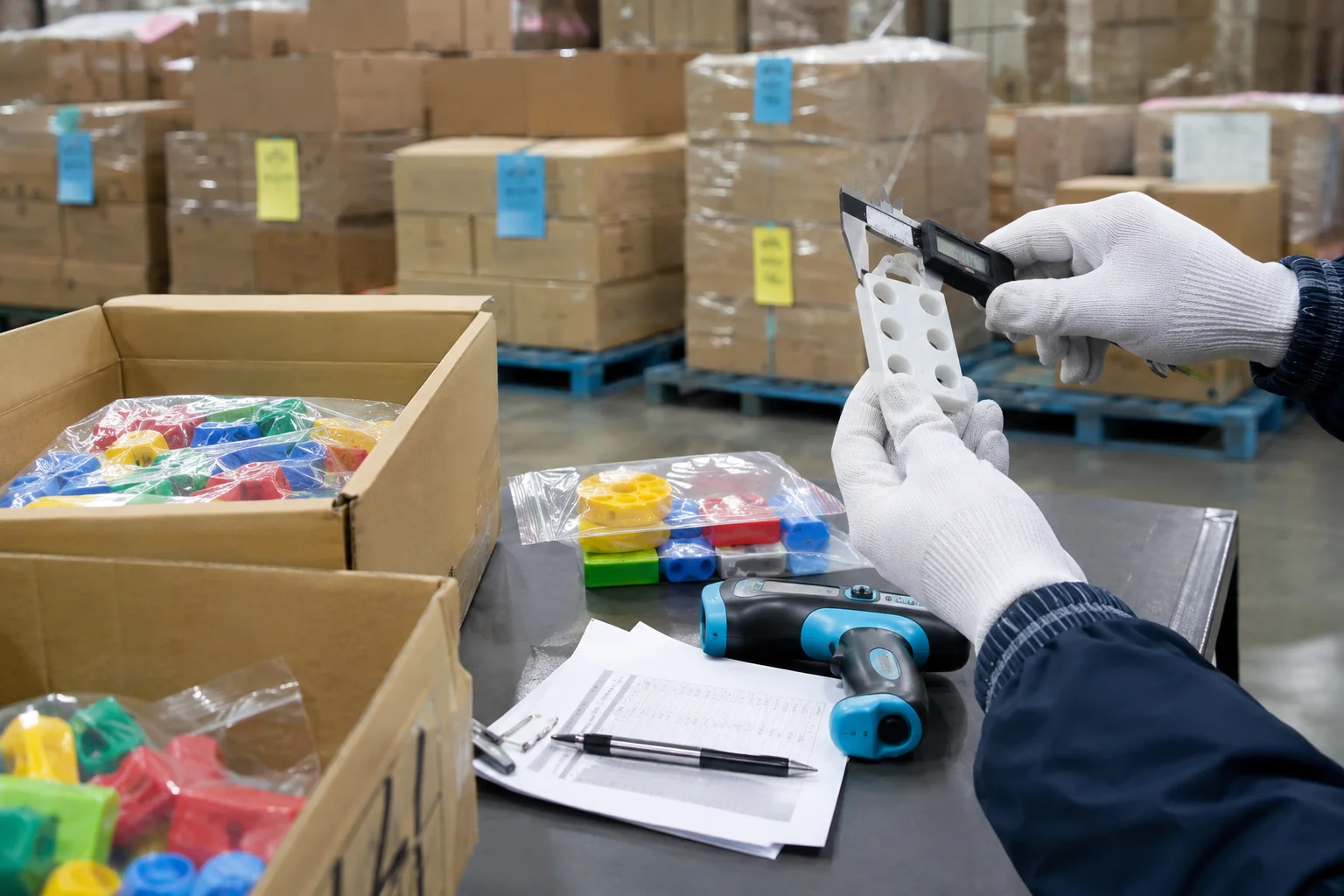
An 8,000-unit order can pass factory QC and still have a compliance problem. A valid laboratory report also does not confirm that all 8,000 units have the right barcode, packaging, or workmanship. Use the two checks for the jobs they are designed to do.
Match the Test Report to the Actual SKU
Before accepting a test report, compare it with the production SKU.
- product name;
- model number;
- product photos;
- materials;
- components;
- test date;
- test standard;
- applicant/manufacturer;
- covered color/model variants.
| SKU | Material | Color | Component | Status |
|---|---|---|---|---|
| CAR-01 | Same | Blue | Motor A | Confirmed |
| CAR-02 | Same | Red | Motor A | Confirm with lab |
| CAR-03 | Different resin | Green | Motor B | New review |
Work Backward From the Loading Date
Set the shipping date first, then work backward through the factory and warehouse steps.
Container loading: November 8
Warehouse complete: November 5
Latest factory dispatch: November 3
Final QC: October 30
Rework window: October 27–30
Production complete: October 26
Leave separate time for:
- QC;
- rework;
- reinspection;
- China trucking;
- warehouse receiving;
- final document correction.
The vessel departure date belongs to the shipping plan. The factory needs an earlier cargo-ready deadline.
Find the Task That Can Delay Everything
Some production steps happen at the same time, so simply adding every lead time together can give the wrong answer.
- custom packaging: 25 days;
- plastic molding: 12 days;
- assembly: 10 days;
- packaging overlaps 8 days of molding.
So this is not the right calculation:
25 + 12 + 10 = 47 days
Follow the work that depends on the step before it:
Material → component → production → assembly → packing → QC → rework → warehouse
If a custom motor needs 30 days and assembly cannot begin without it, that motor deserves more attention than a carton that can be printed quickly.
Track Weekly Output With Numbers
Weekly totals make it easier to see when production slows down.
For an 8,000-unit order:
- Week 1 total: 1,800;
- Week 2 total: 4,600;
- Week 3 total: 5,200.
Week 2 output:
4,600 − 1,800 = 2,800
Week 3 output:
5,200 − 4,600 = 600
Output has dropped from 2,800 units to 600 units. That is the point to ask whether a machine, component, worker, or packaging issue is holding up the line.
Keep the update focused on:
- materials received;
- critical parts received;
- units completed;
- printing completed;
- packaging completed;
- open production problems.
Use Product-Specific QC Checks
Plush toys
- size;
- shape;
- fabric;
- filling;
- open seams;
- embroidery;
- eyes/attached parts;
- labels;
- stains;
- packaging.
Plastic toys
- dimensions;
- flash;
- cracks;
- deformation;
- color;
- surface;
- edges;
- assembly;
- moving parts;
- printing.
Electronic toys
- power;
- switches;
- buttons;
- lights;
- sound;
- battery compartment;
- screws;
- charging;
- repeat operation;
- abnormal heating.
Turn vague checks into something the inspector can repeat:
Press each sampled sound button 20 times. No sticking, failure, or abnormal sound.
Define AQL and Defects Before Inspection
ISO 2859-1:2026 is the current international standard for AQL-indexed lot-by-lot sampling by attributes.[8]
AQL 2.5 does not mean “2.5% defective goods are allowed.”
For an 8,000-unit lot, the inspection company should determine the sample size and acceptance/rejection numbers from the selected inspection level and sampling plan.
Agree on the defect categories before inspection starts.
Critical
- dangerous sharp object;
- serious safety-related construction failure.
Major
- missing part;
- open seam;
- wrong SKU;
- wrong barcode;
- major print/embroidery error;
- required function fails.
Minor
- small removable thread;
- small cosmetic variation within tolerance;
- minor non-critical packaging print defect.
Inspect Before Final Payment
Where the agreed commercial terms allow it, keep inspection ahead of the final balance:
Deposit → production → packing → final inspection → rework/reinspection → balance → cargo release
Put these points into the PO or quality agreement:
- approved specification revision;
- approved sample;
- inspection method;
- defect classification;
- sorting responsibility;
- rework responsibility;
- reinspection responsibility;
- replacement responsibility.
QC on October 30 for a November 8 loading date still leaves time to fix problems. QC on November 7 does not.
Verify Any Bank Account Change
A last-minute bank-account change should be checked before the balance is sent.
- contract company;
- invoice company;
- bank beneficiary;
- bank country;
- reason for the change.
Confirm the new bank details through a contact method that was already known before the change request arrived.
Measure the Size of a Failed QC Problem
Suppose the order contains 6,000 plush toys and sorting finds 300 open seams.
300 ÷ 6,000 = 5%
Now the corrective action has a clear size:
- quarantine affected goods;
- repair 300 units;
- check remaining goods;
- reinspect if required;
- identify the cause.
Look at the production cause as well:
- thread quality;
- stitch density;
- seam allowance;
- machine setting;
- worker training.
Choose the Consolidation Location by Cost
Do not choose the warehouse only because one forwarder already uses it. Compare the domestic movement and shipping cost first.
China pickup + warehouse handling + international freight + time
Example:
- Guangdong suppliers: 31 m³;
- Zhejiang suppliers: 18 m³;
- total: 49 m³.
Before trucking all 49 m³ to one South China warehouse, compare:
- one national consolidation point;
- South China + East China regional consolidation;
- separate shipments.
The warehouse type also depends on the work required:
- forwarder warehouse for receiving, storage, consolidation, and shipping;
- sourcing warehouse when goods also need checking, sorting, labeling, repacking, or kitting;
- lead factory only when it can reliably receive and track other factories’ cartons.
Count Warehouse Cargo Against the Factory Packing List
When goods arrive, compare the warehouse count with what the factory said it shipped.
- PO;
- SKU;
- batch;
- cartons;
- carton numbers;
- weight;
- dimensions;
- visible damage;
- arrival photos.
Factory record:
126 cartons × 20 units = 2,520 units
Warehouse receipt:
125 cartons × 20 units = 2,500 units
Shortage:
1 carton / 20 units
Find the missing carton before the international shipment is loaded.
Keep Batch Data After Consolidation
Keep this chain intact even after cartons from several factories are placed in the same warehouse:
SKU → PO → factory → production batch → spec revision → test record → QC report → shipment → destination
Example:
- Lot A: 4,000 units;
- Lot B: 4,000 units;
- Lot C: 4,000 units.
If a confirmed problem is limited to Lot B, the investigation can focus on 4,000 units instead of automatically treating all 12,000 units as one batch.
Keep the same batch and specification controls across repeat orders with a long-term Chinese toy manufacturer.
Book Freight From Final Carton Measurements
Use the packed cartons, not the early packaging estimate.
Length × Width × Height × carton quantity
Example:
0.58 × 0.42 × 0.48 × 120 = 14.03 m³
Five factories:
- Factory A: 8.4 m³;
- Factory B: 14.0 m³;
- Factory C: 6.8 m³;
- Factory D: 9.1 m³;
- Factory E: 4.3 m³.
Total = 42.6 m³
If the early estimate was 46.8 m³:
46.8 − 42.6 = 4.2 m³ less cargo
Update the freight quote using the 42.6 m³ final figure.
Reduce Empty Space Before Printing Packaging
Packaging volume can change freight cost more than a small difference in unit price.
Original carton:
60 × 50 × 50 cm = 0.15 m³
500 cartons:
0.15 × 500 = 75 m³
Revised carton:
58 × 46 × 46 cm = 0.122728 m³
500 cartons:
61.36 m³
Volume saved:
75 − 61.36 = 13.64 m³
Check packaging size, inserts, barcode position, warnings, and carton arrangement together. These points also apply to private-label toy packaging.
After reducing the size, check whether the packaging still protects the product:
- carton strength;
- stacking;
- drop protection;
- movement inside the carton;
- retail-box crushing.
Compare LCL and FCL With One All-In Quote
Use the complete delivered cost when comparing LCL and FCL.
Illustrative example for 24 m³:
| Method | Example All-In Cost |
|---|---|
| LCL | $5,900 |
| FCL | $5,500 |
$5,900 − $5,500 = $400
In this case, FCL is $400 cheaper.
LCL comparison:
- pickup;
- warehouse receiving;
- CFS/consolidation;
- origin handling;
- documentation;
- ocean freight;
- destination handling;
- customs-related charges;
- delivery.
FCL comparison:
- container trucking;
- loading;
- origin fees;
- ocean freight;
- destination fees;
- customs clearance;
- delivery;
- possible detention/demurrage.
The 24 m³ example is not a universal cutoff. Use current quotations for the actual route and shipment.
Approve Cartons, Labels, and Barcodes Before Mass Packing
Start with one approved master carton before the factory packs the full order.
IMPORTER: ABC TOYS
PO: PO-260915
SKU: PT-104
DESCRIPTION: DINOSAUR PLAY SET
QTY: 24 PCS
CARTON: 18 OF 120
G.W.: 15.8 KG
N.W.: 14.4 KG
MEAS.: 58 × 42 × 48 CM
MADE IN CHINA
| Label | Check |
|---|---|
| Retail label | Correct product/customer information |
| Compliance label | Required warning and traceability data |
| Product barcode | Correct sellable SKU |
| Carton mark | PO, SKU, carton number, quantity |
| 3PL/retailer label | Destination receiving requirements |
Check the full chain:
SKU → physical toy → retail barcode → carton barcode
Scan the barcode and compare the result with the SKU database. A barcode that scans correctly but points to the wrong SKU is still wrong.
Build the Final Packing List From Warehouse Data
Use the warehouse count as the basis for the final packing list.
- quantity;
- cartons;
- net weight;
- gross weight;
- dimensions;
- CBM.
Example:
- invoice: 2,400 units;
- warehouse: 2,352 units.
2,400 − 2,352 = 48 units difference
Fix the 48-unit difference before the final documents are issued.
These records should agree:
Warehouse count → packing list → invoice → customs data → transport document
Check the Container Before Loading
For FCL, inspect the empty container before loading starts.
- no visible holes;
- no standing water;
- no strong odor;
- no obvious oil/chemical contamination;
- usable floor;
- no serious internal damage.
The IMO/ILO/UNECE CTU Code provides international guidance for packing cargo transport units.[9]
For a 760-carton shipment, record:
- container number;
- seal number;
- 760-carton loading count;
- key SKU quantities;
- loading date;
- loading photos.
Set a Cutoff for Late Factories
Do not wait until loading day to decide what to do with late cargo.
Container loading: November 8
Late-factory decision: November 1
If Factory D misses November 1, compare:
- cost to delay the whole shipment;
- cost to remove Factory D;
- cost to send Factory D later by LCL;
- cost to use air or faster freight.
Example:
- estimated sales loss from 7-day delay: $15,000;
- late goods factory value: $4,000.
Waiting for $4,000 of goods can put $15,000 of sales at risk.
Another case:
- extra split-shipment cost: $3,200;
- estimated stockout loss avoided: $18,000.
$18,000 − $3,200 = $14,800 potential benefit
Use Air Freight Only for the Quantity That Needs It
A split shipment can protect stock without moving the whole order by air.
For 10,000 units:
- air: 1,000 units;
- sea: 9,000 units.
Air percentage:
1,000 ÷ 10,000 = 10%
This approach is useful when:
- a launch date cannot move;
- Christmas/seasonal stock is at risk;
- a best seller is close to stockout;
- the cost of missing sales is higher than the extra freight.
Score Suppliers With Actual Results
After each order, score what actually happened rather than relying on memory or the latest quotation.
| Metric | Weight |
|---|---|
| Quality | 30% |
| On-time delivery | 20% |
| Price | 15% |
| Communication | 10% |
| Packaging accuracy | 10% |
| Compliance support | 10% |
| Problem solving | 5% |
| Metric | Factory A | Factory B |
|---|---|---|
| Quality | 95 | 75 |
| Delivery | 100 | 67 |
| Price | 75 | 95 |
| Communication | 90 | 80 |
| Packaging | 95 | 70 |
| Compliance | 90 | 75 |
| Problem solving | 95 | 80 |
| Weighted score | 92.0 | 76.7 |
Then add the actual cost created by quality problems:
- reinspection: $300;
- relabeling: $260;
- replacement cartons: $200;
- urgent air freight: $2,100;
- customer credit: $800.
Total = $3,660
If the supplier originally saved $1,500:
$1,500 − $3,660 = -$2,160
Release the Shipment Only When These Checks Pass
| Area | Release Condition |
|---|---|
| Product | SKU, quantity, approved sample, and specification match |
| Compliance | Required tests, certificates, warnings, and records complete |
| QC | Passed or corrective work verified |
| Packaging | Labels, barcodes, cartons, and marks correct |
| Warehouse | Carton count, weight, CBM, and batch data confirmed |
| Documents | Invoice, packing list, customs data, and cargo match |
| Late SKUs | Ship, split, expedite, or delay decision made |
| Logistics | Incoterm, freight, insurance, and loading confirmed |
| Payment | Terms followed and bank details verified |
Finally
For a 5-factory, 18-SKU order, keep the decisions tied to numbers. The 28,000 units, 760 cartons, 42.6 m³, QC results, batch records, warehouse counts, and landed cost tell you whether the order is actually under control. In the examples above, a $0.08/unit saving disappeared after $520 of local costs, better packaging removed 13.64 m³, and $3,660 of quality costs wiped out a $1,500 factory-price saving. Before releasing the shipment, make sure the product, compliance, QC, packaging, documents, payment, and freight data all agree.