
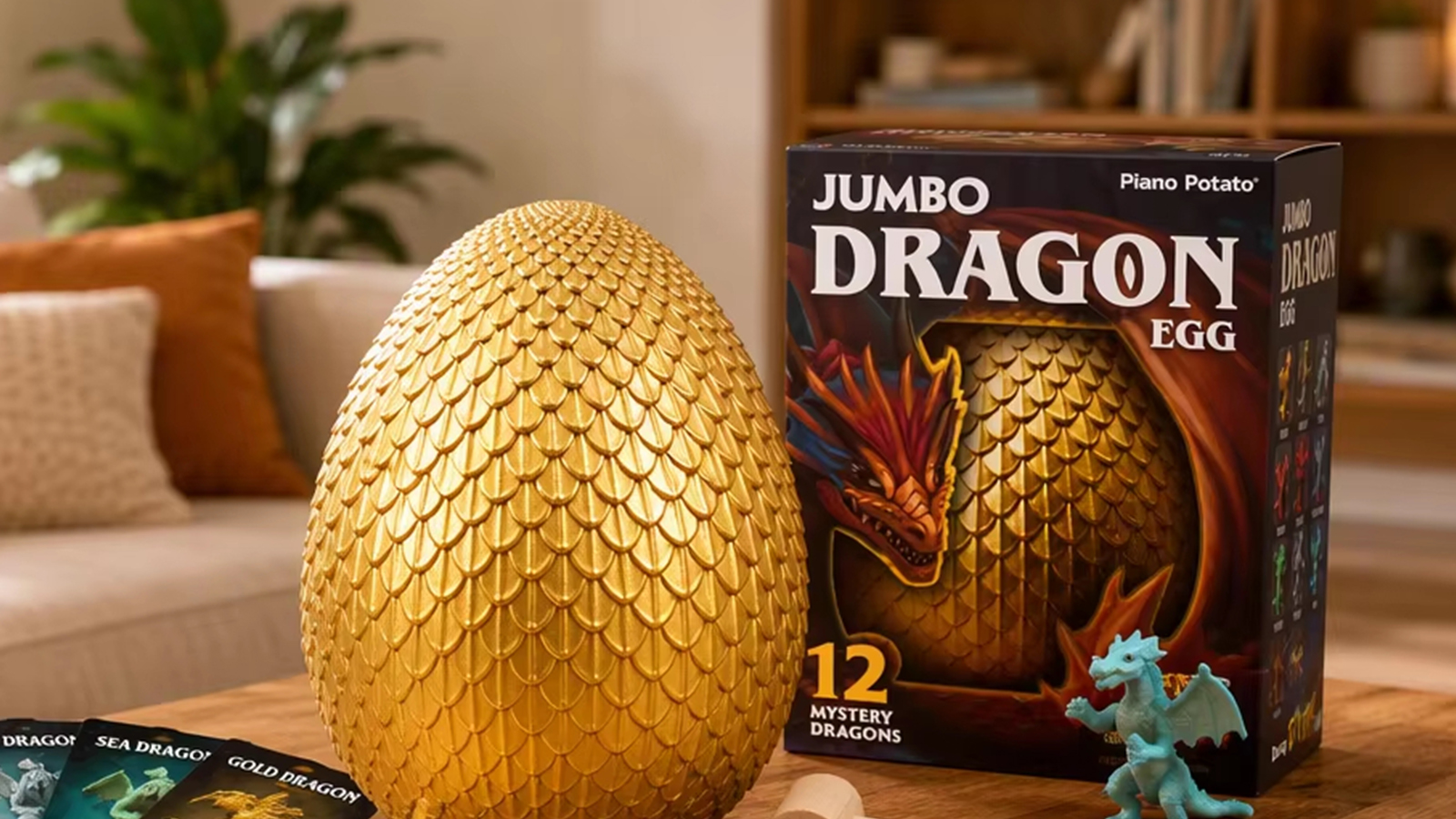
A toy brand stands out when buyers can quickly answer three things: who the toy is for, why it is better for that use, and what proves the difference. The practical route is straightforward: find one real customer problem, solve it in the product, check whether children and buyers can notice the improvement, then make sure the same advantage still works in mass production and leaves enough room for profit.
| Check | Question | Weak Example | Stronger Example |
|---|---|---|---|
| Customer | Who is it for? | Kids | Parents buying screen-free travel activities for ages 4–7 |
| Problem | What does it solve? | Learning | Keeping a child occupied during travel with little setup |
| Difference | Why this product? | More pieces | Reusable activities stored inside a flat travel case |
| Proof | Can buyers see it? | “Easy to use” | Show setup, use, cleanup, and storage |
| Business | Can it scale? | Works on one prototype | Specification, approved sample, QC limits, repeatable production |
USP Scorecard
When several product differences all sound promising, put them side by side and score them from 1 to 5. This makes the trade-offs easier to see.
| Factor | 1 Point | 5 Points |
|---|---|---|
| Customer value | Buyer barely notices | Changes the purchase decision |
| Clarity | Needs a long explanation | Understood from the product or one sentence |
| Proof | Mostly a marketing claim | Easy to demonstrate or measure |
| Copyability | Competitor can copy quickly | Requires IP, engineering, process, system, or time |
| Production fit | Difficult to make consistently | Stable in normal production |
| Profit fit | Cost increase exceeds buyer value | Creates enough value to support the added cost |
The scores below are only an illustrative example, not an industry benchmark.
| Possible Difference | Value | Clarity | Proof | Copyability | Production | Profit | Total / 30 |
|---|---|---|---|---|---|---|---|
| 10 extra pieces | 2 | 5 | 5 | 1 | 5 | 4 | 22 |
| Child can complete basic build with less help | 5 | 4 | 4 | 3 | 3 | 4 | 23 |
| Built-in compact storage | 4 | 5 | 5 | 3 | 4 | 3 | 24 |
Do not pick the winner by total score alone. The weak points matter just as much. If customer value is 5/5 but production stability is 1/5, the feature is not ready to become the core USP yet.
Buyer Matrix
The person playing with the toy is not always the person choosing or paying for it. That changes what the product needs to prove.
| Role | Main Questions |
|---|---|
| Child | Is it fun? Can I understand it? Can I do something new with it? |
| Parent or caregiver | Is the age right? Is it safe? Will it last? Is it messy? Where will it be stored? |
| Gift buyer | Is the age clear? Does it feel worth the price? Is everything needed included? |
| Retail buyer | Will shoppers understand it? Does the price fit? How much shelf space does it use? Will it sell through? |
“Educational toys for kids” gives a product team very little to work with. A more useful target is:
“Parents of children aged 4–7 looking for a reusable screen-free activity that works during travel with limited adult setup.”
Once the target is this clear, several product choices follow naturally:
- short setup
- portable size
- few loose parts
- clear visual instructions
- easy storage
- activities suitable for the intended age
Target age, sales channel, price, packaging, and use case should be decided early in toy OEM and ODM development. These choices affect materials, structure, testing, packaging, and production later on.
Buying Moment
A broad category tells buyers what the product is. A clear buying situation tells them when they need it.
- birthday gift
- holiday gift
- long flight
- road trip
- screen-free afternoon
- quiet restaurant activity
- rainy-day play
- family game night
- classroom activity
- independent play while an adult is busy
Compare the difference:
Broad: “Creative activity toy for ages 4–7.”
Specific: “Reusable screen-free travel activity for ages 4–7 that packs flat inside its own case.”
The second version gives the customer a clear situation in which the product becomes useful.
Market Gap Check
Good product gaps often show up first in customer complaints. Instead of guessing what the market wants, start by looking at what buyers already dislike.
As a practical starting point, manually review 20–50 detailed reviews from several relevant competing products. This is a research method, not an industry requirement.
Tag each complaint by cause so repeated problems become visible.
| Illustrative Review Sample: 40 Reviews | Mentions |
|---|---|
| Difficult storage | 11 |
| Too much adult assembly | 8 |
| Parts separate during play | 6 |
| Instructions unclear | 5 |
| Color complaints | 2 |
In this example, 11 storage complaints deserve more attention than two complaints about color. That still does not mean storage should automatically become the USP.
For each repeated issue, check what is really happening:
- Frequency: How often does it appear?
- Severity: Does it stop play, create returns, or prevent purchase?
- Buyer value: Will solving it make customers choose your product?
- Cost: What will the solution add to materials, labor, packaging, and shipping?
- Side effects: Does the solution create new safety, weight, storage, or production problems?
Take a larger storage box as an example. If it adds $1.20 in materials, $0.35 in packaging, and $0.45 in freight per unit, the improvement adds $2.00 before retail margin is considered. If customers will not pay enough more for that benefit, the idea may improve the product but still be a poor business choice.
The same caution applies to “white space” in a category. A position may be empty because demand is weak, safety is difficult, production is expensive, or retailers have already rejected similar products.
Benefit Hierarchy
Most toys have more than one useful feature. The mistake is making every feature compete for attention.
| Level | Example |
|---|---|
| Main benefit | Independent creative play |
| Proof 1 | Easy-connect parts |
| Proof 2 | Picture-led activities |
| Proof 3 | No complicated adult assembly |
| Proof 4 | Built-in storage |
Here, independent creative play leads the message. The other features explain why the customer should believe it.
This is clearer than saying the same product improves creativity, math, memory, focus, language, teamwork, emotional intelligence, and motor skills all at once.
A useful USP format is:
For [customer], this toy helps [result] through [specific product difference].
That promise also needs to survive the full custom toy development process. If design changes, sampling, packaging, safety work, or mass production remove the original advantage, the positioning no longer matches the product.
Play Test
“Do you like it?” gives very little useful information on its own. Watching what the child actually does tells you much more.
Record:
- time to first successful result
- number of adult prompts
- where the child stops
- which actions are repeated
- whether the child changes the activity without being told
- whether the child starts another activity
- whether the child returns in a later session
An illustrative test record could look like this:
| Measure | Example Result |
|---|---|
| Children tested | 8 |
| Completed first activity without help | 6 |
| Needed one prompt | 1 |
| Needed repeated help | 1 |
| Typical first-success time | About 4 minutes |
| Started a second activity | 5 |
These numbers show what can be measured; they are not universal performance targets.
Three points are especially useful when comparing prototypes:
- First success: Can the intended child reach a useful result before frustration takes over?
- Replay: Does the product offer a new build, result, story, strategy, experiment, or challenge after repeated use?
- Difficulty: Can a beginner start successfully while an experienced user still has something harder to do?
Play can support cognitive, language, social-emotional, and self-regulation development when it is appropriate to the child and activity.[1] That does not justify promising that every toy produces a specific developmental result.
For a science kit, replay may come from changing a variable, comparing results, moving to harder experiments, or using the tools for a second activity rather than simply adding more items to the box.
Friction Check
Not every difficulty should be removed. The child should work on the challenge created by the game or toy, not fight with poor product design.
| Useful Challenge | Unnecessary Friction |
|---|---|
| How can I build a taller tower? | Why do correctly matched parts not fit? |
| Which strategy will win? | Why are the rules unclear? |
| Can I make a different result? | Why does setup require 20 minutes? |
| Can I solve the harder activity? | Why does the structure keep falling apart? |
During testing, pay attention to:
- setup time
- assembly difficulty
- instruction clarity
- required adult help
- charging or battery needs
- cleanup
- storage
- easy-to-lose pieces
- required materials not included in the box
Remove problems around the play without removing the challenge inside the play.
Child vs. Parent Test
A child can love a toy while the parent still decides not to buy it. Test those two reactions separately.
For a dinosaur excavation product, the child may focus on the digging experience. The adult is more likely to care about questions such as:
- Does the age seem right?
- How messy does it look?
- Is the activity long enough for the price?
- Are the tools included?
- Is adult help required?
- What can the child keep or use afterward?
Those answers can change block hardness, tool size, specimen size, instructions, packaging, and activity length in a dinosaur dig kit.
| Child Appeal | Adult Approval | Likely Problem |
|---|---|---|
| High | High | Strong purchase fit |
| High | Low | Price, mess, safety, clutter, or value objection |
| Low | High | Product sounds useful but play appeal is weak |
| Low | Low | Product or target market needs major revision |
Brand Recognition Test
Cover the logo and look at what remains.
Can buyers still recognize the brand from:
- product shape
- color combinations
- illustration style
- packaging structure
- character design
- icons
- materials
- product naming
A design can be attractive and still look like every other product in the category. Check these three points separately:
| Question | What to Check |
|---|---|
| Is it attractive? | Does the intended buyer like it? |
| Is it recognizable? | Does it look different from nearby competitors? |
| Does it fit the brand? | Does the design support the intended price and position? |
Packaging Test
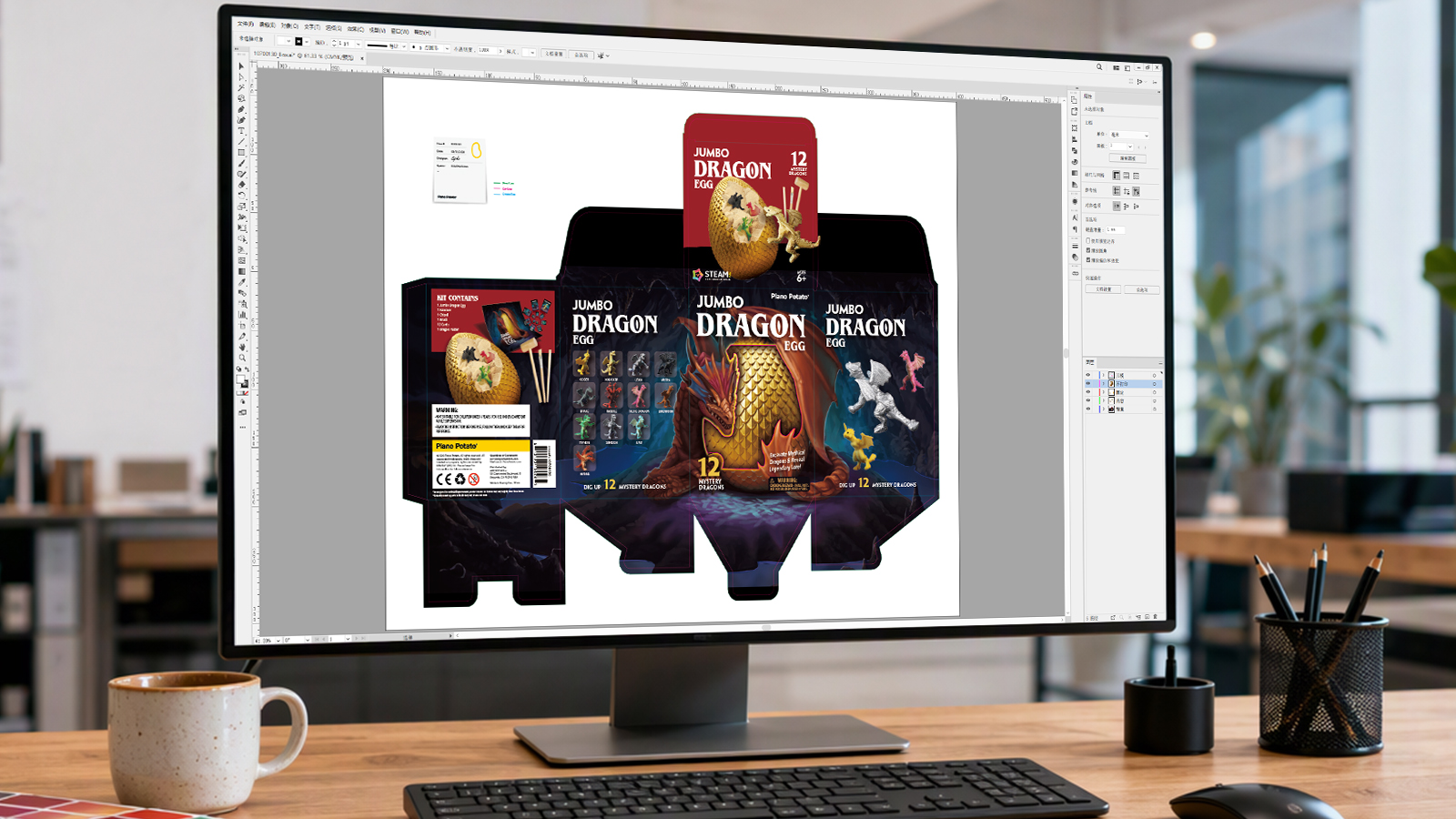
A buyer should not need a salesperson to understand the box.
The package needs to answer:
- What is it?
- What does the child do?
- What age is it for?
- What is included?
- Why choose this one?
A small internal test can quickly show where the package is weak.
| Illustrative 10-Person Test | Correct Answers |
|---|---|
| Could identify the product | 8/10 |
| Could identify the intended age | 7/10 |
| Could explain the main difference | 5/10 |
In this example, most people understand the product category, but only half can explain the main difference. The packaging is doing a better job of saying what the toy is than why this version deserves attention.
Private-label packaging should also control box size, insert, artwork, barcode, warnings, instructions, age information, and retailer requirements rather than treating packaging as a logo change. The same details are covered in practical private-label toy packaging projects.
Size and Contents Check
Dimensions on their own are easy to misread online. Give buyers both the number and a visual reference.
Instead of only writing:
42 × 28 × 16 cm assembled
also show the product:
- in the child’s hands where appropriate
- on the table or floor where it is normally used
- next to important individual parts
- inside its storage solution
- inside the retail package
The same applies to box contents. “Complete activity kit” is vague. A clear list is more useful:
- 1 activity base
- 24 reusable pieces
- 2 tools
- 12 activity cards
- 1 storage case
If buyers repeatedly say “smaller than expected,” “larger than expected,” or “I thought X was included,” correct the product information before assuming the product itself needs to change.
Quality Proof
Quality claims are easier to trust when the proof matches the promise.
| Claim | Useful Evidence |
|---|---|
| Durable | Repeated-use, joint, wear, impact, defect, or warranty data relevant to the product |
| Easy to assemble | Number of steps, tools required, assembly time, user completion results |
| Easy to clean | Cleaning method, material limits, actual cleaning test |
| Consistent fit | Approved dimensions and production tolerances |
Do not use technical numbers just because they sound convincing. A thicker plastic wall, heavier product, or larger piece count does not automatically mean the toy performs better.
Important requirements should be recorded in a toy product specification sheet, including materials, dimensions, allowed variation, color, function, packaging, safety requirements, and inspection methods.
Safety Check
Safety decisions need to be made while the product can still be changed, not after tooling and mass production are finished.
- intended age
- small parts
- magnets
- batteries
- cords
- sharp points and edges
- coatings and accessible materials
- projectiles
- sound
- heat
- breakage
- reasonably foreseeable misuse
For the United States, toys designed or intended primarily for children 12 years of age or younger require third-party testing by a CPSC-accepted laboratory for applicable children’s product safety requirements. ASTM F963 itself applies to toys intended for children under 14, so the ASTM age scope and the U.S. children’s-product third-party-testing threshold are different.[2]
The mandatory U.S. toy rule incorporates ASTM F963 through 16 CFR Part 1250. ASTM F963-23 became effective for relevant toys manufactured on or after April 20, 2024.[3]
Not every section of ASTM F963 applies to every toy, and some applicable sections are exempt from third-party laboratory testing. However, the Children’s Product Certificate must cover all applicable requirements. The domestic manufacturer or U.S. importer is responsible for the CPC; the laboratory provides test results rather than issuing the certificate.[4]
For the European Union, Regulation (EU) 2025/2509 applies to products designed or intended for play by children under 14. It applies generally from August 1, 2030, when Directive 2009/48/EC is repealed; certain provisions apply earlier under the Regulation’s timetable.[5]
A practical US and EU toy safety compliance process should identify the target market, age grade, materials, product structure, applicable tests, certificate responsibility, warnings, and documentation before production.
Work through the product in this order:
- Define intended user and age.
- Define normal use.
- Consider realistic misuse.
- Identify product-specific hazards.
- Review prototypes.
- Complete applicable testing and documents.
- Control later material, supplier, and design changes.
Claims Check
Describe what the toy actually does before claiming what it supposedly causes.
| Claim Type | Example | Evidence Need |
|---|---|---|
| Factual | Includes 48 pieces | Direct verification |
| Performance | Typical setup takes under five minutes | Appropriate product/user testing |
| Developmental | Improves concentration | Much stronger evidence |
| Safety/environmental | Non-toxic / sustainable | Specific definition and appropriate supporting evidence |
The FTC states that advertisers need a reasonable basis for objective claims before making them, with health and safety claims generally requiring stronger evidence.[6]
Prefer:
“Includes six activities that use counting and shape matching.”
over:
“Guaranteed to improve intelligence and concentration.”
Mandatory safety compliance should not be presented as a special premium benefit. It is a basic requirement.
Sustainability Check
Broad environmental labels are less useful than specific facts buyers can understand.
- product lifespan
- replaceable parts
- repairability
- material sourcing
- packaging weight and volume
- shipping efficiency
- recycled content
- recyclability
- end-of-life options
The FTC advises against broad, unqualified claims such as “green” or “eco-friendly” because they are difficult to substantiate and may imply wider benefits than the evidence supports.[7]
A supported statement such as:
“Retail box contains 80% recycled paperboard.”
is more useful than:
“Eco-friendly toy.”
Accessibility Check
Look for barriers that do not add anything to the intended play.
- grip size
- hand strength required
- button size
- color contrast
- information communicated only by color
- sound level
- flashing effects
- reading ability required
- language dependence
- visual instructions
If red and green are the only signals for two game states, for example, different symbols or shapes can provide a second cue without changing the game.
Keep the claim focused on the design itself. Do not turn accessibility features into unsupported medical or therapeutic promises.
Product Ladder
Each product should have a clear job in the range.
| Product | Job | Illustrative Price |
|---|---|---|
| Starter | Low-risk first purchase | $19.99 |
| Main set | Best expression of the brand | $34.99 |
| Advanced set | More depth or difficulty | $59.99 |
| Expansion/refill | Add value to an existing product | Depends on category |
The prices above are illustrative. What matters is that each level answers a different buying need.
A basic mineral collection, for example, can lead into more specialized geology and space science kits without forcing a first-time buyer to purchase the largest set.
A larger catalog is not automatically a stronger catalog. Several products with almost identical contents only add SKU complexity.
IP and Copyability Check
Break the advantage into parts and look at how easy each one is to copy.
| Advantage | Typical Copyability |
|---|---|
| Color change | Very easy |
| Extra accessory | Easy |
| Custom product structure | Moderate |
| Special manufacturing process | Harder |
| Original IP with market recognition | Harder to replace |
| Compatible product ecosystem | Harder to reproduce quickly |
| Retail relationships and customer history | Cannot be copied simply by duplicating the product |
Trademarks, patents, and copyrights protect different types of intellectual property in the United States. Product names and source identifiers may involve trademarks; qualifying inventions may involve patents; original creative works may involve copyright.[8]
Protection depends on the product and jurisdiction, so specific IP decisions need appropriate professional review.
Mass-Production Check
A good prototype is only useful if normal production can reproduce the same result.
Consider an illustrative connector dimension:
Nominal design: 10.00 mm
If actual production produces one part near 9.80 mm and another near 10.20 mm, fit may change significantly.
These numbers are only an illustration, not recommended manufacturing tolerances. The acceptable range depends on geometry, material, mold design, process, and intended function.
Before mass production, define:
- approved materials
- important dimensions
- allowed variation
- color limits
- assembly requirements
- function checks
- inspection rules
- approved sample
- packaging version
- supplier-change approval
These controls are especially important when sourcing educational toys from China, where the buyer should define the age grade, destination market, compliance scope, packaging, inspection method, and landed-cost target before approving production.
Unit Economics Check
Work out the cost of the differentiation before paying for tooling.
| Illustrative Cost Item | Original Product | With Storage Feature |
|---|---|---|
| Base unit cost | $6.40 | $6.40 |
| New storage case | $0.00 | $1.20 |
| Packaging increase | $0.00 | $0.35 |
| Freight impact per unit | $0.00 | $0.45 |
| Illustrative total | $6.40 | $8.40 |
The example cost increases by $2.00, or about 31%. That does not make the feature a bad idea. It means the brand now needs to prove that the storage case improves conversion, supports a higher retail price, reduces returns, or creates enough other value to cover the extra cost.
Real calculations should also consider:
- tooling
- assembly labor
- testing
- packaging
- master-carton configuration
- freight
- duties where applicable
- warehouse cost
- retail or marketplace margin
- returns
Carton Check
Packaging can change logistics even when the toy stays exactly the same.
Illustrative example:
- Old master carton: 8 retail units
- New package: 6 retail units per carton
- Order: 240 units
The old configuration requires 30 cartons.
The new configuration requires 40 cartons.
That is 10 extra cartons for the same 240 units.
Check carton efficiency before approving a larger package purely for stronger shelf presence.
Product Demonstration Plan
Where possible, show the proof instead of repeating adjectives.
| Claim | Show This |
|---|---|
| Easy setup | Box opening to ready-to-play state |
| Independent play | Intended child starting the activity with limited help |
| Easy storage | All pieces returned to the storage system |
| Replay value | Three genuinely different builds, activities, or outcomes |
| Compact size | Product inside a bag, drawer, shelf, or travel environment |
| Expandable | What becomes possible after adding the next set |
For example, “easy to store” is weaker than a 10-second demonstration showing all 48 pieces fitting into the built-in case.
Review Analysis
Customer reviews are useful after the sale because they show what buyers actually notice.
Tag feedback into:
- age fit
- quality
- setup
- instructions
- replay
- storage
- gift value
- missing pieces
- size expectations
- safety concerns
One comment is not always the root cause.
“My child got bored” may mean:
- wrong age
- activity too easy
- poor first-use instructions
- wrong buyer expectation
- weak replay value
Compare review patterns with returns, support tickets, testing, and direct observation before making a product decision.
The FTC’s Consumer Reviews and Testimonials Rule took effect on October 21, 2024 and addresses practices including fake reviews and certain incentives tied to required positive or negative sentiment.[9]
Channel Fit
| Channel | Best Fit | Main Requirement |
|---|---|---|
| Marketplace | Known product category | Fast comparison of price, reviews, contents, and differences |
| Brand website | Product needs explanation or has a larger ecosystem | Detailed proof, instructions, comparisons, support |
| Physical retail | Gift products and products helped by physical viewing | Package must explain itself quickly |
| Short video | Visual activity, transformation, experiment, craft, game | Main benefit should be visible on screen |
| Creator | Product benefits from trusted demonstration | Creator must reach the actual buyer and demonstrate the USP |
For creator campaigns, check:
- audience age
- buyer type
- country
- comment quality
- category fit
- demonstration ability
- sales performance when reliable data is available
If a creator receives payment, free products, discounts, or another material benefit, the connection may need clear disclosure. FTC guidance says material connections should be disclosed in a way that is difficult to miss and easy to understand.[10]
If a child-directed website, app, connected toy, or online service collects personal information from children under 13 in the United States, COPPA may require notice, verifiable parental consent, security measures, and limits on collection and use.[11]
Retail Check
A retailer needs more than a good consumer story. Prepare the commercial details as well.
- retail price
- wholesale price
- retailer margin
- package dimensions
- master-carton quantity
- minimum order quantity
- lead time
- expected sales rate
- return risk
- seasonality
- reorder capacity
- testing and documentation
A product can appeal strongly to parents and still fail retail review if the package is too large, the price point does not fit the assortment, or supply cannot support reorders.
Gift Check
A gift buyer often knows less about the child than the parent does. The product therefore needs to reduce uncertainty quickly.
- What age is it for?
- What does the child do?
- What is included?
- Are batteries or household materials required?
- How large is it?
- Does it look complete enough to give as a gift?
- Does the price match the size and perceived value?
A simple product ladder can make that choice easier:
- entry gift
- main gift
- larger premium gift
Product Page Check
The product page should answer the questions customers normally ask before they buy.
| Question | Required Information |
|---|---|
| Why buy it? | Main benefit |
| What happens during play? | Photos or video demonstration |
| Who is it for? | Clear intended age and use |
| What is included? | Exact parts and quantities |
| What else is needed? | Batteries, water, tools, household materials, adult assembly |
| How large is it? | Product, assembled, storage, and package dimensions |
| Why this product? | Specific difference and proof |
| What safety information matters? | Age, warnings, supervision, battery or product-specific information |
| What problems do buyers ask about? | FAQ based on real support questions |
Parent Test
Ask every participant the same questions so the answers can be compared properly.
- What do you think this product does?
- What age would you buy it for?
- What is the main benefit?
- What do you think it should cost?
- What would stop you from buying it?
- Where would you store it?
- What product would you compare it with?
Illustrative example: if 10 parents see the product and only 3 identify the intended main benefit without being told, investigate the product, packaging, or message. The number is not a universal pass/fail standard; the value is detecting repeated misunderstanding.
When possible, place the product beside two or three realistic competitors before explaining your USP. Ask which one they would choose and why.
Competitor Map
Use the same fields for each major competitor so the comparison stays useful.
- price
- age
- materials
- main benefit
- product size
- piece count where relevant
- packaging
- review complaints
- sales channels
Then compare where each product sits:
- low price ↔ premium
- structured play ↔ open-ended play
- child-led ↔ adult-led
- quiet ↔ high stimulation
- simple ↔ complex
- general entertainment ↔ focused activity
Illustrative example: if 8 of the 10 strongest products compete mainly on “more pieces,” another piece-count claim is unlikely to create a clear position. Investigate whether customers care more about setup, storage, replay, portability, age fit, or independent use.
After-Sale Check
Decide how the company will handle common problems before they happen.
- lost parts
- broken parts
- missing instructions
- damaged packages
- safety questions
- repeat defects
- product issues found after sale
Keep:
- current specification
- approved sample
- bill of materials
- current packaging artwork
- test and compliance records
- inspection records
- production lot information
The same controls are important in a long-term toy manufacturing relationship, especially when repeat orders use different material batches, production dates, or suppliers.
One successful small order does not prove unlimited capacity. Moving from 3,000 units to 30,000 units is a 10× increase. Material supply, molds, labor, assembly, QC, packaging, and delivery planning all need to remain stable at the higher volume.
Performance Dashboard
Sales numbers tell only part of the story. Track whether customers actually understand and value the difference as well.
| Metric | What It May Reveal |
|---|---|
| Conversion rate | Whether product, message, price, and traffic fit |
| Return rate | Whether expectations match the actual product |
| Repeat purchase rate | Whether the brand has a useful next product |
| Review themes | What customers actually value or dislike |
| Support questions | Where product information or design is unclear |
| Retailer reorder rate | Whether the product continues to sell through |
| Message recall | Whether customers remember the intended USP |
Illustrative diagnostic example:
| Metric | Before Campaign | After Campaign |
|---|---|---|
| Product-page conversion | 3.8% | 4.2% |
| Return rate | 4% | 11% |
Conversion improved, but returns nearly tripled. That is a warning sign. The new advertising may be attracting buyers with expectations the actual toy does not meet.
Other useful patterns:
- High traffic + low conversion: weak USP, weak proof, wrong audience, or price problem.
- Good conversion + high returns: expectation mismatch or product problem.
- Good first sale + weak repeat: no useful next product.
- Strong parent approval + weak child use: product sounds better than it plays.
- Strong child interest + weak parent approval: price, clutter, mess, durability, safety, or value objection.
Scale Score
Before putting more money into inventory or advertising, score each area from 1 to 5.
| Area | Score |
|---|---|
| Customers care about the difference | 1–5 |
| Buyers understand it quickly | 1–5 |
| Play delivers the promise | 1–5 |
| Important claims have evidence | 1–5 |
| Production is consistent | 1–5 |
| Cost and retail price work | 1–5 |
| Competitors cannot easily cancel the advantage | 1–5 |
| Future products can strengthen the same position | 1–5 |
The maximum is 40. This is an internal decision tool, not an industry standard.
The weak score matters more than the headline total. A product scoring 35/40 can still be a poor scale candidate if manufacturing consistency scores 2/5 or safety evidence is incomplete.
Finally
Before scaling, make sure eight things are clear: who buys the toy, which problem it solves, what one benefit leads the message, how children actually use it, what evidence supports the claims, whether production can hold the approved specification, whether the added value supports the real landed cost, and how easily competitors can copy the advantage. Track first-success time, adult prompts, repeated review complaints, packaging comprehension, defect rates, returns, unit cost, carton quantity, and repeat purchase. If customers still need a long explanation to understand the difference, or the difference disappears once production moves from prototype to volume, the brand advantage is not ready to scale.