
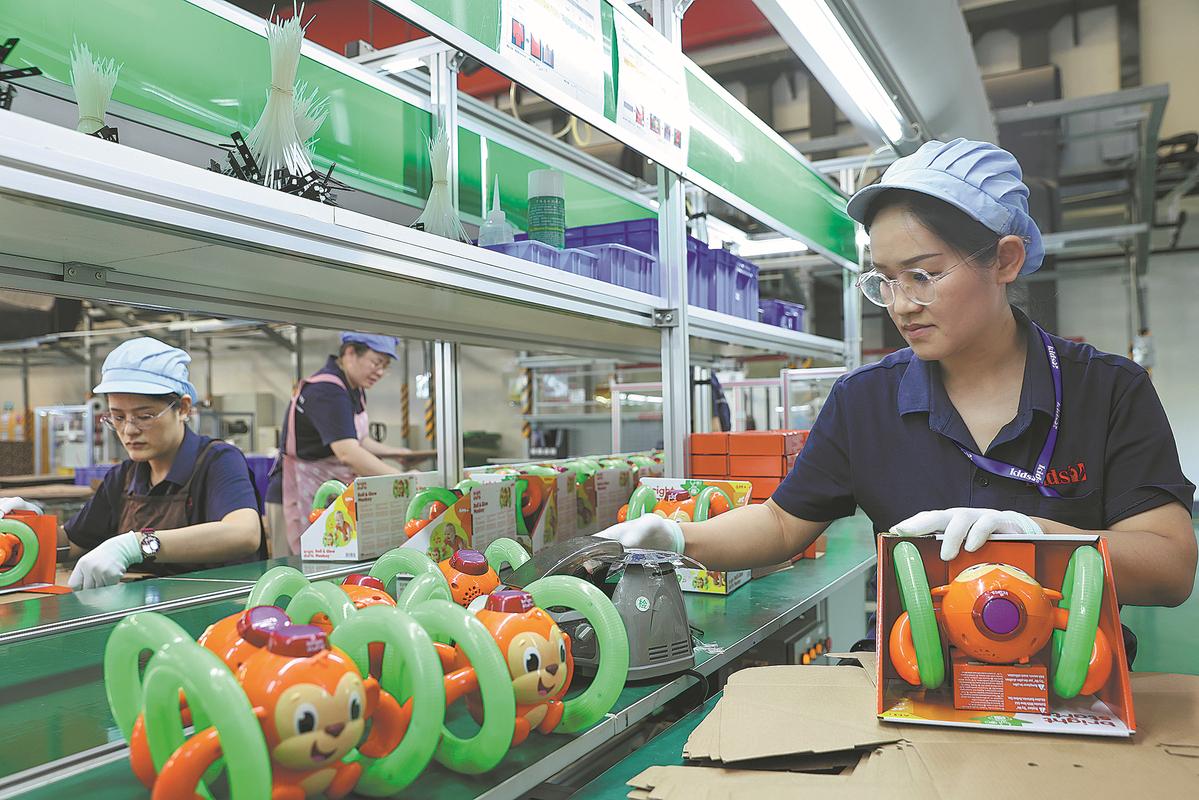
The choice usually comes down to three things: how custom the product really is, how many critical suppliers are involved, and how much supplier management you can handle yourself. Price matters, of course, but the lowest unit price does not always produce the lowest project cost.
Quick Comparison
| Area | Direct Factory | Sourcing Company |
|---|---|---|
| Engineering | Usually easier to speak directly with engineers | Depends on whether the sourcing team has technical staff |
| Price visibility | Usually clearer | May include a service fee, commission, or resale margin |
| Tooling | Easier to deal with the factory that actually stores the mold | You need to confirm who owns and physically controls the mold |
| Multiple suppliers | Works well if the main factory already manages them | Useful when several unrelated factories must be coordinated |
| Quality follow-up | The factory runs its own QC | Can add local inspection and follow-up |
| Repeat orders | Often simpler once the product is stable | Ongoing service cost should be reviewed as volume grows |
| Buyer workload | Higher | Lower if the sourcing company is actually managing the project |
| Factory visibility | Usually high | Depends on whether the real factories are disclosed |
How Custom Is the Product?
“Custom STEM toy” can mean anything from adding a logo to developing a new electronic product from scratch. Those are very different projects, so they should not be sourced in the same way.
| Level | Typical Work | Main Need |
|---|---|---|
| Private label | Logo, box, instructions, labels, or color | A stable existing product and packaging process |
| Existing-product customization | Accessories, materials, theme, packaging, or limited function changes | Product-development support and supplier control |
| Full custom | New structure, molds, electronics, PCB, firmware, or mechanical system | Strong engineering, tooling, testing, and production control |
Factories may call these services OEM, ODM, semi-custom, or private label. The wording is not always consistent from one supplier to another. K&M’s OEM and ODM service structure is one example of how different levels of customization can be handled.
If you only need a logo and a new retail box on an existing science kit, buying directly from a factory can be straightforward. If you are building a programmable robot with new molds, sensors, PCB work, motors, and firmware, the situation changes quickly. At that point, direct access to the technical team is much more valuable.
Start with the Supply Chain
Before comparing quotations, break the product down into its parts.
A simple science kit might contain plastic cups, measuring tools, experiment materials, printed instructions, and a box. An experienced science kit manufacturer may already have stable suppliers for nearly all of it.
An electronic STEM product can be much more involved:
- injection-molded housings;
- gears;
- motors;
- PCB assemblies;
- sensors;
- wires and connectors;
- battery contacts;
- fasteners;
- printed instructions;
- trays and retail packaging.
Here is a simple example. A private-label kit might have 12 BOM lines and only 3 customized parts. A programmable STEM robot might have 35 BOM lines, with 6 critical parts that cannot be changed without approval. Both products may be assembled in one factory, but the second one needs much tighter control.
It helps to split the BOM into three groups:
Made by the main factory: molding, assembly, packing, or other work done directly by the manufacturer.
Standard purchased parts: common screws, standard cables, packaging materials, and other items that can be replaced with an approved equivalent without changing the product.
Critical specialist parts: custom PCBs, motors, sensors, magnets, special materials, displays, or anything that affects safety or the main function.
The number of suppliers matters less than what those suppliers control. Eight suppliers can be easy to manage if most of them provide ordinary parts. Two suppliers can be difficult if one owns the PCB design and the other supplies the only motor that fits the product.
For every important part, ask a few practical questions:
- Does it affect safety?
- Does it control an important function?
- Is there a qualified second source?
- Does it have a long lead time?
- Would changing it require new testing?
- Would a change affect the housing, electronics, or software?
Engineering Matters Early
A product can look perfectly fine in a 3D drawing and still be difficult to manufacture.
Take a small plastic gearbox. Problems may not appear until samples are made:
- walls are too thin;
- screw posts crack;
- gears have too little clearance;
- shafts move too much;
- snap joints break during assembly;
- parts are hard to release from the mold;
- battery covers do not fit consistently.
A proper custom educational toy development process should connect design review, sampling, tooling, testing, pilot production, and mass production. Treating those as separate jobs usually creates more back-and-forth later.
Before tooling starts, someone should be reviewing the 3D files, materials, wall thickness, tolerances, mold structure, assembly method, component fit, and product-specific safety risks.
Good engineering feedback is specific. Instead of saying, “Yes, we can make it,” an engineer should be able to explain why a screw boss may crack, why a gear gap is too tight, or why one shape will slow assembly.
Those details affect cost too. Suppose a design change adds only $0.08 of assembly labor to each unit. On 20,000 units, that small decision adds $1,600 to one production run. That is why engineering should look at both manufacturability and assembly efficiency.
If you use a sourcing company, find out whether it has engineers or only purchasing staff. A buyer needs to know who can actually judge motor torque, gear ratios, battery load, PCB changes, and plastic fit—not just who can negotiate the price.
Control the BOM
A controlled bill of materials helps stop quiet component substitutions.
| Field | Example |
|---|---|
| Part | Gear motor |
| Code | MTR-002 |
| Approved supplier | Supplier A |
| Voltage | 3 V |
| Gear ratio | 1:48 |
| Shaft size | 2 mm |
| Approved sample | Rev B |
| Substitute allowed | No |
This matters most for motors, magnets, electronic parts, plastic resin, coatings, adhesives, batteries, and experiment materials.
A BOM that only says “3 V motor” is not enough. Two motors can both be 3 V but still have very different speed, torque, noise, and life. As a simple example, one may be rated around 8,000 rpm under its test conditions and another around 9,500 rpm. Swapping them without checking the design could change speed, battery use, noise, or gear performance.
Electronic products also need a plan for discontinued parts. If a display, controller, sensor, or chip disappears from the market, the replacement may affect the PCB, firmware, housing, testing, or all of them at once.
Look at Total Cost
The factory’s unit price is only one part of the project.
The figures below are examples, not industry averages.
| Item | Example |
|---|---|
| Product | $4.60/unit |
| Retail box | $0.45/unit |
| Inner tray | $0.18/unit |
| Tooling | $8,000 |
| Testing | Separate |
| Inspection | Separate |
| Freight | Separate |
A useful comparison should include development, molds, samples, testing, packaging, production, inspections, sourcing fees, rework, leftover custom materials, and the time your own purchasing team spends on the project.
For example, if a factory quotes $5.00 per unit and a sourcing company quotes $5.30 for the same approved product, the difference on 5,000 units is $1,500. If that extra $1,500 genuinely covers inspections, supplier coordination, factory visits, and production follow-up, it may be money well spent.
At 50,000 units, though, the same $0.30 difference becomes $15,000. At that point, it is worth asking whether you still need the same level of sourcing support.
Payment terms matter too. Look at when tooling deposits, production deposits, and final balances are due. A cheap quotation is not especially attractive if most of the money has to be paid before important samples, tests, or inspections are finished.
MOQ Is More Than One Number
A custom STEM toy usually has several MOQs hiding inside one project. The final product may have one minimum, while the box, PCB, motor, custom color, or molded insert has another.
| Item | Why MOQ Exists |
|---|---|
| Plastic parts | Machine and mold setup |
| Custom color | Material preparation |
| Printed box | Paper, printing, and die-cut setup |
| PCB | Board-production setup |
| Motor | Component supplier minimum |
Ask for the pilot quantity, normal production MOQ, the quantity where the price becomes more efficient, and the MOQ of important custom components.
Suppose you order 1,000 finished kits, but the box supplier requires 2,000 boxes and a component supplier also requires 2,000 pieces. You need to know who pays for the extra stock, where it will be kept, how long it can be stored, and whether it will still be usable for the next order.
If each unused box costs an illustrative $0.40, 1,000 extra boxes tie up $400. That may not look serious on its own, but the same thing happening with boxes, inserts, motors, printed manuals, and special materials can quickly build up.
This is especially common with private-label toy packaging, because printed boxes, inserts, labels, and instructions often run on different production minimums from the toy itself.
Tooling and Files
Paying for a mold does not automatically mean every ownership question is settled.
Before paying a tooling deposit, confirm:
- who owns the tool;
- where it is stored;
- its mold or tool number;
- whether it may be used for another customer;
- who pays for repairs and maintenance;
- how long it will be stored;
- how it can be moved if the relationship ends.
You should also understand a few basic production details, such as cavity count, expected output, maintenance needs, and how future design changes will be handled.
The money involved can be meaningful. If a product needs three molds at an illustrative $4,000 each, $12,000 is tied up before mass production starts. If those molds cannot be clearly identified or transferred, a small unit-price saving suddenly looks much less important.
And molds are only part of the story. A custom product may depend on:
- CAD and STEP files;
- 2D drawings;
- PCB files;
- firmware;
- BOMs;
- packaging artwork;
- instructions;
- inspection specifications.
You can own the plastic mold and still be unable to move production if the current supplier controls the only working PCB files or firmware. Decide ownership and access before the project becomes expensive.
Use More Than One Sample
One handmade prototype should not be the basis for a mass-production approval.
Appearance sample: use it to check size, shape, color, printing, and packaging. Temporary materials may still be acceptable at this point.
Engineering sample: check function, fit, movement, electronics, assembly, and how the parts work together.
Tooling sample: use the real production tooling and inspect fit, flash, sink marks, deformation, surface finish, screw joints, and snap joints.
Pilot run: make a small batch using the planned production process.
A single sample can work because an engineer adjusted it by hand. A pilot batch tells you whether ordinary production can repeat the same result. If 12 out of 100 pilot units need extra force during assembly, 12% of that pilot batch is showing the same warning. That does not mean mass production will have a 12% defect rate, but it is more than enough reason to stop and find the cause.
Where possible, use production tooling, approved materials, normal operators, real work instructions, and the planned inspection method during the pilot run.
Keep one approved production sample with the buyer and another with the factory. Put the product code, revision, and approval date on both.
Control Every Change
Some of the most expensive problems start with changes that look harmless.
- a different resin grade;
- a new motor supplier;
- a different magnet;
- a shorter screw;
- a new adhesive;
- a replacement PCB component;
- thinner packaging material.
Keep a simple record:
Current part → proposed change → reason → cost effect → quality effect → testing effect → approval
Even a cheaper part deserves a proper check. A component that saves $0.03 per unit saves $1,500 on 50,000 units. Sounds good. But if the change also needs new samples, engineering work, testing, or creates a higher failure risk, much of that saving can disappear.
Before mass production, set one approved production revision. The drawings, BOM, samples, packaging, and relevant test documents should all point to the same version.
Quality Control
Waiting until the final shipment is packed is too late for many quality problems. The inspection plan should be agreed before the order, especially when sourcing educational toys from China.
Incoming inspection: check important parts before assembly. Motors, PCBs, wires, printed materials, dimensions, colors, and other critical components belong here.
Production inspection: watch for missing parts, loose wires, incorrect screws, poor adhesive application, reversed components, damaged surfaces, and wrong labels while the product is being assembled.
Final inspection: check function, appearance, accessories, instructions, labels, barcodes, packaging, quantities, and shipping cartons against the approved product.
Finding a problem early can save a lot of work. Suppose 400 defective motors are found in an illustrative incoming lot of 10,000 pieces. Before assembly, the factory can isolate and replace the motors. Find the same problem after 10,000 finished toys have been packed, and the factory may need to open them, replace parts, retest every affected function, and pack them again.
Put the strongest controls on anything that can create a safety issue, stop the main function, cause customer returns, or make the finished product different from the approved sample.
Keep Traceability
If a component fails later, you need to know which finished products used it.
Useful records include:
- finished-product lot number;
- production date;
- BOM revision;
- critical component lot numbers;
- inspection records;
- rework records.
For U.S. children’s products, CPSC tracking-label rules require specified information to be ascertainable from permanent marks on the product and packaging, to the extent practicable. This includes the manufacturer, importer, or private labeler, production location and date, and batch, run, or other identifying information.[1]
There is also a very practical reason to keep those records. Suppose 20,000 kits have already been made and a motor problem appears. If the affected motor lot was used in only two 1,000-unit finished-product batches, you can start with those 2,000 units instead of treating all 20,000 as equally affected.
Set Defect Rules
Do not wait until inspection day to decide what counts as a defect.
Critical defect: creates a serious safety or legal problem.
Major defect: stops normal use or makes the product materially different from the approved specification.
Minor defect: a small workmanship or appearance problem that does not stop normal use.
For appearance issues such as scratches, black spots, flash, printing errors, color differences, or deformation, photos are often more useful than vague descriptions.
Many buyers use AQL-based sampling instead of checking every finished unit. ISO 2859-1:2026 provides sampling schemes indexed by Acceptance Quality Limit for lot-by-lot inspection.[2]
There is no need to copy one AQL setting from another toy and assume it fits your product. Sampling and acceptance limits should match the product and the buyer’s actual risk.
Compliance
“We have ASTM” or “we have EN71” is not enough for a new custom product. The finished design, age group, materials, functions, and sales market all matter. K&M’s US and EU toy compliance guide explains the wider testing and documentation process.
In the United States, ASTM F963 is incorporated into the mandatory federal toy safety rule. CPSC states that ASTM F963-23 applies to applicable children’s toys manufactured after April 20, 2024. ASTM F963 covers toys intended for children under 14, while CPSC third-party testing and Children’s Product Certificate requirements apply to products designed or intended primarily for children 12 or younger.[3]
Children’s products covered by applicable CPSC safety rules generally need the required third-party testing by a CPSC-accepted laboratory and certification through a Children’s Product Certificate. Some exemptions, exceptions, or CPSC determinations can make third-party testing unnecessary for particular requirements or materials. The responsible domestic manufacturer or importer still has to meet the applicable certification rules.[4]
The laboratory supplies testing and results. It does not replace the company responsible for certification. For products manufactured outside the United States, CPSC generally identifies the importer as the party responsible for issuing the CPC.[5]
Since July 8, 2026, importers of products subject to CPSC certification requirements must electronically file the required certificate data under the updated eFiling rules. Products entered from a Foreign Trade Zone and later entered for consumption or warehousing have a January 8, 2027 effective date.[6]
For the European Union, Regulation (EU) 2025/2509 entered into force on January 1, 2026 and starts applying on August 1, 2030 after the transition period. The European Commission states that Toy Safety Directive 2009/48/EC remains applicable until July 31, 2030.[7]
Calling a product “educational” does not remove toy-safety responsibilities. Look at the actual product, intended age, packaging, marketing, and sales market.
Extra care is needed when a STEM toy contains magnets, batteries, small parts, electronics, liquids, powders, experiment chemicals, cords, heating parts, or food-contact components.
Check Test Reports Carefully
An old supplier test report can be useful, but it does not automatically cover a new custom version.
Compare the report with the real product:
- product model;
- photos;
- materials;
- components;
- age grading;
- test date;
- laboratory;
- test scope.
A new magnet, plastic material, battery compartment, electronic function, or experiment material can change what needs to be tested.
It also helps to separate three documents that are often mixed together:
Test report: shows what sample was tested and what the results were.
Certificate or declaration: records the responsible party’s compliance statement under the relevant system.
Laboratory qualification: shows whether the laboratory is qualified for the testing being relied on.
Verify the Supplier
Samples and sales presentations do not tell you enough about where the product will actually be made. A proper STEM toy factory screening process should go further.
Check the legal company name, factory address, registration information, relevant equipment, production lines, quality records, in-house processes, and important subcontracted work.
Outsourcing some work is normal. A factory may mold and assemble the toy while buying motors, PCBs, packaging, and printing from specialist suppliers. What matters is whether those suppliers are controlled and whether responsibility is clear when something goes wrong.
Be careful with capacity claims too. If a factory says it can make 100,000 units per month, that figure needs context. Look at its machines, assembly lines, shifts, cycle time, current workload, and existing orders. A capacity number in a presentation is not proof that your product can be made at that volume.
If a sourcing company is involved, also check who sends the quote, who signs the contract, who issues the invoice, who receives the payment, and whether you know the name of the actual manufacturer.
Break Down Lead Time
“45 days” tells you very little on a new custom project. Ask for the stages.
The figures below are examples only.
| Stage | Example Time |
|---|---|
| Design review | 5 days |
| Prototype | 10 days |
| Tooling | 30 days |
| Tooling sample | 5 days |
| Correction | 7 days |
| Testing | Depends on the test plan |
| Pilot run | 7 days |
| Mass production | 30 days |
| Final inspection | 2 days |
The key is not adding every number together. Some stages can run at the same time, while others cannot start until an earlier task is finished.
A motor with a 35-day lead time may control the whole project even if molding takes only 20 days. Cutting packaging production from 15 days to 10 days does not help if the motor still arrives on day 35.
Buyer delays count too. Late artwork, slow sample approval, new design changes, or delayed payments can push the schedule just as easily as a factory problem.
When Something Goes Wrong
Responsibility for defects should be discussed before production, not after the shipment fails inspection.
The purchase terms should cover rework, replacement parts, second inspections, failed final inspection, unapproved materials, incorrect packaging, and when a shipment can be held.
When a quality problem appears, deal with it in a simple order:
- Contain: stop the affected material or products.
- Trace: identify the affected lots.
- Find the cause: check materials, design, equipment, and assembly.
- Correct: repair, replace, or remake the affected goods.
- Reinspect: make sure the corrected products now meet the approved standard.
- Prevent: fix the process that allowed the problem to happen.
With a sourcing company, there is one extra question: is it actually responsible for the goods under your contract, or is it only an agent passing information between you and the manufacturer? Those are not the same arrangement.
The Best Model Can Change
A sourcing structure that makes sense during development may not be the right one two years later.
| Stage | Main Need | Useful Model |
|---|---|---|
| Early development | Find suppliers and compare solutions | Sourcing support can reduce workload |
| Engineering | Fast technical decisions | Direct factory access becomes more useful |
| Pilot production | Check whether production is stable | Main factory plus independent QC |
| Stable production | Repeatability, cost, and supply continuity | Direct purchasing often becomes more efficient |
A sourcing company may add real value while the first 500 units are being developed. If annual volume later reaches 50,000 units, the buyer should look again at the service fee, factory access, inspection needs, and how much work the internal team can now handle.
When Direct Factory Works Better
Direct purchasing usually makes more sense when one manufacturer already has the engineering, tooling support, supplier network, assembly capability, and quality system required for the product.
Imagine a buyer that already has approved CAD files, needs two new injection molds, expects regular repeat orders, and has its own purchasing manager. Adding another commercial layer may not solve much. Working directly with an experienced educational toy manufacturer can make technical communication faster and keep tooling, production, and repeat-order pricing easier to see.
When a Sourcing Company Helps
A sourcing company becomes more useful when supplier coordination is the real problem.
A kit containing wooden parts, electronics, molded plastic, printed books, and custom packaging may involve several unrelated factories. A small buyer may not have enough people to chase samples, check dates, arrange inspections, and make sure every component reaches the final assembler at the right time.
In that case, a sourcing company should be doing real work: qualifying suppliers, coordinating samples, following production, arranging inspections, combining parts, and solving problems on the ground.
If it mainly forwards emails and adds a margin, there is a fair question to ask: what are you actually paying for?
Hybrid Model
You can also keep the main factory relationship direct and use another company only where local support is useful.
| Party | Responsibility |
|---|---|
| Buyer | Specifications, key approvals, tooling, files, and commercial decisions |
| Main factory | Manufacturing, assembly, approved suppliers, and production records |
| Sourcing / QC partner | Secondary suppliers, factory visits, production follow-up, and inspections |
This can work very well, but only if everyone knows who is allowed to approve changes. Three companies should not be making separate decisions about the same component.
Score the Supplier
Before giving points for price or communication, use a few pass/fail checks.
Do not approve a supplier if you cannot confirm:
- it can actually make the product;
- there is a realistic compliance path;
- you know the legal supplier identity;
- tooling and important technical files are under clear control;
- agreed inspections are allowed;
- responsibility for the finished product is clear.
Once those basics pass, a weighted score can help compare two otherwise acceptable suppliers.
| Area | Weight |
|---|---|
| Engineering | 20 |
| Quality control | 15 |
| Relevant product experience | 15 |
| Compliance experience | 15 |
| Cost | 10 |
| Communication | 10 |
| Supply-chain control | 5 |
| Tooling control | 5 |
| Capacity | 5 |
| Total | 100 |
Suppose Supplier A scores 84/100 and Supplier B scores 78/100. If Supplier A cannot identify the legal manufacturer or show a workable compliance route, the 84 points do not matter. Basic risk checks come first.
Which Model Fits?
| Situation | Better Starting Point |
|---|---|
| Private-label product with an experienced purchasing team | Direct factory |
| Private-label product with little sourcing experience | Sourcing support can help |
| Full custom product with one capable main manufacturer | Direct factory |
| Several critical specialist suppliers | Sourcing company or hybrid model |
| Large repeat orders after development is stable | Review whether direct purchasing lowers ongoing cost |
| Very small order with expensive custom tooling | Reduce customization before choosing a supply model |
Finally
A direct factory is usually the better fit when one manufacturer can control the important engineering and production work. A sourcing company earns its place when several suppliers genuinely need someone to coordinate them. The numbers make the trade-off easier to see: a $0.30 sourcing premium is $1,500 on 5,000 units and $15,000 on 50,000 units, while three $4,000 molds put $12,000 into tooling before production starts. Before placing the order, make sure the BOM revision, critical suppliers, mold ownership, technical files, approved sample, inspection rules, and compliance responsibility are all clear. Those details matter far more than whether the supplier calls itself a factory, agent, or sourcing company.